






Q: Can I use my own camera, such as a DJI O4 FPV camera, and use this AI tracking module only for target lock and guidance?
A: For the best performance and full functionality, we strongly recommend using the default camera supplied with the AI Vision Tracking Flight Controller.
The AI tracking algorithm has been specifically calibrated and optimized for the supplied camera’s image sensor, lens parameters, зрително поле, честота на кадрите, and video characteristics. Using a different camera may affect target detection accuracy, tracking stability, lock-on performance, and guidance reliability.
Понастоящем, the AI tracking and target lock functions are designed to work with the default camera configuration to ensure seamless integration between the camera, AI processor, and flight controller. This allows the system to achieve the most reliable target recognition, проследяване, guidance, and lock-on performance.
If you are using a DJI O4 FPV system or another digital FPV platform, you may still use it as your pilot-view FPV camera. въпреки това, the AI tracking system will require the dedicated supported analog camera for target detection and autonomous tracking functions.

Q: Can it work with rocket-style FPV platforms? The control system seems different.
A: According to our engineering team, this current version is not suitable for rocket-style FPV platforms.
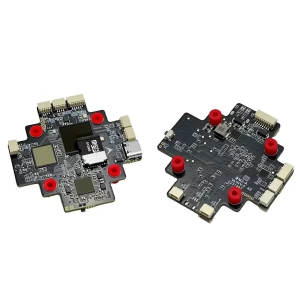
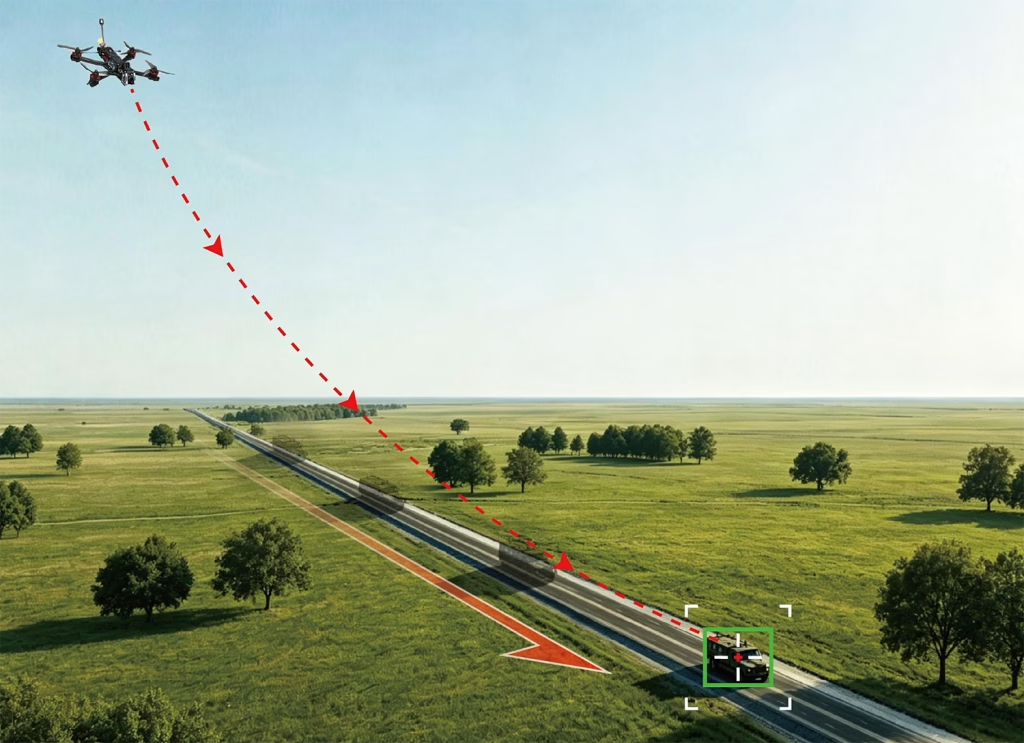
The AI Vision Tracking Flight Controller is specifically designed and optimized for multi-rotor UAV systems, such as quadcopters, that perform aerial flight with stable attitude control and allow continuous target tracking of ground objects (such as humans or vehicles).
Rocket-style FPV platforms typically involve very different flight dynamics, including high-speed linear motion, limited attitude control authority, and non-hovering behavior. These characteristics make it difficult for the current AI tracking and Betaflight-based control system to maintain stable target lock and guidance performance.
At this stage, the system is intended for aerial drones tracking ground targets rather than high-speed rocket-type or missile-style FPV applications.
Q: What is the difference between model 2161 (1st generation) and model 2162 (2nd generation)?
A: The main differences between the first-generation model 2161 и the second-generation model 2162 are firmware optimization and processing performance.
Модел 2162 is an upgraded version with improved computing power, allowing faster AI inference, smoother target detection, and more stable tracking performance under complex environments. The AI response speed and lock-on accuracy have been enhanced compared to the previous generation.
В допълнение, the firmware architecture has been further optimized in model 2162, resulting in better overall system stability, improved compatibility with Betaflight 4.6, and more efficient integration between the AI module and flight control functions.
В обобщение:
2161 (1st Gen): Original firmware, standard AI processing performance
2162 (2nd Gen): Upgraded firmware + higher computing power + improved AI tracking stability and speed
Най- 2162 model is recommended for users who require stronger target tracking performance, faster response, and improved reliability in real-world FPV and UAV applications.
Q: Does this Betaflight AI flight controller require a GPS module?
A: A GPS module is не се изисква for the core functions of this system.
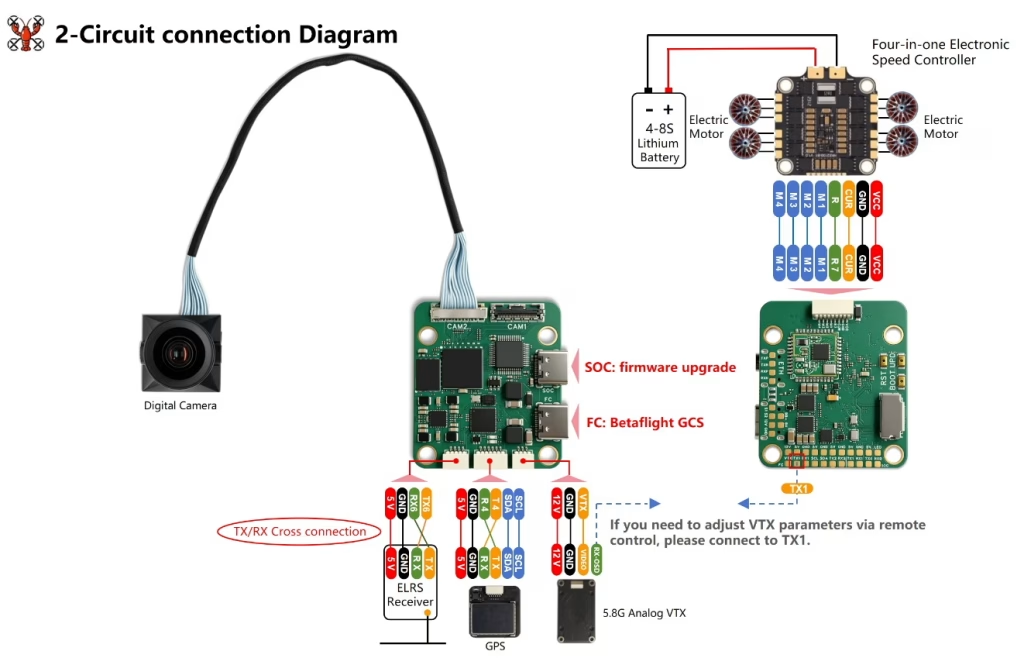
The AI Vision Tracking Flight Controller is designed to handle target detection, lock-on, and visual tracking using onboard AI and camera input, so basic FPV flight and AI tracking can work normally without GPS.
въпреки това, a GPS module can still be optionally added depending on your use case:
- No GPS needed (default use case):
FPV състезания, AI target tracking, short-to-medium range visual missions, manual or semi-autonomous flight. - GPS recommended (advanced use cases):
- Return-to-Home (RTH) safety feature
- Long-range BVLOS flights
- Position hold / loiter modes (if enabled in Betaflight setup)
- Mission planning or telemetry logging
Резюме:
- AI tracking = camera-based, does NOT require GPS
- Flight safety / long-range autonomy = GPS is optional but recommended
Задай въпрос
Вашето съобщение е изпратено