








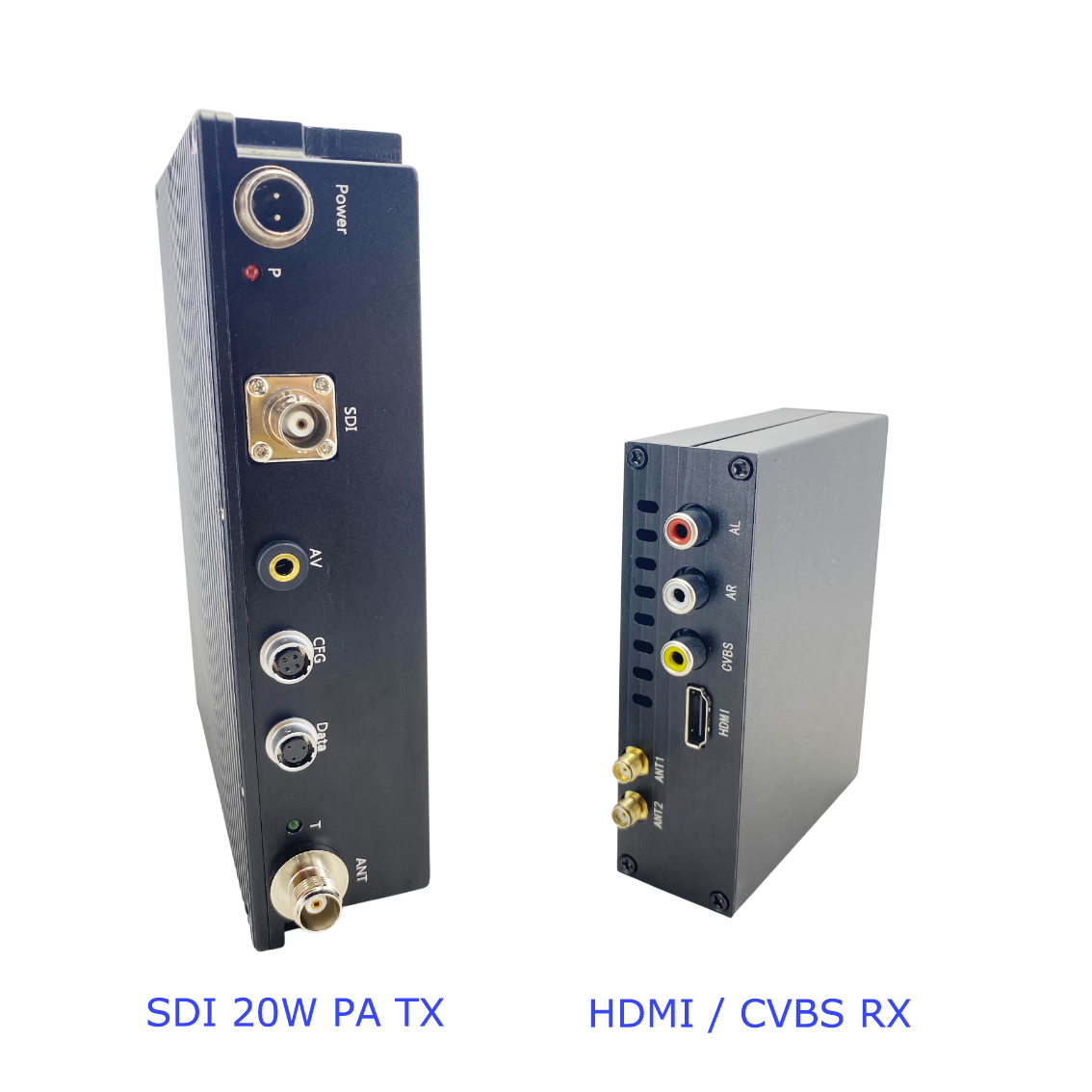
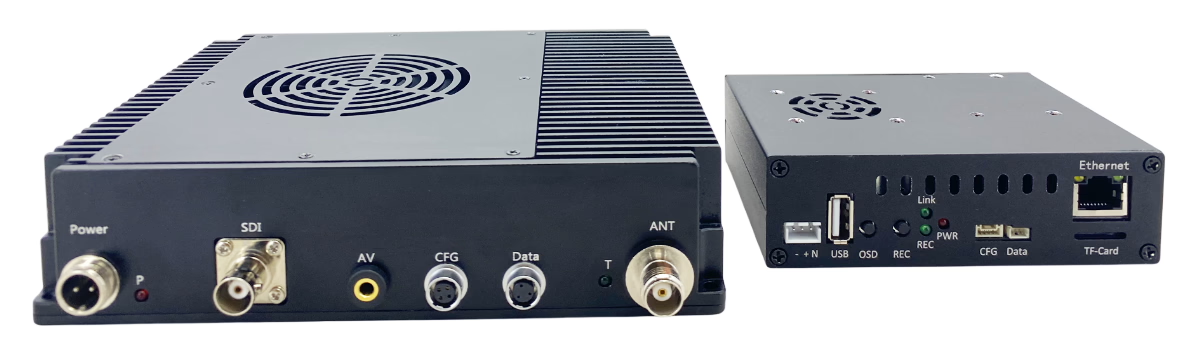
1350-1400MHz 20W PA COFDM SDI无线视频发射器和接收器
目录
特征
- 可以定制工作频率. The frequency range of the transmitter is 70~2500Mhz, and the frequency range of the receiver is 170~860Mhz. Operating frequencies exceeding this range require down-conversion.
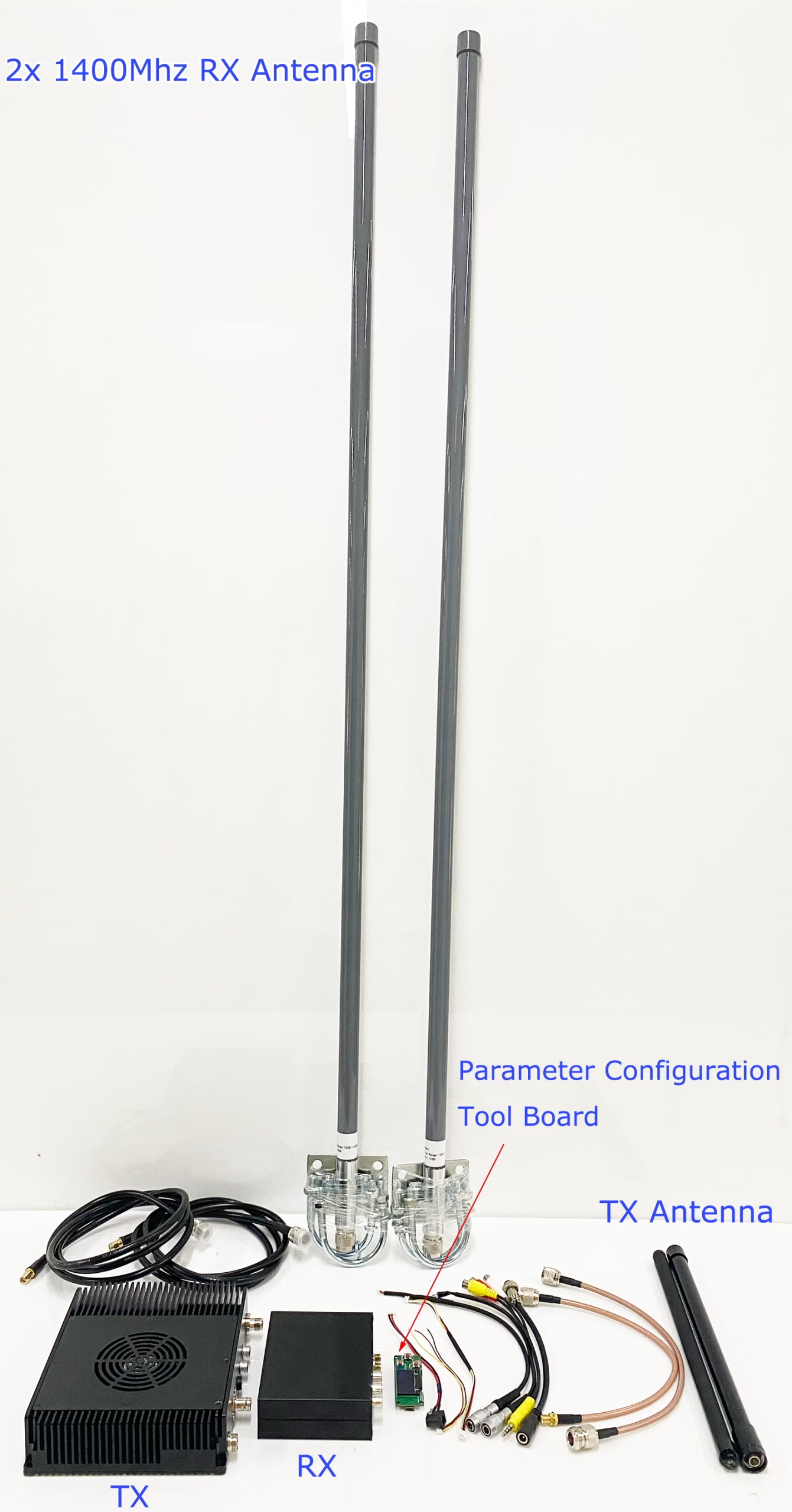
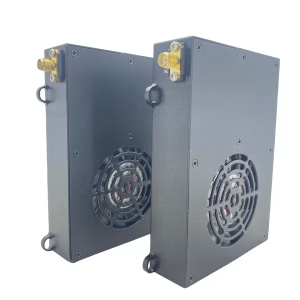
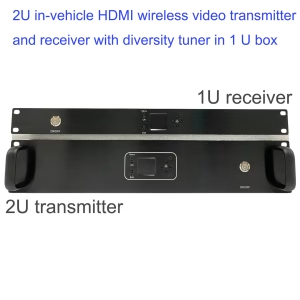
- The frequency range required by the customer for this set of equipment was 1350-1400Mhz, so the receiver is a diverse dual-antenna reception, so two down-converters were added. (1350-1400Mhz input, output 370Mhz, LO 1000Mhz)
附件
常问问题
-
Q: What is this 1.4GHz 20W PA COFDM SDI wireless video transmitter and receiver?
一个: It’s a professional 长距离无线视频发射器 and receiver kit operating in the 1350-1400兆赫频率 乐队 (Other frequencies can also be customized.), using robust COFDM调制 for reliable SDI, CVBS, 要么 HDMI AHD video input 传送, 同 HDMI, CVBS 和 Ethernet RJ45 RTSP UDP output. 它具有一个 可编程 10 瓦特或 20 瓦特功率放大器 (Other powers can also be customized).
-
Q: What video inputs does the transmitter accept?
一个: 该 无线视频发射器 支持 SDI视频输入, CVBS 视频输入 (合成的), and other standard HDMI AHD video input.
-
Q: What outputs does the receiver provide?
一个: 该 COFDM接收器 offers both HDMI输出 for modern displays and CVBS 输出 (合成的) for legacy equipment compatibility, 该 ethernet RJ45 networking output also support to connect computer via RTSP or UDP protocol video stream.
-
Q: How much power does the transmitter output?
一个: 该 PA功率放大器 是 定制, offering either 10 瓦 要么 20 瓦 输出功率, selectable via configuration tools for range or power consumption needs. (Other powers can also be customized).
-
Q: What frequency band does it use?
一个: It operates specifically within the 1350-1400兆赫频率 乐队 (also referred to as 1.4G频率). (Other frequencies can also be customized.),
-
Q: What modulation does it use for reliable video?
一个: 它雇用 COFDM调制, renowned for excellent performance in non-line-of-sight (NLOS) and multipath environments, 使其理想 远程传输.
-
Q: How is the system configured?
一个: Configuration is done via a dedicated 参数配置工具 or using 在命令 通过 CFG port, Web UI management for video encoder parameter setting.
-
Q: Does it support remote configuration?
一个: 是, parameters like frequency, 带宽, 功率, 密码, 获得, 等等, can be set using the programmer tool, 参数配置板 or by sending 在命令 通过 CFG port.
-
Q: What is the TTL data port used for?
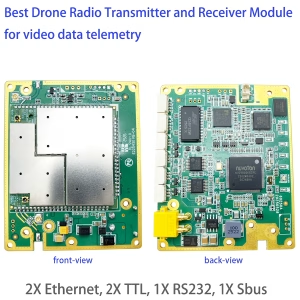
一个: 该 TTL data port allows for TTL data transmission of flight control in the drone air unit alongside video. It can be used for remote control, 遥测, triggering, or sending/receiving low-bandwidth serial data (单程 on TX typically).
-
Q: Is the video transmission bidirectional?
一个: 没有, this system is designed for one-way transmission of video and data from the transmitter to the receiver. Or please check our other models supports two-way transmission.
-
Q: What kind of range can I expect?
一个: 范围 depends on terrain, 天线, and power setting. 随着 20你不 and good antennas, 远程传输 的 100-150+ 千米 (视线) is achievable. COFDM图传 aids in difficult environments.
-
Q: How do I choose between 10W and 20W power?
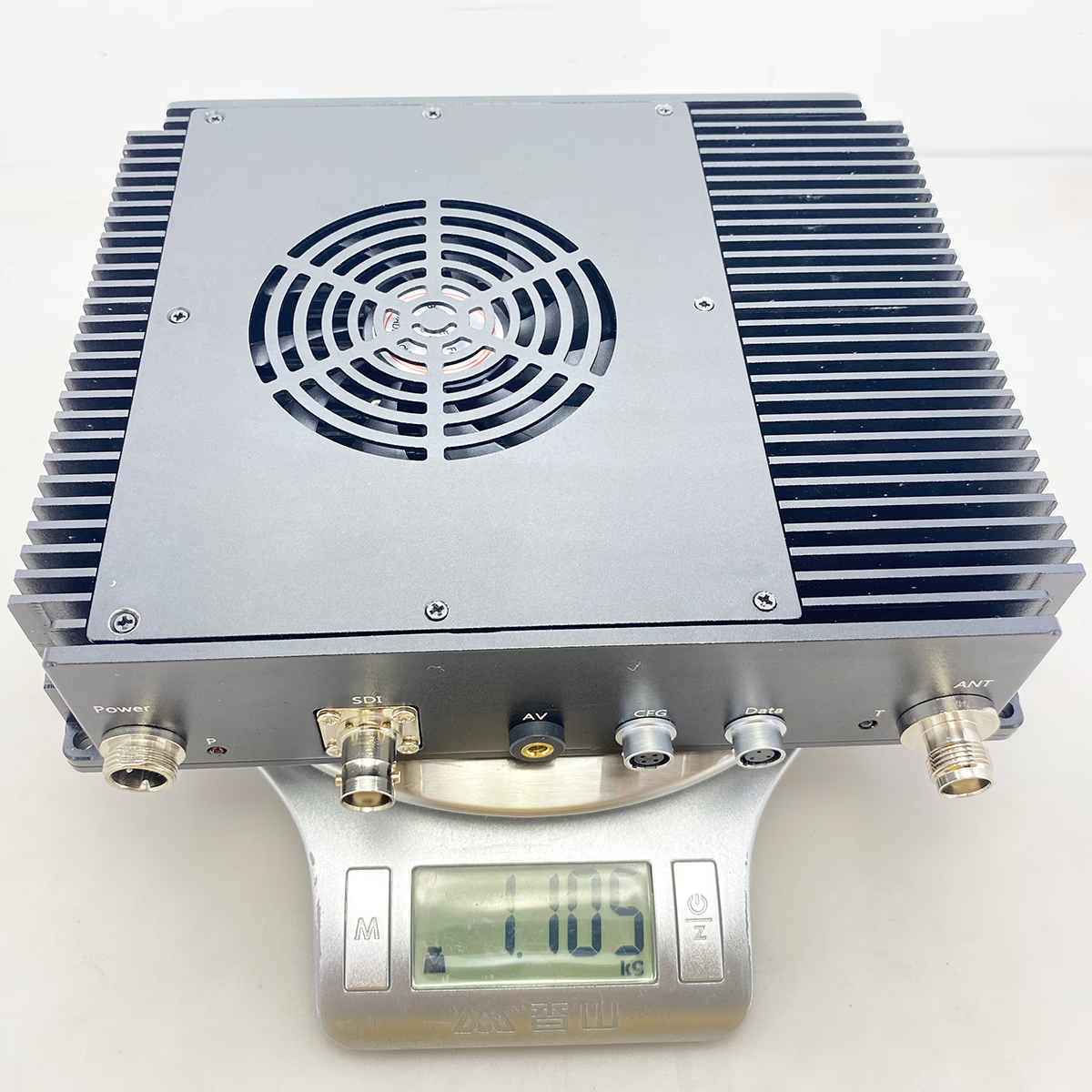
一个: Default is 20W PA inside. 使用 参数配置工具 to set Gain, 一个 3 dB reduction means the output is halved; so a reduction from 20W to 10W means a 3 dB reduction in gain. 选择 10 瓦 要么 20 瓦 在 PA功率放大器, please consider higher power extends range but consumes more battery.
-
Q: Does it support low-latency video?
一个: 是, COFDM wireless video systems typically offer very 低延迟 (often sub-150ms), suitable for live monitoring and Drone UAV applications.
-
Q: What antennas are recommended?
一个: 高增益定向天线 (Yagi antenna, Flat Panel antenna) on the receiver and omnidirectional/semi-directional antennas on the transmitter are recommended for maximizing 远程传输 performance at 1.4G频率.
-
Q: Is the 1350-1400MHz band license-free?
一个: Licensing varies significantly by country/region. 该 1350-1400兆赫频率 band is 不 globally license-free. 务必检查当地法规 before operation. A license is often required, especially for 20W¯¯ 功率.
-
Q: Can I change the operating frequency?
一个: 是, the operating 频率 在 1350-1400兆赫 range can be precisely set using the 参数配置工具 要么 在命令.
-
Q: How do I update the firmware?
一个: Firmware updates are typically performed using the programmer tool software connected to the device’s configuration port (例如, USB or TTL serial).
-
Q: What is the purpose of the programmer tool?
一个: 该 programmer tool (parameter configuration tool board) is an extra small LCD screen with menu board used for easy 参数配置, monitoring status, and setting 在命令 profiles.
-
Q: Can I control the transmitter remotely via data?
一个: 没有, basic control functions (频率, 带宽, 密码, gain ect) be connected directly via the CFG configuration port or using predefined 在命令 sent from the computer serial port tool.
-
Q: What voltage does the TTL data port use?
一个: 该 TTL data port operates at standard 3.3V TTL logic levels. Ensure any connected device is compatible.
-
Q: Does the receiver have a data output port?
一个: 通常, 该 TTL data port is on the transmitter and receiver for one-way data transparent transmission. The data input from the data port on the transmitter will be completely output to the data output port of the receiver. -
Q: What is the video resolution supported?
一个: While dependent on the specific model, systems like this often support up to 1080p30 for SDI输入 和 HDMI输出. CVBS input/output is standard definition (SD).
-
Q: Is it suitable for drone (无人机) 使用?
一个: 是, 该 1.4G频率, COFDM robustness, 低延迟, 和 远程传输 capabilities make it a popular choice for professional drone video downlink 系统, especially with the TTL data port for telemetry.
-
Q: How is audio handled?
一个: Audio is typically embedded within the SDI输入 or carried alongside the CVBS/AV video input (usually as part of the composite signal). It will be decoded and output via the receiver’s HDMI输出 and potentially the CVBS 输出.
-
Q: What power supply does the transmitter need?
一个: Transmitters with 10W/20W PA typically require a robust DC input, often in the range of 24V, capable of supplying several amps (especially at 20W¯¯ 射频输出). -
Q: What power supply does the receiver need?
一个: Receivers usually require a standard DC input, often 12V, with lower current requirements than the transmitter.
-
Q: Does it work in urban environments?
一个: 是, COFDM调制 is excellent at handling multipath interference common in 城市环境, making this 无线视频 system suitable for city use.
-
Q: 是否耐候?
一个: Professional units often feature rugged, weather-resistant casings. Check the specific IP rating for details on suitability for outdoor or harsh environments.
-
Q: Can I use multiple transmitters with one receiver?
一个: This requires a receiver capable of scanning or multiple receivers. 通常, each TX-RX pair operates on a unique frequency. When multiple transmitters use similar frequencies, there will be interference, and a bandpass filter is required. When multiple transmitters use a larger frequency range, the receiver’s antenna range increases, and the sensitivity decreases, which may result in a shorter transmission distance.
-
Q: Can I use multiple receivers with one transmitter?
一个: 是, a single 无线视频发射器 signal can typically be received by multiple COFDM receivers tuned to the same frequency.
-
Q: 典型的延迟是多少?
一个: COFDM wireless video systems like this are designed for 低延迟, often in the range of 100-250 毫秒, 取决于配置, 信号处理, camera and monitor.
-
Q: Does it support HD video over SDI?
一个: 是, 该 SDI视频输入 typically supports standard HD-SDI formats (like 720p, 1080一世, 1080p).
-
Q: Can I send telemetry data?
一个: 是, 该 TTL data port 在 发射机 is specifically designed for sending TTL data transmission like telemetry (例如, 全球定位系统, 高度, 电池状态) alongside the video stream.
-
Q: How do I connect the TTL data port?
一个: 该 TTL data port usually has pins for Ground (GND), 发送 (TX), and Receive (RX). Connect it to a compatible serial port (UART) on your controller/sensor using a 3.3V TTL level compatible interface.
-
Q: What baud rate does the TTL port use?
一个: The baud rate for the TTL data port (例如, 9600, 19200, 57600, 115200) is usually configurable via the 参数配置工具 要么 在命令.
-
Q: Are AT commands well documented?
一个: Professional systems should provide comprehensive documentation for the 在命令, detailing syntax, 参数, and functionality for configuration and control. 串口UART AT指令
-
Q: Can I integrate this with my existing control system?
一个: 是, integration is possible via the TTL data port (使用 在命令 or custom data) and potentially relay/GPIO signals (if available), facilitated by the 参数配置工具.
-
Q: Is there encryption for the video signal?
一个: Many professional COFDM图传 systems offer AES-128 encryption. Check the specifications or 参数配置工具 options for security settings.
-
Q: How do I set the encryption key?
一个: Encryption keys are typically set using the 参数配置工具 or via specific 在命令, ensuring both TX and RX share the same key.
-
Q: What is the bandwidth of the RF channel?
一个: COFDM systems often use configurable bandwidths like 2MHz, 4兆赫, or 8MHz. This affects data rate and robustness. Set it via the 参数配置工具.
-
Q: Can it transmit through obstacles?
一个: Thanks to COFDM调制, it performs significantly better than analog or simpler digital systems in Non-Line-Of-Sight (NLOS) conditions and when penetrating light obstacles (叶子, 墙), 支持 远程传输.
-
Q: What’s the difference between the programmer tool and AT commands?
一个: 该 programmer tool is an extra LCD screen + menu board for easy setup and monitoring. 在命令 offer a text-based interface for configuration and control via the TTL data port, suitable for automation and integration. -
Q: Does the receiver output a clean HDMI signal?
一个: 是, 该 COFDM接收器 is designed to provide a stable, low latency HDMI output signal compatible with standard monitors and recorders.
-
Q: Is the CVBS output active simultaneously with HDMI?
一个: 通常, 是. 两个都 HDMI输出 和 CVBS 输出 are usually active concurrently on the receiver.
-
Q: How do I mount the antennas?
一个: Use high-quality coaxial cables (例如, LMR-400 for longer runs) and mount antennas (发射机 & 接收器) as high and clear as possible. Directional antennas on the RX should be pointed towards the TX.
-
Q: What is the typical power consumption at 10W vs 20W?
一个: Power consumption is significantly higher at 20W¯¯ RF output compared to 10W¯¯. Expect the 20你不 to draw 50-100% more DC power than the 10W¯¯ setting. Check the datasheet.
-
Q: 是否有过热保护?
一个: Professional transmitters with high-power 功放功率放大器 usually include thermal protection, potentially reducing power or shutting down if overheating occurs.
-
Q: Can I remotely reboot the transmitter?
一个: This depends on the specific implementation. Some systems support a remote reboot command via the TTL data port 使用 在命令.
-
Q: Where can I buy this wireless video system?
一个: Search for distributors or manufacturers specializing in long-range COFDM wireless video transmitters, 1.4G frequency systems, 和 SDI/HDMI video links. Look for models matching the 10W/20W PA, TTL data port, 和 参数配置 特征. Or click contact us to get the further support.
-
Q: 是否可用技术支持?
一个: As a reputable manufacturer, we offer technical support for configuring the 参数配置工具, 理解 在命令, setting up the TTL data port, and troubleshooting COFDM transmission 问题.
Q: I need a long-range, low-latency system for NLOS operation in dense forest terrain. Do you have a test video?
一个: Because different obstacles, terrain structures, and forest densities cause very different transmission results, it is not possible to create a test video that accurately simulates every customer’s real usage environment.
To recommend a suitable solution, we need to understand your exact application scenario:
-
Are the transmitter and receiver fixed in place (例如, 森林火灾监测, wildlife surveillance), or are both mobile?
-
Are they located inside the forest, or can the antennas be placed above the canopy?
-
How high can the antennas be mounted?
-
How much NLOS obstruction (树木, 丘陵, 建筑物) will the signal encounter?
In dense forest or enclosed environments, wireless signals cannot diffract effectively, and the usable transmission distance becomes very short. For NLOS and long-range applications, customers typically choose 10W–20W RF power, 不 0.5W–1W, because higher power significantly improves penetration and link stability.
Once we understand your real deployment environment, we can provide a suitable model recommendation and expected performance.




iVcan.com –
I recently used the 1350-1400MHz 20W PA COFDM SDI wireless video transmitter and receiver, 它的性能给我留下了深刻的印象. The signal quality is exceptionally stable even over long distances, and the dual-antenna diversity reception ensures minimal interference and zero signal dropouts. 设置很简单, and the included down-converters made it compatible with our customized frequency range effortlessly. Video transmission is crystal clear, latency is very low, and the 20W PA output provides excellent coverage. 全面的, this is a highly reliable and professional wireless video solution for any demanding application.