





目录
单向模型, 更便宜, 适用于闭路电视安全摄像机.
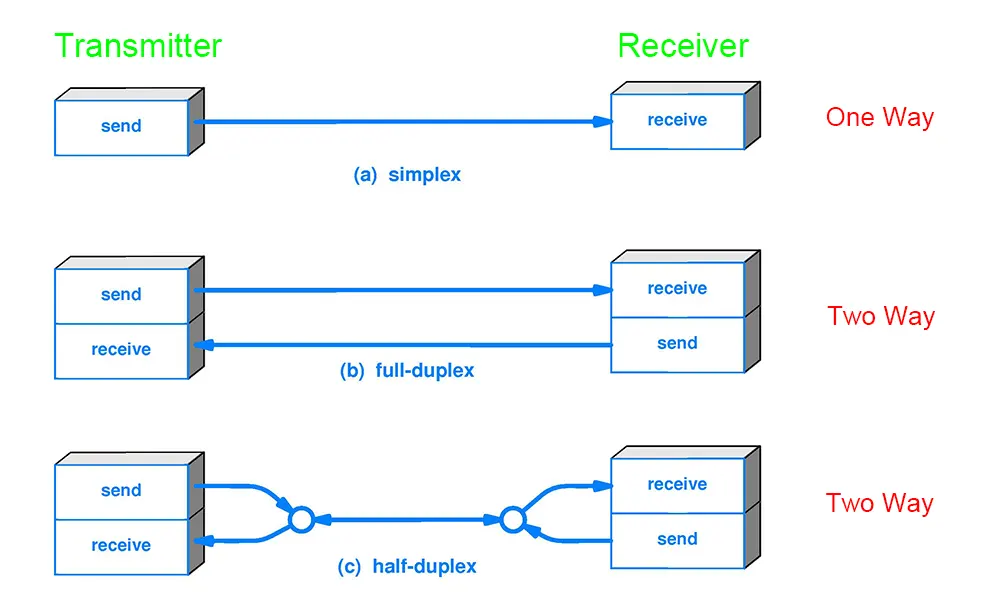
单向无线视频发射器和接收器, support sending video and data from the transmitter to the receiver, but not sending the data or commands from the receiver to the transmitter.
This wireless transmission type is like a TV or radio; you can get the video or radio broadcast from the transmitting tower to your devices. but you can not send the command or message to communicate with the TV or radio company directly.
The transmitter is a transmitter, and the receiver is only a receiver.
These models are suitable for CCTV security cameras; 你可以 “看” 要么 “listen” the real-time the video or audio.
One-way models:
Two-Way Model, 受欢迎的, suitable for Drone UAV, Robotic, to see and to control.
Two-way wireless video transmitter and receiver; every unit plays a role of transmitter and receiver; it is transceiver.
It can get the video and data from the transmitter to the receiver. The person can also send the control command from the receiver to the transmitter or the camera, like a PTZ camera.
These wireless video transmission system like a mobile video call, not only allow you can “see and listen” to the video and audio from the transmitter to the receiver, but also allow you can “reply” and real-time communicate with the receiver.
This two-way video transmission system supports UAV drones, which support getting the real-time video and data; you also can send the control command to the drone at ultra lower latency.
How to Choose a Two-Way or One-Way Wireless Video Transmitter and Receiver
选择无线视频传输系统时, understanding the differences between one-way and two-way (or simplex and duplex) 系统 很关键. The choice depends on the application, operational requirements, budget, and whether bidirectional communication is necessary.
One-Way Wireless Video Transmitter and Receiver
一个 one-way wireless video transmitter and receiver system is the simpler and more cost-effective option. In this configuration, the transmitter only sends video and data to the receiver, but the receiver cannot send any signals, 控制命令, or messages back to the transmitter. This type of system is also known as a simplex transmission system, analogous to traditional TV or radio broadcasting.
In a one-way system, 这 发射机 is purely a sending device, 和 接收者 is solely a receiving device. The communication is unidirectional, meaning data flows in only one direction—from the source to the observer. This setup is ideal for applications where only observation is needed without active control or interaction.
Common applications of one-way wireless video systems include:
- CCTV Security Cameras: One-way transmitters allow monitoring personnel to view real-time video streams from cameras installed in facilities, streets, or other secure locations.
- 监控系统: Remote locations such as warehouses, 建筑工地, or public spaces can benefit from real-time monitoring without the need for control commands.
- Broadcast Monitoring: Situations where video is transmitted to multiple receivers without requiring feedback from each receiver.
The advantages of one-way systems include 成本更低, simpler installation, and reduced power consumption. Since no data is sent back to the transmitter, system design is less complex, and latency is minimal for the video signal.
然而, the limitation is that the receiver cannot interact with the transmitter. Commands, 云台控制, or telemetry feedback are not possible. This system is best suited when the operational goal is observation only, such as watching live video feeds or monitoring events remotely.
Two-Way Wireless Video Transmitter and Receiver
一个 two-way wireless video transmitter and receiver system—also called a full-duplex or transceiver system—enables bidirectional communication. Every unit functions as both a transmitter and a receiver, 允许 视频, 声音的, and data to flow in both directions.
This type of system is ideal for applications requiring real-time interaction and control. 例如, 无人机, 无人机, and robotic systems often use two-way wireless video transmission. The operator can not only receive real-time video and telemetry from the drone but also send control commands back to the drone, such as adjusting camera angles, controlling a PTZ camera, or modifying flight parameters.
Two-way systems function like a video call on a mobile phone. Operators can watch live video and listen to audio streams while simultaneously sending commands, enabling full interactive control. This capability is essential for complex operations where human intervention is required in real time.
Common applications of two-way wireless video systems include:
- Drone and UAV Operations: Two-way communication enables pilots to receive live video from the UAV’s camera while controlling the flight path, camera angle, or payload release in real time.
- Robotics and Remote-Control Vehicles: Operators can monitor robots, 工业车辆, or remotely operated machines and send commands for navigation or task execution.
- PTZ Camera Systems: Two-way systems allow remote operators to pan, 倾斜, 飞涨, and control focus in real time while watching the video feed.
- Interactive Surveillance: Environments that require both observation and command execution, such as security checkpoints, traffic monitoring, 或紧急响应场景.
The key advantages of two-way systems include enhanced interactivity, control capabilities, and operational flexibility. These systems usually incorporate low-latency transmission protocols to ensure that commands are executed almost instantaneously, which is critical for UAV flight control or live robotics operation.
然而, two-way systems are generally 更贵 and slightly more complex to install compared to one-way systems. They require transceivers, synchronization mechanisms, and potentially higher power consumption. Proper frequency planning is also important to avoid interference and maintain stable communication, especially in environments with multiple devices operating simultaneously.
Summary and Selection Guide
- Choose a One-Way System if:
- The primary goal is observation only.
- Cost is a major factor.
- The application involves static cameras, 中央电视台, or broadcast monitoring.
- No control or command signals are needed.
- Choose a Two-Way System if:
- You need real-time interaction with the remote device.
- Applications involve drones, 无人机, 机器人技术, or PTZ cameras.
- Low latency video and bidirectional control are required.
- Operators need to send commands and receive feedback simultaneously.
Ultimately, the decision between one-way and two-way wireless video transmission depends on the specific operational needs, budget constraints, and complexity of the mission. For passive monitoring, one-way systems provide an efficient, cost-effective solution. For interactive control and mission-critical operations, two-way systems deliver full functionality and real-time responsiveness, making them essential for UAV, 无人机, and advanced robotic applications.
By understanding the differences between simplex, 半双工, and full-duplex wireless video systems, operators can select the appropriate solution to ensure optimal performance, 可靠性, 和用户体验 for their specific video transmission requirements.
问一个问题
感谢您的回复。 ✨