

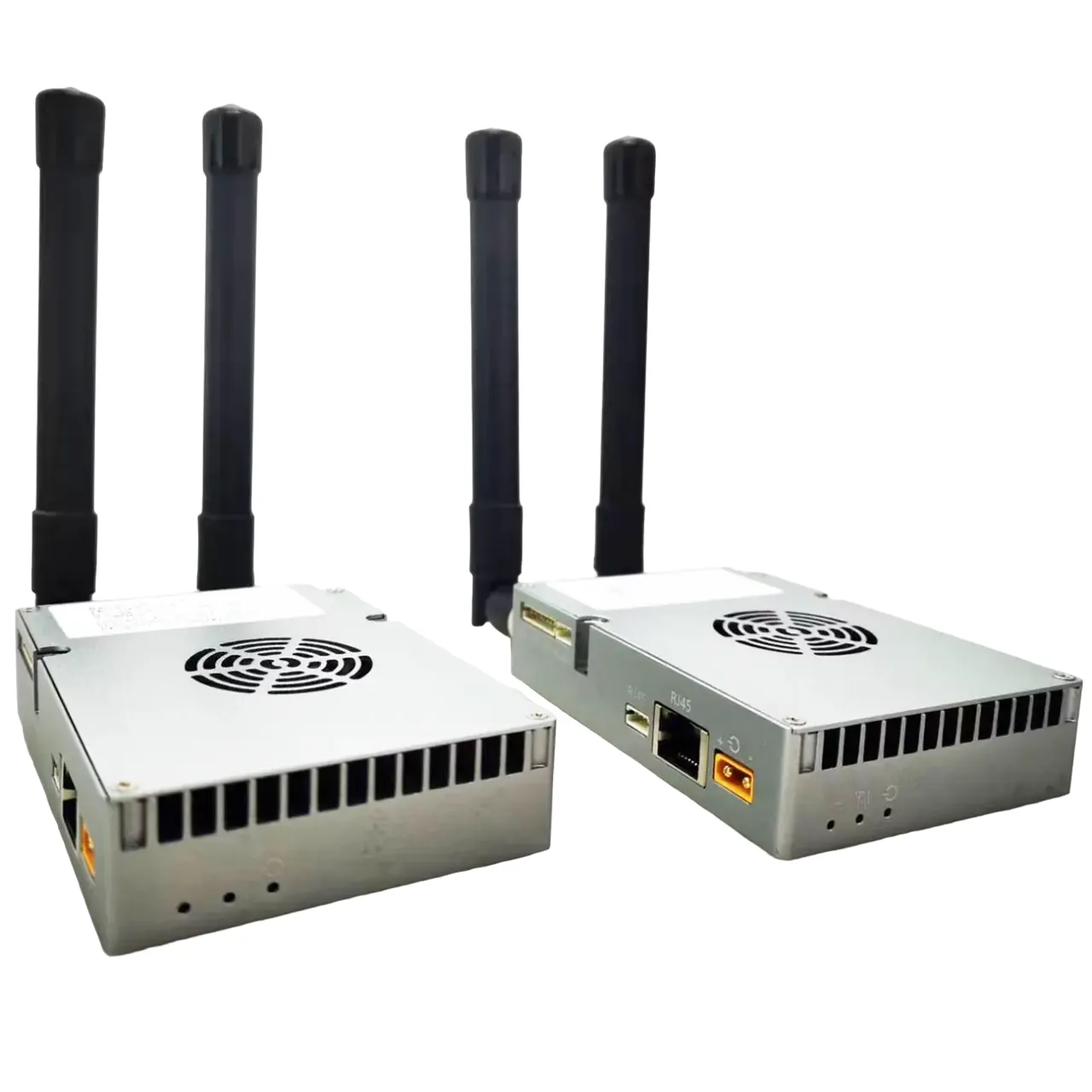
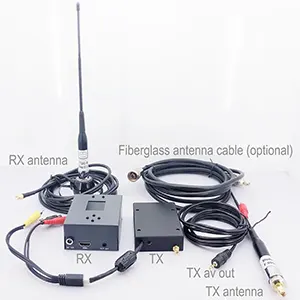


低雜訊放大器, PA, and BDA refer to key components in wireless communication systems: 這 Low-Noise Amplifier (低雜訊放大器) amplifies weak incoming signals with minimal noise, 這 功率放大器 (PA) increases the power of signals for transmission, 和 Bi-Directional Amplifier (BDA) boosts and extends the range of wireless signals, often by combining LNA and PA functionalities into a single device. A BDA can act as a half-duplex repeater or a full-duplex system, depending on its design and the use of separate transmit and receive frequencies or bandpass filters to isolate signals.
Here’s a clear explanation of the differences between LNAs, 不是, and BDAs:
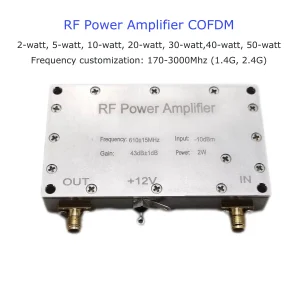
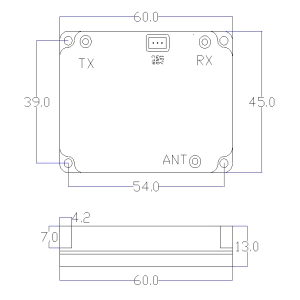
價格範圍: $336.00 通過 $460.00
價格範圍: $450.00 通過 $980.00
價格範圍: $460.00 通過 $998.00

$1,350.00

價格範圍: $456.00 通過 $898.00
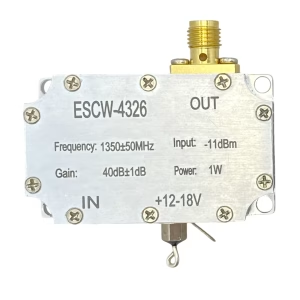

原價是: $999.00.$535.00目前的價格是: $535.00.
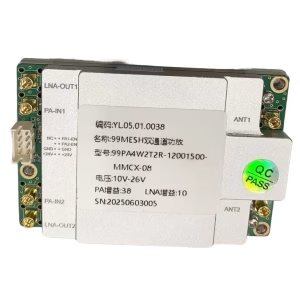
價格範圍: $480.00 通過 $690.00

目錄
1. 低雜訊放大器 (Low-Noise Amplifier)
- 目的: To amplify very weak received signals while adding as little noise as possible. Its primary goal is sensitivity.
- 地點: First active component 在 receiver chain, directly after the receive antenna.
- Key Performance Indicators (KPIs):
- 噪音係數 (NF): Crucially low (通常 0.3 分貝至 3 分貝). Measures added noise.
- 獲得: Sufficient to overcome noise from later stages (通常 15-30 分貝).
- 線性度: Important to handle potential strong interferers without distortion.
- 方向性: Unidirectional (Receive only).
- 設計重點: Ultra-low noise transistor selection, circuit topology for minimal noise, 穩定, sufficient gain.
- 應用: Receiver front-ends in smartphones, base stations, 衛星接收器, GPS, radar receivers, radio telescopes, WiFi routers.
2. PA (功率放大器)
- 目的: To amplify processed signals to a high power level 適合於 efficient transmission over the air. Its primary goal is 輸出功率.
- 地點: Last active component 在 transmitter chain, directly before the transmit antenna.
- Key Performance Indicators (KPIs):
- 輸出功率: Crucially high (milliwatts to kilowatts+). Measured as saturated power (Pₛₐₜ) or power at specific linearity points (例如, P₁dB).
- 效率: High DC-to-RF power conversion (critical for battery life & 熱). Measured as Power Added Efficiency (PAE) or Drain Efficiency.
- 線性度: Extremely important for modern complex modulations (QAM, OFDM). Measured by ACPR/ACLR, 評估值. Often requires techniques like Digital Pre-Distortion (DPD).
- 獲得: Sufficient to reach required output power from the driver stage.
- 方向性: Unidirectional (Transmit only).
- 設計重點: 功率處理, 熱管理, 效率, 線性度 (often requiring trade-offs), 穩定.
- 應用: Transmitter final stages in smartphones, base stations, broadcast transmitters, radar transmitters, walkie-talkies, microwave links.
3. BDA (Bi-Directional Amplifier) / 中繼器 / Signal Booster
- 目的: To simultaneously amplify signals in both directions (uplink and downlink), primarily to extend coverage into areas with weak signal (例如, 建築物, 隧道).
- 地點: 一個 standalone system placed between a “donor antenna” (pointing towards the source signal) 和一個 “service antenna” (covering the target area).
- Key Performance Indicators (KPIs):
- Uplink Gain & Downlink Gain: Amplification for each direction. Must be carefully set.
- 噪音係數 (NF): Primarily impacts the 下行鏈路 (收到) sensitivity of the overall system.
- 輸出功率: Primarily impacts the 上行鏈路 (傳送) coverage capability.
- Isolation: THE MOST CRITICAL KPI. Isolation between donor and service ports, and between internal Tx/Rx paths MUST be significantly higher than the system gain (Uplink Gain + Downlink Gain) to prevent oscillation/feedback.
- 方向性: 雙向 (Simultaneous Rx and Tx).
- Internal Structure: Essentially contains:
- 一個 低雜訊放大器 for the downlink path (receiving signal from the service area and amplifying it cleanly towards the donor antenna/base station).
- 一個 PA for the uplink path (amplifying signals received from the donor antenna/base station for transmission into the service area).
- 一個 Duplexer 或者 Circulators to provide the essential 隔離 between the Tx and Rx paths/frequencies.
- 設計重點: Achieving high isolation, gain balance between uplink/downlink, system stability, noise figure (下行鏈路), 輸出功率 (上行鏈路), 濾.
- 應用: In-building coverage systems (DAS), subway/tunnel coverage, rural signal extension, filling coverage gaps in large facilities (airports, malls).
Summary of Key Differences:
| 特徵 | 低雜訊放大器 (Low-Noise Amplifier) | PA (功率放大器) | BDA (Bi-Directional Amplifier) |
|---|---|---|---|
| Primary Role | Boost weak Rx signals (靈敏度) | Boost Tx signals (輸出功率) | Extend Coverage (Bidirectional Relay) |
| 地點 | Front-end of Receiver | Back-end of Transmitter | Standalone System (Between Antennas) |
| Critical KPI | Low Noise Figure (NF) | High Output Power & 效率 | 高隔離度 & Balanced Gain |
| 方向 | Unidirectional (Rx Only) | Unidirectional (Tx Only) | 雙向 (接收 & Tx Simult.) |
| 訊號電平 | Very Low (µV – mV range) | 非常高 (Watts+) | 緩和 (Amplifies both levels) |
| Core Design | Minimize Added Noise | Maximize Power & 效率 | Isolation, Gain Control, System Stability |
| Contains | – | – | 低雜訊放大器 (下行) + PA (上行鏈路) + Duplexer/Circulator |
In Simple Terms:
- 低雜訊放大器: Listens carefully to faint whispers (weak received signals) without adding static (噪音).
- PA: Shouts loudly (high-power transmission) so the message can travel far.
- BDA: Hears the faint whispers from one area, amplifies them cleanly, and re-shouts them clearly into another area where the original shout couldn’t reach, and vice-versa. It’s a relay station containing both a careful listener (低雜訊放大器) and a powerful shouter (PA), kept from interfering with itself by special isolators.
價格範圍: $336.00 通過 $460.00
價格範圍: $450.00 通過 $980.00
價格範圍: $460.00 通過 $998.00
$1,350.00
價格範圍: $456.00 通過 $898.00
原價是: $999.00.$535.00目前的價格是: $535.00.
價格範圍: $480.00 通過 $690.00
問一個問題
感謝你的回應。 ✨