

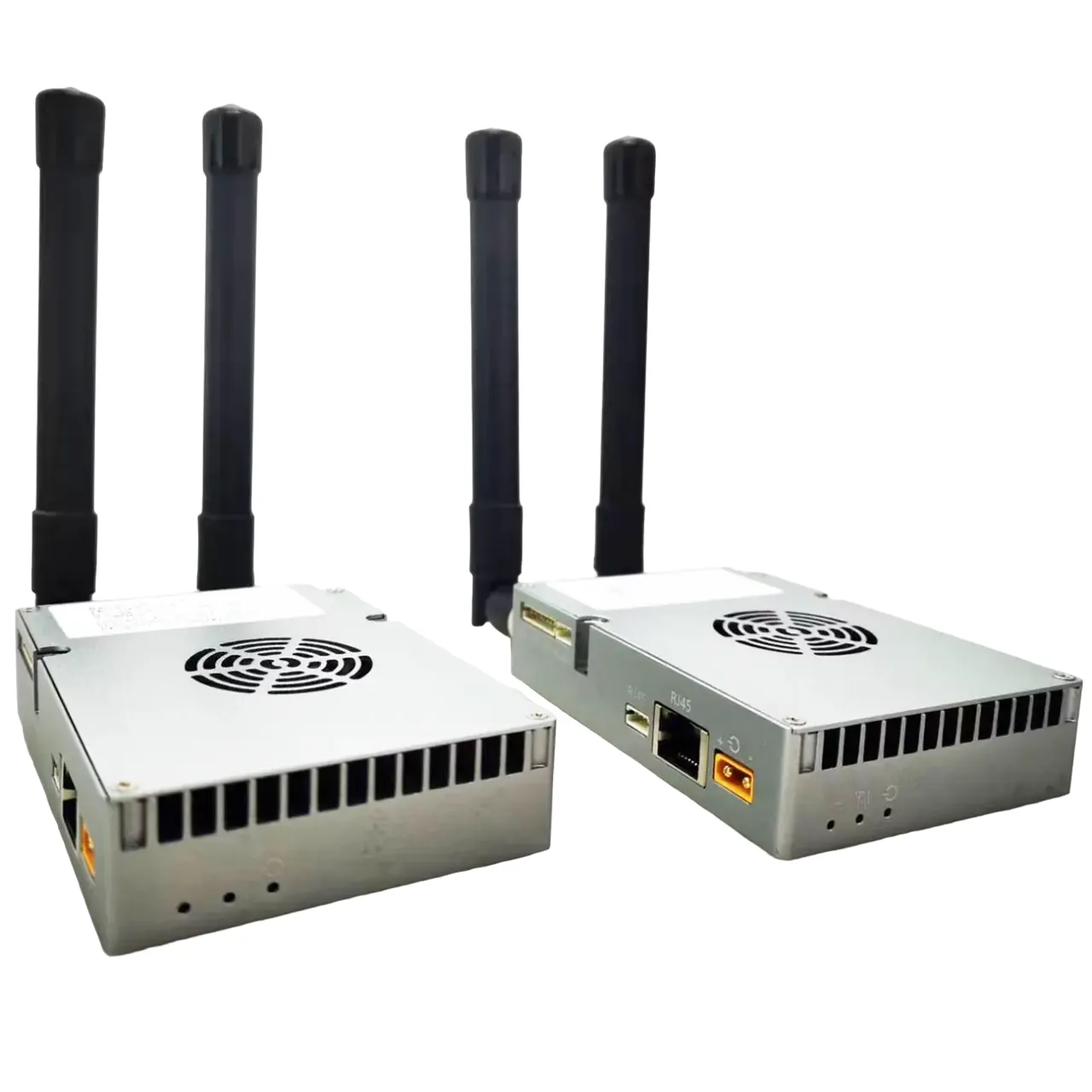
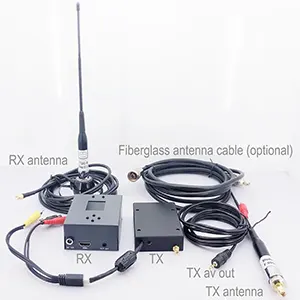


Wireless Data Transmission, radio telemetry
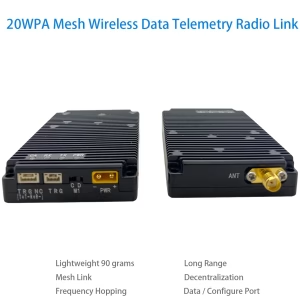
Wireless Data Transmission

Wireless Data Transmission

Wireless Data Transmission

Wireless Data Transmission

Wireless Data Transmission
Wireless data links are the backbone of UAV video, 원격 측정, and control systems. They determine range, 신뢰할 수 있음, 처리량, and interoperability with various platforms such as drones, 지상 로봇, or wearable devices. Wireless links can be classified according to 네트워크 토폴로지, power amplification, 응용 시나리오, 및 데이터 인터페이스.
1. By Network Topology (네트워킹 모드)
-
지점 간 (P2P)
-
Direct link between two nodes.
-
이점: 단순한, 낮은 지연 시간, 높은 신뢰성.
-
Common Use: UAV에서 지상국으로, remote-controlled vehicles.
-
-
지점 대 다중 지점 (P2MP)
-
One transmitter communicates with multiple receivers.
-
이점: Efficient broadcasting to several ground stations or UAVs simultaneously.
-
Common Use: Swarm UAV management, multi-vehicle telemetry.
-
-
중계전송
-
Data is forwarded through one or more intermediate nodes to extend range or bypass obstacles.
-
이점: Overcomes line-of-sight limitations, suitable for long-range or urban operations.
-
-
IP Mesh (자기 조직화, 노드 중심 네트워크)
-
Nodes automatically route data between each other without a central server.
-
이점: Highly resilient to node failure, flexible for large-scale UAV or robotic networks.
-
Common Use: Multi-UAV collaborative missions, robotic swarms, disaster recovery scenarios.
-
2. By Transmission Power (PA 통합 / Output Wattage)
-
0.5 W Wireless Link
-
Short-range, low-power applications.
-
이점: Lower energy consumption, suitable for small drones or indoor use.
-
-
1 W Wireless Link
-
Moderate range, typical for standard UAV-to-ground links.
-
-
10 W Wireless Link
-
장거리, high-performance links for professional UAV operations.
-
-
20 W Wireless Link
-
Very long-range applications, can penetrate obstacles and cover several kilometers.
-
Often used in industrial, 방어, 또는 비상 대응 시나리오.
-
3. By Application Scenario
-
UAV Wireless Data Transmission
-
Real-time telemetry, 비행 제어, 센서 데이터, or video streaming from drones to ground stations.
-
요구사항: 낮은 대기 시간, 간섭 방지, 높은 신뢰성.
-
-
Ground Robotic Data Transmission (UGV에서, Robotic Dogs, Mobile Platforms)
-
원격 측정, sensor fusion, remote control signals for autonomous or semi-autonomous robots.
-
요구사항: High reliability, 긴 지구력, adaptable to urban or rugged terrain.
-
4. By Data Interface
-
TTL (Transistor-Transistor Logic)
-
Simple UART-based communication, common in microcontrollers and lightweight UAV systems.
-
-
RS232
-
Standard serial interface for industrial or professional equipment.
-
이점: Reliable over longer cables and noise-prone environments.
-
-
S.버스
-
Specialized serial protocol widely used in UAV flight controllers and RC systems.
-
이점: Supports multiple channels on a single line for telemetry and control.
-
5. Optional Customization / Advanced Features
-
Adjustable Transmission Power
-
Some wireless links allow customers to select PA wattage depending on required range.
-
-
Redundant or Multi-Path Networking
-
중요한 임무를 위한, links may be configured with relays, mesh nodes, or multiple antennas to improve reliability.
-
-
Modular Interfaces
-
Customers can choose which serial/data interface (TTL, RS232, S.버스) to integrate depending on UAV or robot system.
-
요약
Wireless links for UAVs and robotic systems can be classified along these dimensions:
-
네트워크 토폴로지: 지점 간, 지점 대 다중 지점, 계전기, IP Mesh
-
전송 전력 / 산출: 0.5 W, 1 W, 10 W, 20 W
-
응용 시나리오: UAV, UGV/로봇, wearable systems
-
데이터 인터페이스: TTL, RS232, S.버스
-
Customization Options: Adjustable PA, optional relays/mesh, modular interfaces
This classification helps system designers, UAV integrators, and industrial customers select the right wireless data link for range, 신뢰할 수 있음, 처리량, and operational scenario.