






2.4 に 3-3.5 GHz RF Frequency Up Down Converter for COFDM, UAV links, ワイヤレスビデオ, and RF front-end systems
目次
概要
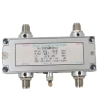
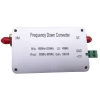
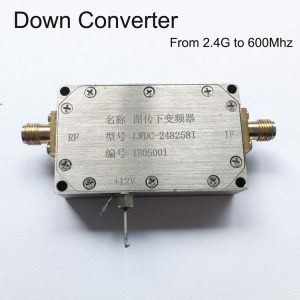
の 2.4 to 3–3.5 GHz RF Frequency Up/Down Converter is a high-performance frequency translation module designed for professional wireless video transmission, COFDM systems, and RF front-end integration. By shifting 2.4 GHz signals to the 3–3.5 GHz band—or vice versa—it ensures reliable communication in congested RF environments and supports long-range, low-latency wireless links. The compact, low-noise design makes it ideal for drone, 放送, 工業用, およびセキュリティアプリケーション.
特徴
-
Bidirectional Conversion: Supports both up-conversion (2.4→3–3.5 GHz) and down-conversion (3–3.5 GHz→2.4 GHz).
-
低雑音指数: Ensures clean signals for long-distance and high-quality video transmission.
-
High Linearity & 安定性: Excellent performance in interference-heavy environments.
-
Wide Operating Voltage: Suitable for embedded and mobile RF systems.
-
Compact Metal Housing: Easy to integrate into UAVs, ロボット, 車両, and field equipment.
-
Customizable Frequency Range: 中心周波数, LO, and gain can be tailored.
仕様
| アイテム | 価値 |
|---|---|
| Conversion Type | Up/Down Converter (2.4 GHz ↔ 3–3.5 GHz) |
| 入力周波数 | 2.4 GHz帯 |
| 出力周波数 | 3.0–3.5 GHz band (カスタマイズ可能な) |
| LO Frequency | カスタマイズ可能 |
| コンバージョンゲイン | 0–15 dB (オプション) |
| 雑音指数 | <2.5 dB (典型的な) |
| Input/Output Connector | SMAメス |
| 供給電圧 | 5–12 V DC |
| 動作温度 | –20 °C to +70 ℃ |
| 大きさ | Compact module design (カスタマイズ可能な) |
アプリケーション
-
COFDM wireless video transmitters & 受信機
-
UAV / drone image transmission systems
-
RF link range-extension solutions
-
Wireless communication R&D
-
RF front-end signal isolation and interference avoidance
-
Professional broadcast and monitoring equipment
-
Industrial IoT and long-range wireless systems
よくある質問
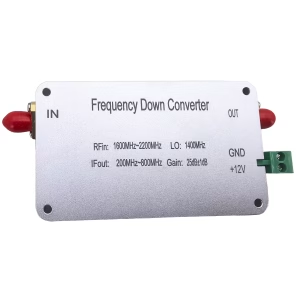
Q: Can you explain more about dropping down to 600 MHz to work with your cofdm transmitter and receiver module?
A: 確かに. Our 送信機 platform supports a very wide operating frequency range of 175–3500 MHz, and in some configurations even 175–6000MHz. しかし, the internal tuner/demodulator chipset used in the receiver is designed to directly process signals only within approximately 175–860MHz. This frequency range corresponds to the standard European DVB-T broadcast spectrum, where the receiver operates natively and most efficiently.
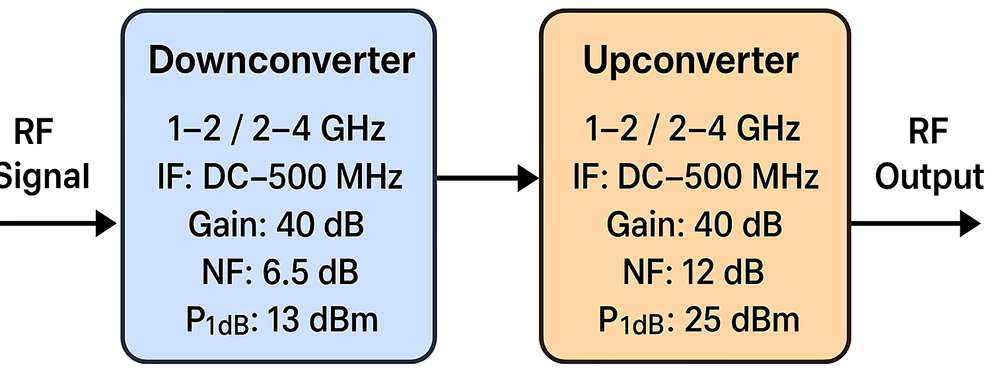
When the transmission frequency is above 860 MHz — for example in bands such as: 1.2 GHz, 2.4 GHz,5.8 GHz. the receiver cannot directly demodulate the RF signal at those frequencies. In these cases, ある frequency downconverter is required.The downconverter shifts the higher RF frequency down into the receiver’s supported 175–860MHz range before demodulation. Once converted, the receiver processes the signal normally using the DVB-T demodulator.
| 動作周波数 | Receiver Operation |
|---|---|
| 175–860MHz | Direct reception |
| 860–6000MHz | Requires external downconverter |
This is a standard approach used in many professional RF, 放送, and COFDM/DVB-T systems, allowing very wide frequency coverage while maintaining stable and reliable DVB-T reception performance.
1. Can the frequency range be customized?
はい. Both the input/output frequencies and LO can be customized based on your system requirements.
2. Does it support COFDM video transmission systems?
絶対に. The converter is designed for COFDM-based UAV and long-range video transmission.
3. Can it reduce interference from other 2.4 GHz devices?
はい. Shifting the operating band to 3–3.5 GHz helps bypass crowded 2.4 GHz environments.
4. Is the module suitable for drone applications?
はい. It features compact size, 低消費電力, and stable RF performance.
5. Can you provide OEM/ODM customization?
We can customize connectors, 得, housing, and frequency ranges based on your project needs.
ご注文時, please let us know your required conversion gain, LO (局部発振器) 頻度, and any other custom parameters.




iVcan.com –
I have been using the 2.4 to 3–3.5 GHz RF Frequency Up/Down Converter for several weeks in my UAV and COFDM wireless video projects, そしてそれは私の期待を上回りました. The module delivers exceptionally clean, stable signals with very low noise, even in congested RF environments. Its compact design made integration into my drone system straightforward, and the customizable frequency and gain options allowed me to optimize performance for my specific setup. 全体, it significantly improved video transmission quality, reduced interference, and enhanced long-range communication reliability. Highly recommended for professional UAV and wireless video applications.