

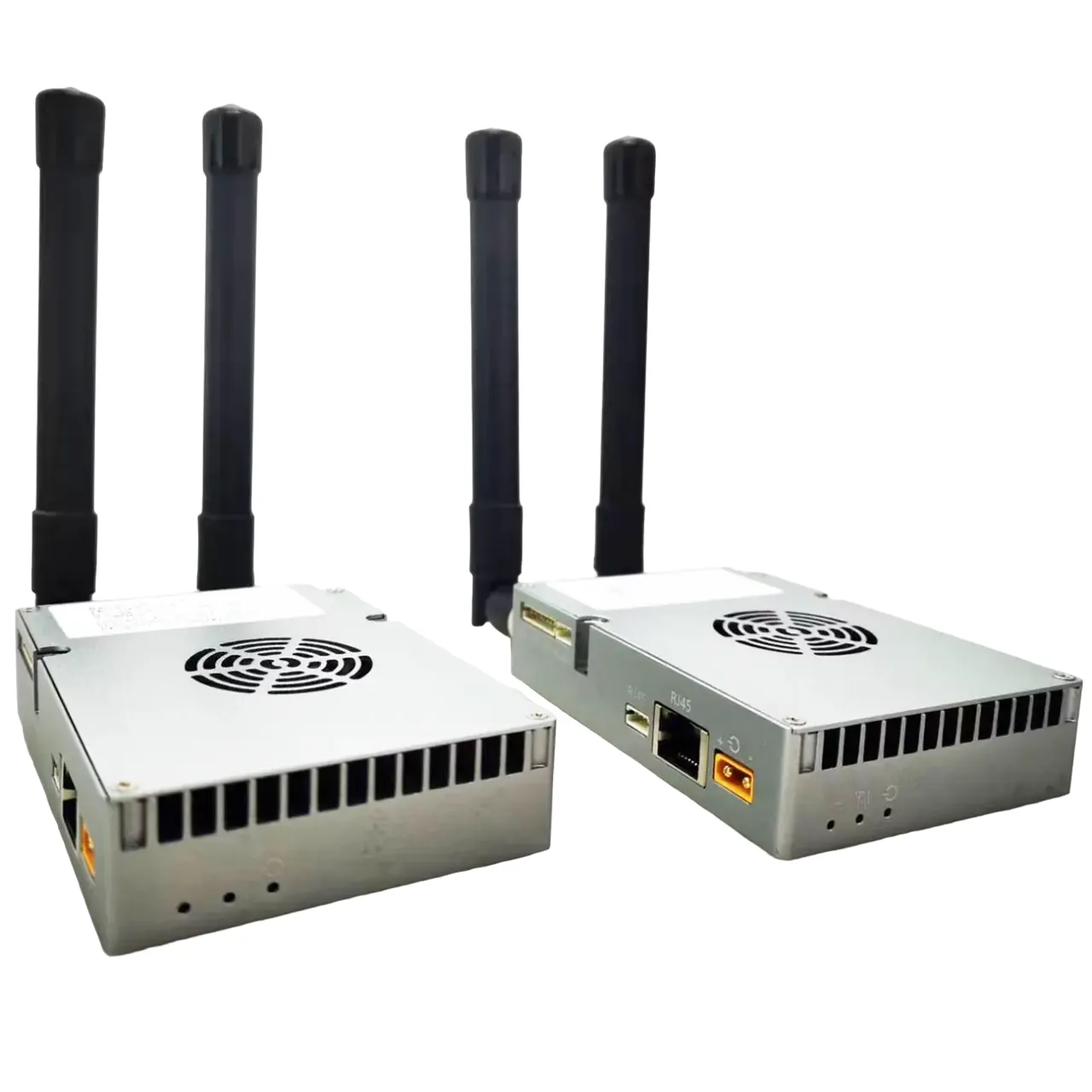
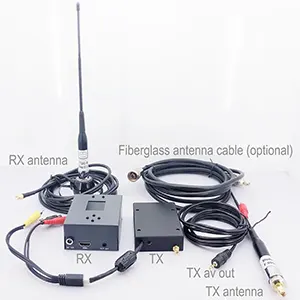


2.4G and 5.8G wireless video data transceiver based on artosyn module

EIN 2.4G and 5.8G wireless video data transceiver based on the Artosyn module is a device designed to transmit and receive video data wirelessly using the 2.4 GHz und 5.8 GHz frequency bands.
Inhaltsverzeichnis
1. Core Functionality
The transceiver likely combines 2.4 GHz und 5.8 GHz wireless technologies to optimize video transmission based on environmental needs:
- 2.4 GHz: Offers longer transmission range und better penetration through obstacles (z.B., walls), making it suitable for indoor or obstructed environments. aber, it faces congestion due to widespread use by devices like Wi-Fi routers and microwaves.
- 5.8 GHz: Bietet höhere Bandbreite und lower interference, ideal for high-speed, stable video streaming in open or low-obstruction areas (z.B., industrial sites, outdoor surveillance). Its shorter wavelength limits penetration but improves data rates.
The Artosyn module may integrate dual-band switching to dynamically select the optimal frequency based on signal quality or interference levels.
2. Hauptmerkmale
- Adaptive Frequency Selection: Automatically switches between 2.4 GHz und 5.8 GHz to balance coverage and speed. Zum Beispiel, 2.4 GHz might be prioritized for indoor monitoring, während 5.8 GHz handles high-definition outdoor feeds.
- OFDM Modulation: Likely employs Orthogonales Frequenzmultiplex (OFDM) (common in 5.8 GHz-Systeme) to enhance signal stability and resistance to multipath interference, critical for video data integrity.
- Geringe Wartezeit: Optimized for real-time video transmission, crucial for applications like drone surveillance or live broadcasting.
- Interferenzminderung: Verwendungsmöglichkeiten 5.8 GHz’s cleaner spectrum to avoid congestion from 2.4 GHz devices (z.B., Bluetooth, W-lan).
3. Anwendungen
- Industrielle Überwachung: Transmits video from remote or hazardous areas (z.B., oil fields, Minen) verwenden 5.8 GHz for long-distance clarity and 2.4 GHz for obstacle-rich zones.
- Sicherheitssysteme: Combines both bands for indoor/outdoor coverage; 5.8 GHz ensures high-resolution feeds for critical areas, während 2.4 GHz handles broader coverage.
- Drohneneinsätze: Supports First-Person View (FPV) Drohnen, Wo 5.8 GHz reduces latency for real-time control, und 2.4 GHz provides backup connectivity in cluttered environments.
4. Technical Comparisons
| Aspect | 2.4 GHz | 5.8 GHz |
|---|---|---|
| Reichweite | Longer (bis zu 600 Meter) | Shorter (but higher stability) |
| Penetration | Better through walls/obstacles | Weaker; relies on line-of-sight |
| Bandbreite | Lower (max ~150 Mbps) | Higher (bis zu 1.7 Gbps with 802.11ac) |
| Interference | Hoch (due to crowded spectrum) | Minimal (cleaner channels) |
5. Integration with Artosyn Module
The Artosyn module may incorporate:
- Dual-Band RF Front-End: Manages simultaneous transmission/reception on both frequencies.
- Signalkonvertierung: Similar to devices that convert 5.8 GHz signals to 2.4 GHz for compatibility with legacy equipment.
- Energieeffizienz: Optimizes energy use for prolonged field deployment, especially in battery-powered systems like drones.
Stelle eine Frage
Vielen Dank für deine Antwort. ✨