






IP MESH Ad Hoc network user guide
Version number: iVcan-20230606
সুচিপত্র
Brief introduction
- Our Ad hoc network communication radio station, as a mobile self-organizing network, supports any network topology.
- Unlike traditional wireless networks, it is a wireless broadband system with no center, distributed, multi-hop relay, dynamic routing, strong invulnerability, and good scalability.
- Some routing protocols complete the wireless communication between nodes through wireless multi-hop forwarding.
- An ad hoc distributed broadband wireless network transmission system with an efficient MAC layer transmission protocol and a two-layer routing protocol.
- All nodes are completely equal, without any infrastructure, and can quickly build a dedicated self-organizing network between mobile nodes, provide instant adaptive communication, have excellent broadband performance, and support the real-time transmission of multimedia information such as video coding and audio coding.
- The system technology has the advantages of strong anti-interference ability, high spectrum efficiency, long transmission distance, anti-fading ability, and strong diffraction ability.
- It can realize real-time and high-quality wireless two-way data transmission functions in complex and non-line-of-sight environments.
Technical Features
- There is no need to set up a central station and complex system configuration. After the site is powered on, it will automatically form a network, and the communication can be started in “সেকেন্ড”;
- Arbitrary topology, multi-hop relay, relay forwarding;
- The logical attributes of each node can be flexibly configured;
- বর্তমানে, the same frequency network can support the interconnection of ≥32 nodes;
- The channel is encrypted with AES;
- The system data bandwidth peak value is 90Mbps;
- Strong anti-interference ability, high spectrum efficiency, long transmission distance, বিরোধী হস্তক্ষেপ
- Strong falling ability and diffraction ability
প্রযুক্তিগত পরামিতি
- Communication frequency: 1412~1452MHz, adjustable in 5MHz steps;
- Transmission power: 2*30dBm (2*1ওয়াট), 1dBm step adjustable。
- Bandwidth mode: 5 / 10 / 20 মেগাহার্টজ;
- Modulation method: multi-carrier TDD-COFDM;
- Carrier modulation: BPSK/QPSK/16QAM/64QAM (adaptive or fixed);
- সংবেদনশীলতা গ্রহণ: -98dBm @ 10MHz;
- Communication distance: 30কিমি (ground-air/air-air line-of-sight), 8কিমি (ground-ground line-of-sight);
- Communication rate: peak 90Mbps (অভিযোজিত);
- Transmission delay: Single jump about 2ms;
- Multi-hop capability: পর্যন্ত 8 video jumps;
- Start time: ≤25S;
- Network access time: less than 1 second;
- Routing switching: less than 1 second;
- ডেটা ইন্টারফেস: network port x 2, RS232 x 2;
- শক্তি খরচ: 2~8W
- Protection level: IP65;
- কাজ তাপমাত্রা: -40~+70℃;
- মাত্রা: length: 72.8mm*width 47.3mm*height 17.9mm
- ওজন: 78ছ
Software operation Instructions
Support 5M, 10এম, and 20M bandwidth, real-time graphical interface display, real-time map indication, ইত্যাদি.
The software disables DHCP by default, and the default IP address is 192.168.17.1 If you forget the address, please connect the 9th pin of the 26PIN cable to the ground to reset the parameters.
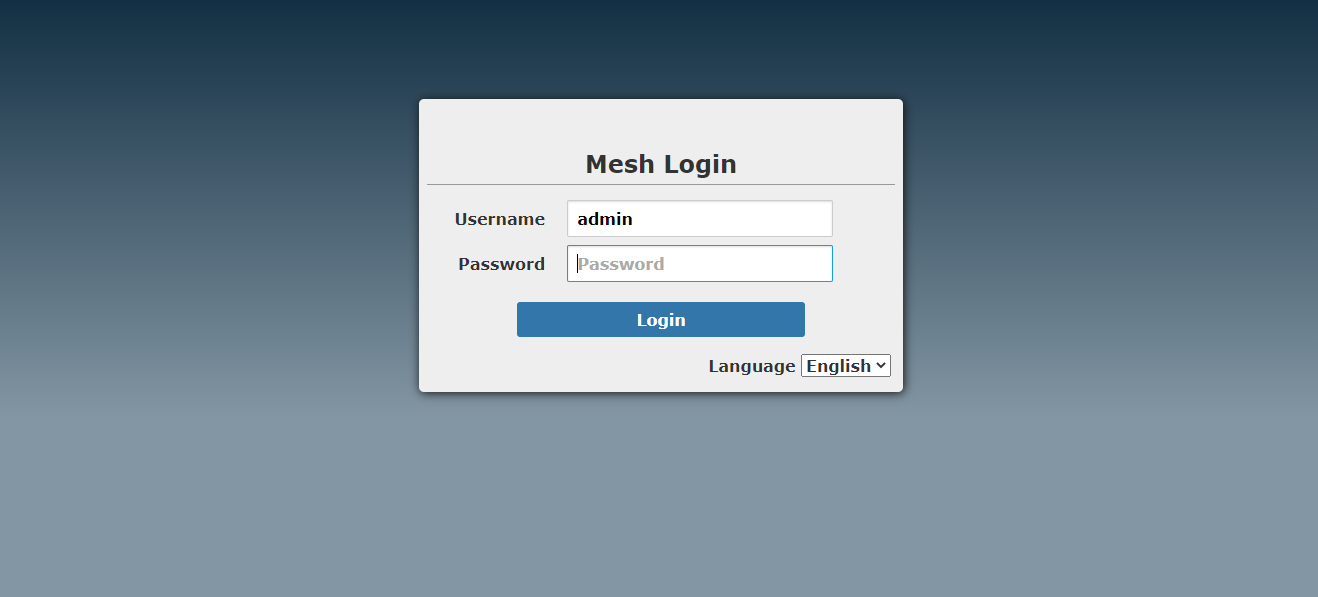
Enter the IP address of the module in the browser, and the default username and password are both admin. It takes about 20s for the module to connect to the network from power-on. The recommended browser is Chrome.
After entering, it defaults to simple mode, click expert mode to unlock more settings, suitable for professional debugging.
Status section:
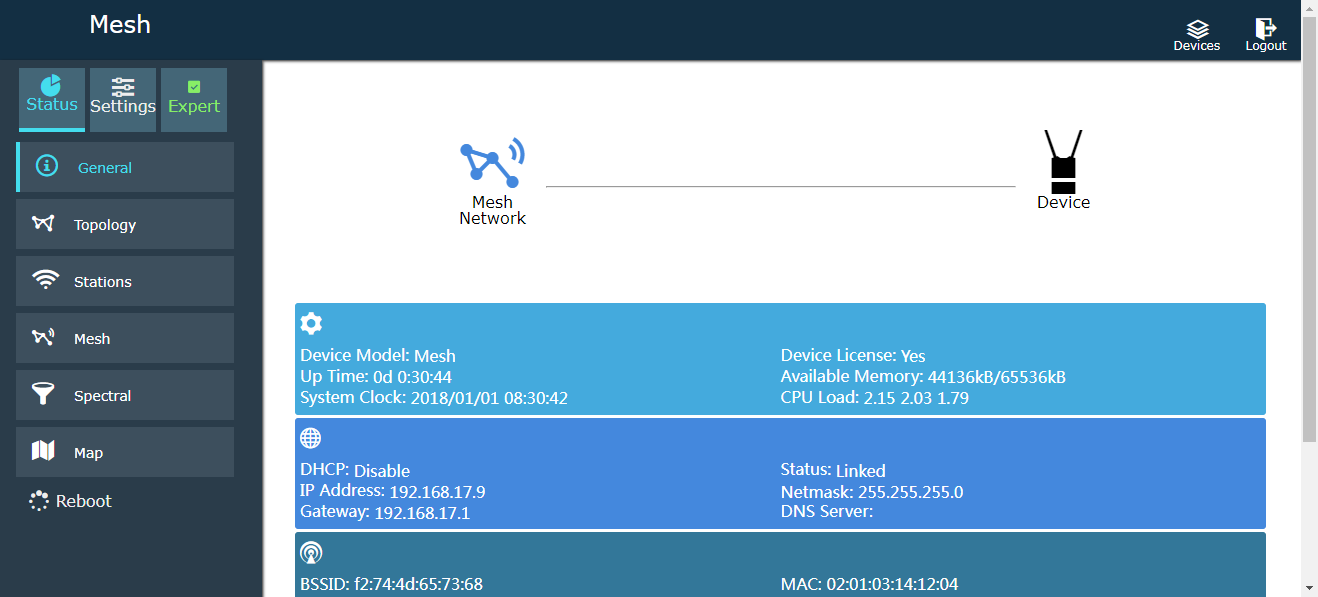
ওভারভিউ:
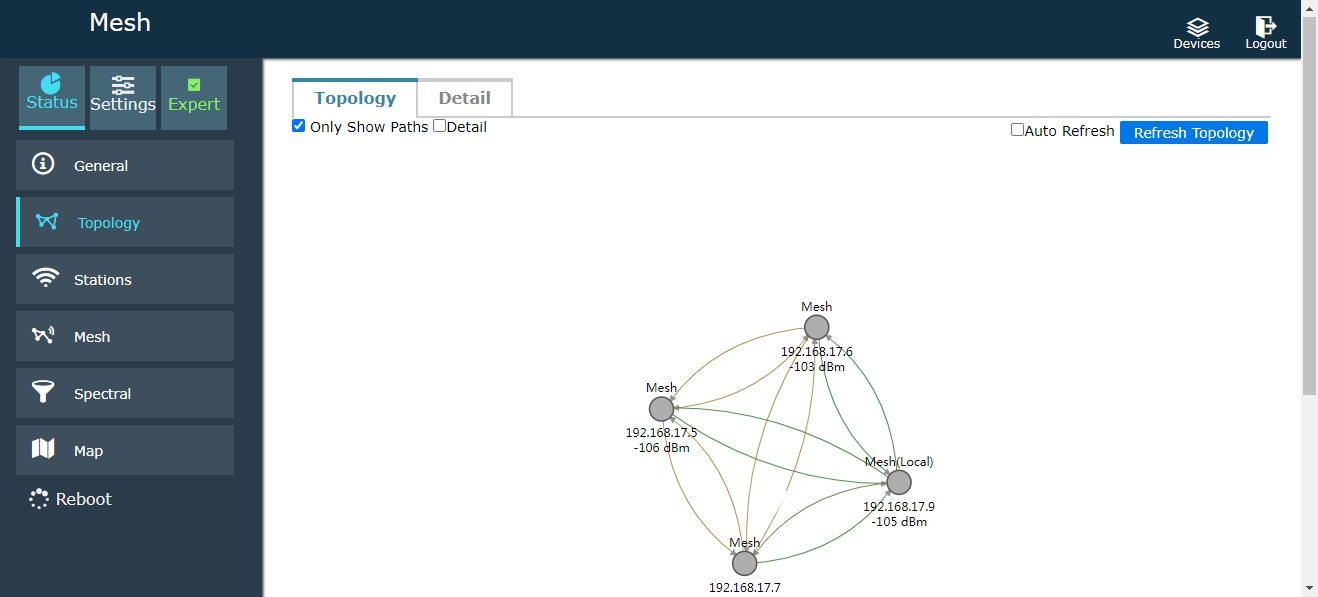
Topology map: (automatic refresh is turned off by default to save bandwidth, you can check automatic refresh)
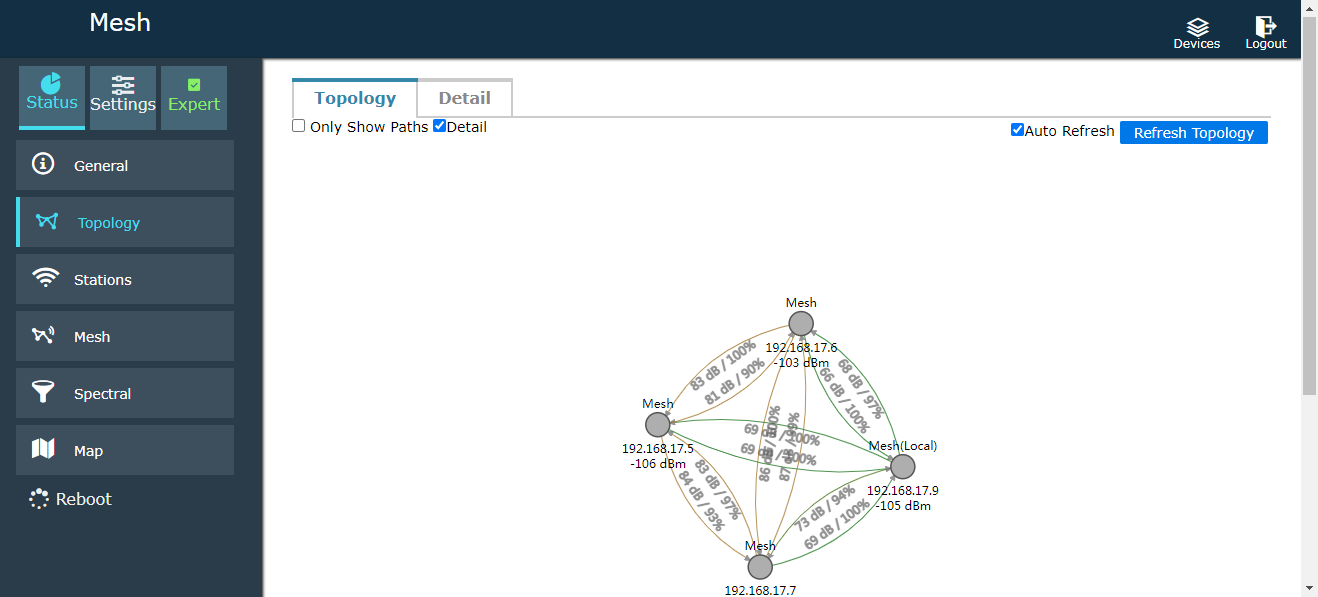
Check only the display path, you can know the direct jump point relationship of each module
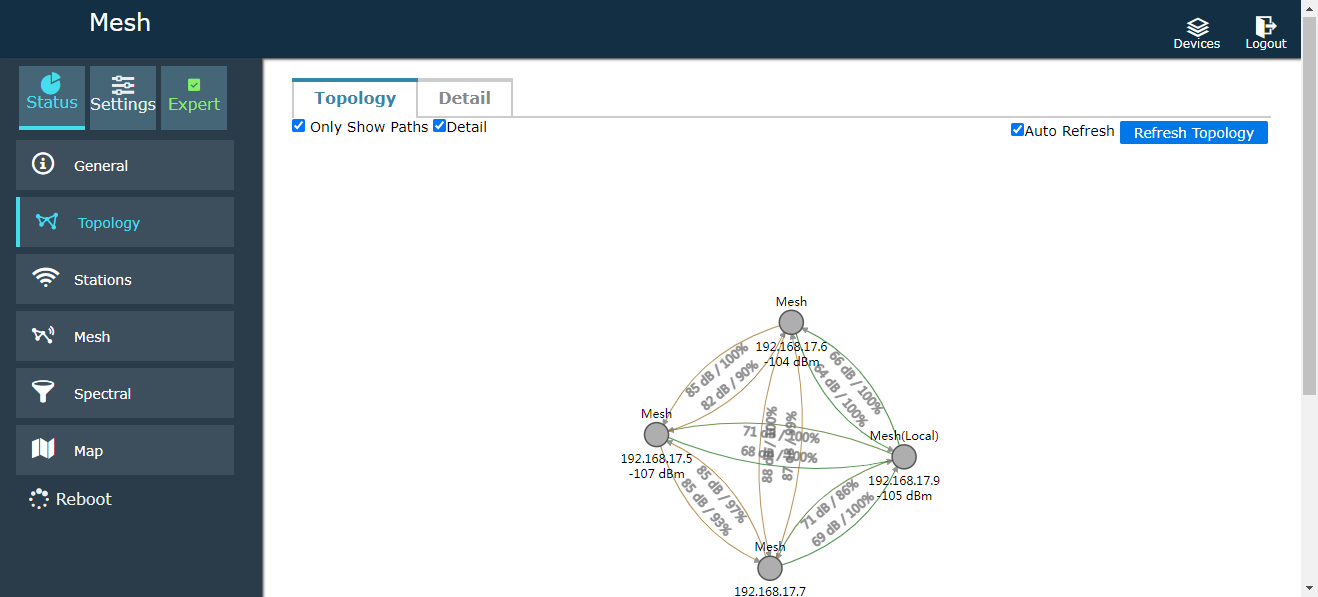
Check the details to judge the data connection status of each module. These are displayed dynamically in real time
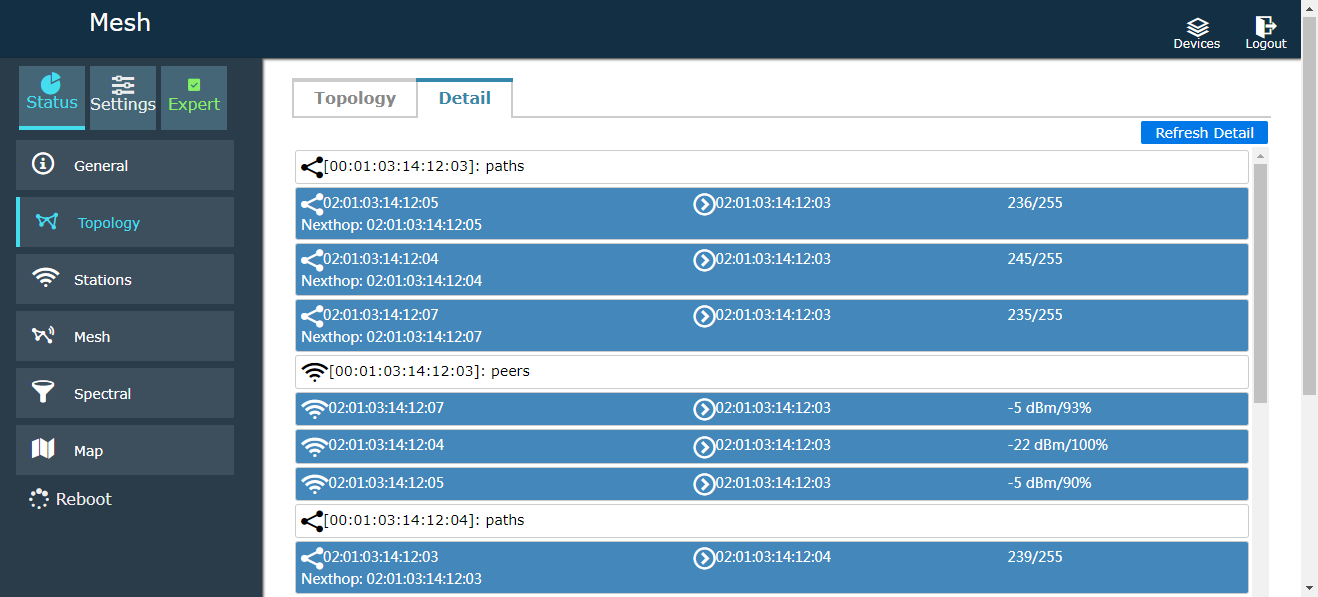
Click Details: You can know the specific situation of each module directly:
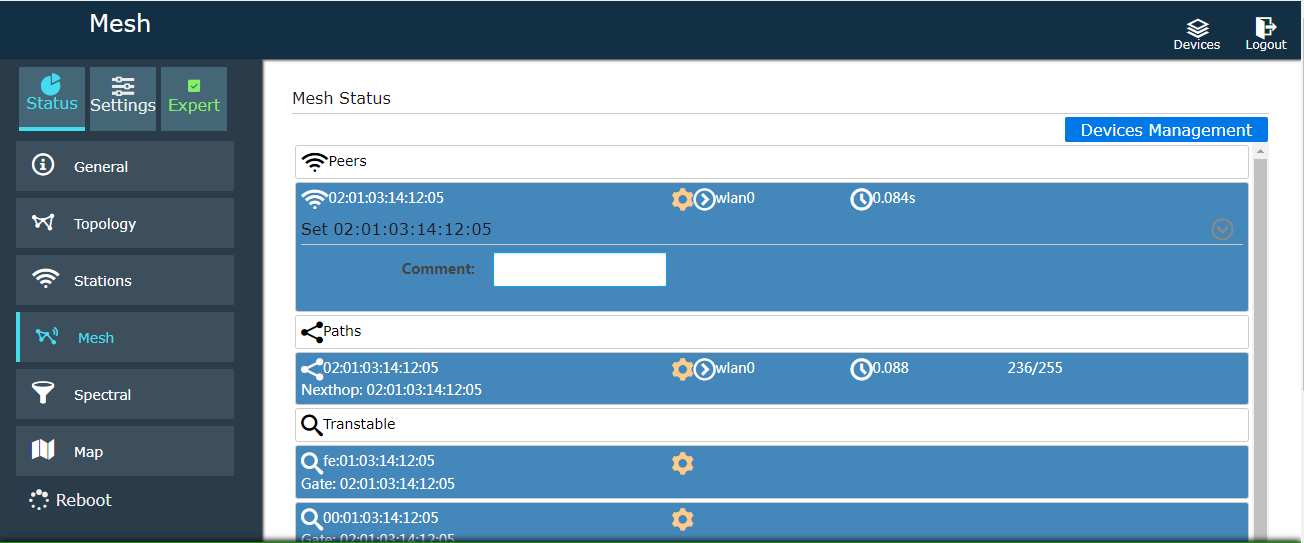
Terminal state:

Ad hoc network: You can remark the name, of course, it can also be operated in the terminal state.
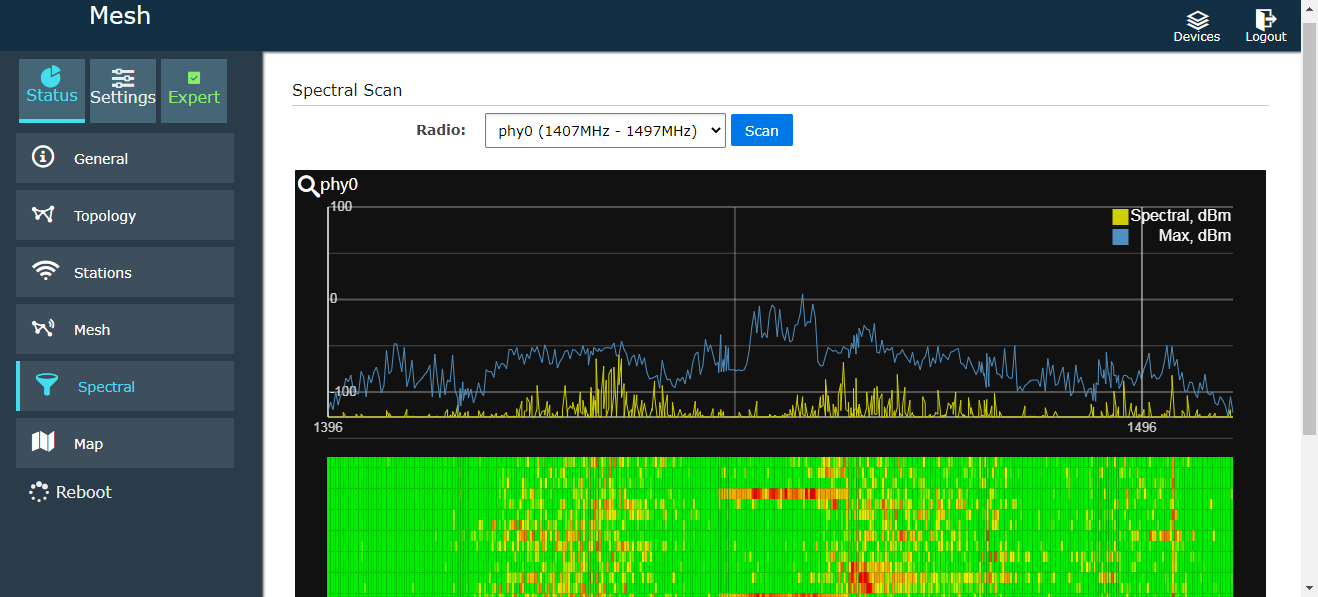
Spectrum scanning: Check the interference of each frequency band. অবশ্যই, the frequency bands of different modules are purchased, and the scanning frequency bands are different.
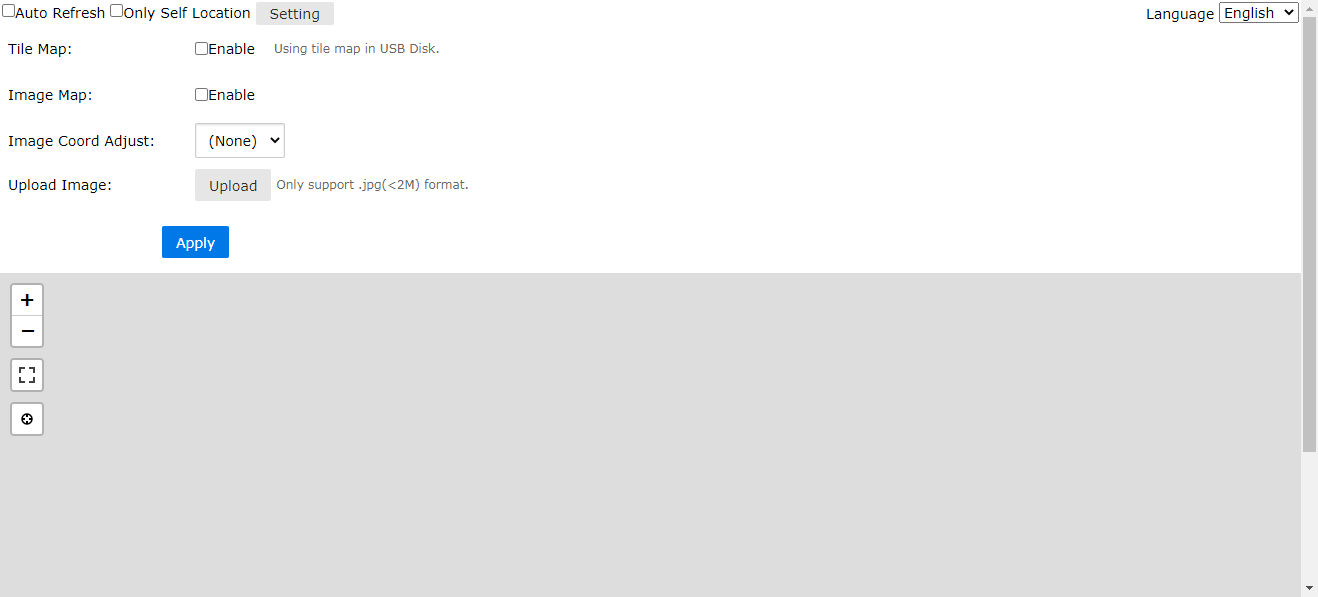
Map: (অবশ্যই, to know the location information of each terminal, GNSS modules such as GPS or Beidou need to be installed)
Support tile maps, image maps, network maps, ইত্যাদি.
Configuration section
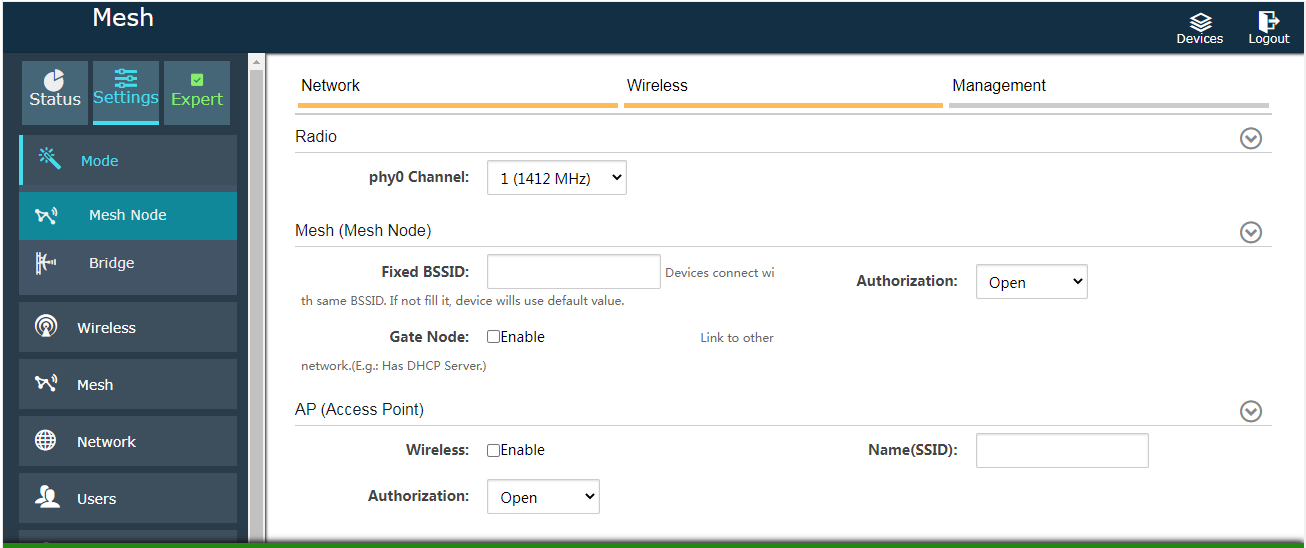
মোড: 1. MESH node or bridge configuration
2. Wireless configuration:
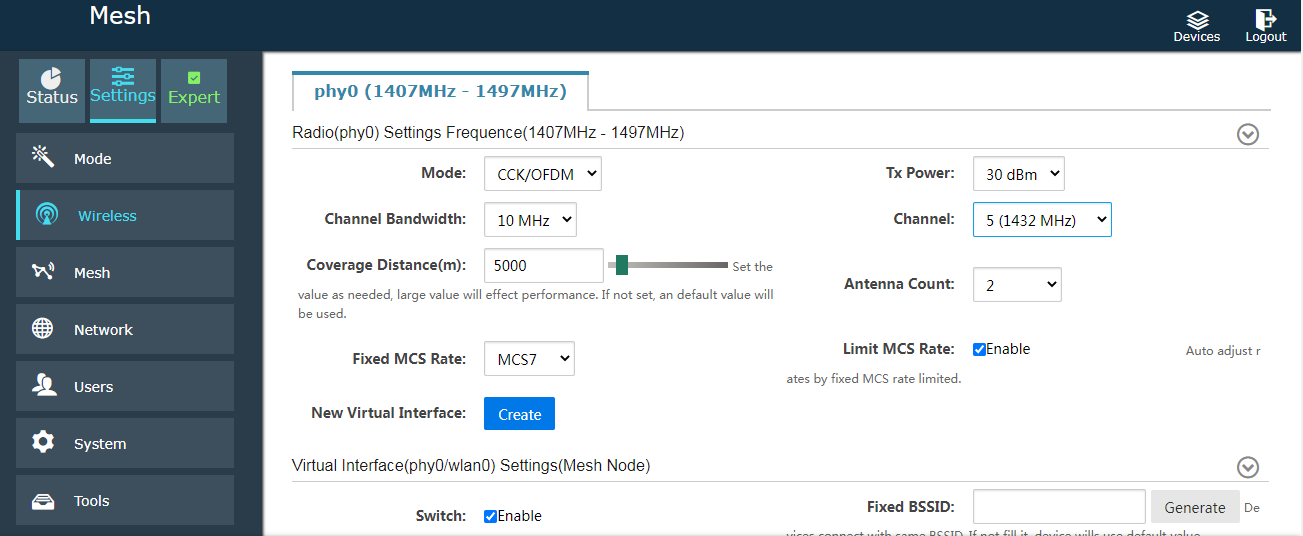
2.1 Transmission power configuration, the power of different products purchased is different.
Channel bandwidth: 5M 10M 20M 40M
চ্যানেল: Different channels are used to purchase different products
The coverage distance (মিটার) needs to be filled in according to the actual situation. If it is set to 3000 মিটার, it is impossible to actually run to 5000 মিটার.
Number of Antennas 2
Fixed MCS rate: Can be set to off for automatic selection. If you want stable transmission, it is recommended to set the manual, পরিসীমা (MCS0 to MCS15)
ব্যান্ডউইথ, সামঁজস্যবিধান, হার
Limit MCS rate: It is recommended to enable it. After enabling it, if the fixed rate is MCS4, the software will automatically select the best modulation method from MCS0 to MCS4 during the test.
| 5এম | 10এম | 20এম | 40এম | ||
| MCS0 | BPSK 1/2 | 1.7এম | 3.3মি | 6.5এম | 13.5এম |
| MCS1 | QPSK 1/2 | 3.2মি | 6.5এম | 13মি | 27মি |
| MCS2 | QPSK 3/4 | 4.8মি | 9.8মি | 19.5এম | 40.5এম |
| MCS3 | 16QAM 1/2 | 6.5এম | 13মি | 26এম | 54এম |
| MCS4 | 16QAM 3/4 | 9.7এম | 19.5এম | 39এম | 81এম |
| MCS5 | 64QAM 2/3 | 13মি | 26এম | 52মি | 108এম |
| MCS6 | 64QAM 3/4 | 14.5এম | 29এম | 58.5এম | 121এম |
| MCS7 | 64QAM 5/6 | 16এম | 32.5এম | 65মি | 135এম |
| MCS8 | BPSK 1/2 | 3.2মি | 6.5এম | 13মি | 27মি |
| MCS9 | QPSK 1/2 | 6.5এম | 13মি | 26এম | 54এম |
| MCS10 | QPSK 3/4 | 9.7এম | 19.5এম | 39এম | 81এম |
| MCS11 | 16QAM 1/2 | 13মি | 26এম | 52মি | 108এম |
| MCS12 | 16QAM 3/4 | 19.5এম | 39এম | 78এম | 162এম |
| MCS13 | 64QAM 2/3 | 26এম | 52মি | 104এম | 216এম |
| MCS14 | 64QAM 3/4 | 29এম | 58.5এম | 117এম | 243এম |
| MCS15 | 64QAM 5/6 | 32.5এম | 65মি | 130এম | 270এম |
From MCS0 to MCS7, two wireless ports send the same data in order to improve stability during the movement.
From MCS8 to MCS15, the two wireless ports send different data, which can make the rate X2
If it is in a mobile state, it is recommended to use BPSK or QPSK to transmit data. 16QAM and 64QAM are suitable for use with fixed transmission.
If MCS8 to MCS15 is used, it is recommended that the antennas of the two ports be 90 degrees from each other, উদাহরণস্বরূপ, one is vertical and the other is horizontal.
If drones are used, MCS0 to MCS2 is recommended.
The greater the bandwidth, the lower the sensitivity. The same goes for modulation.
above rate unit bps
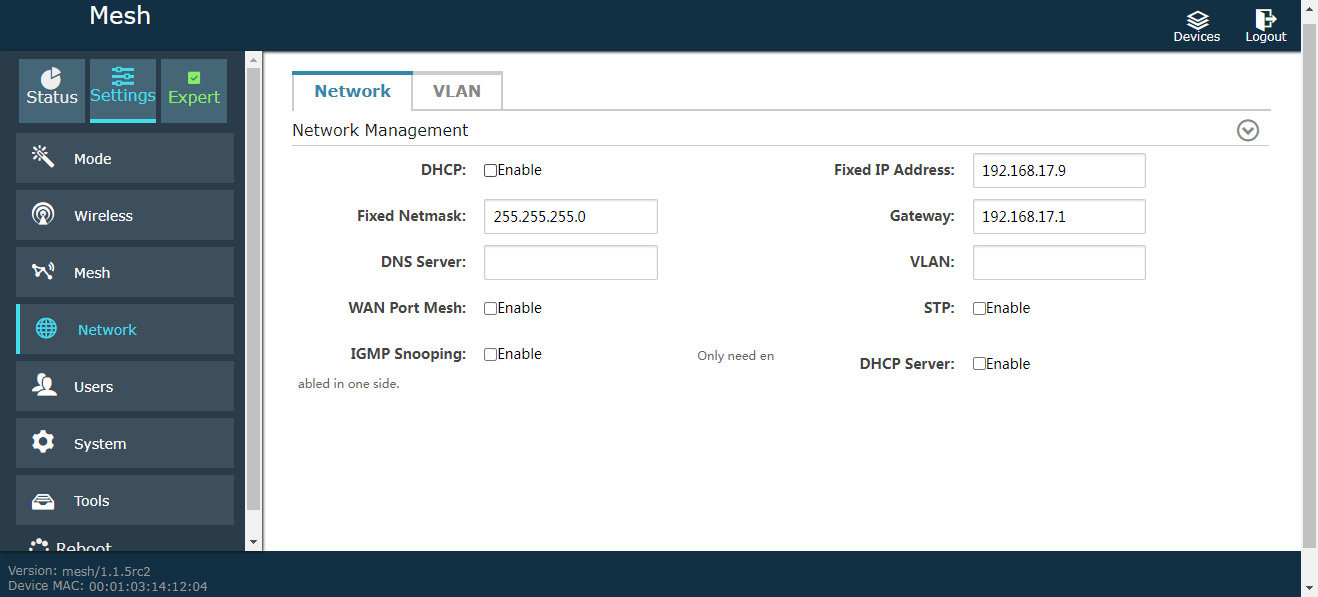
3. নেটওয়ার্ক:
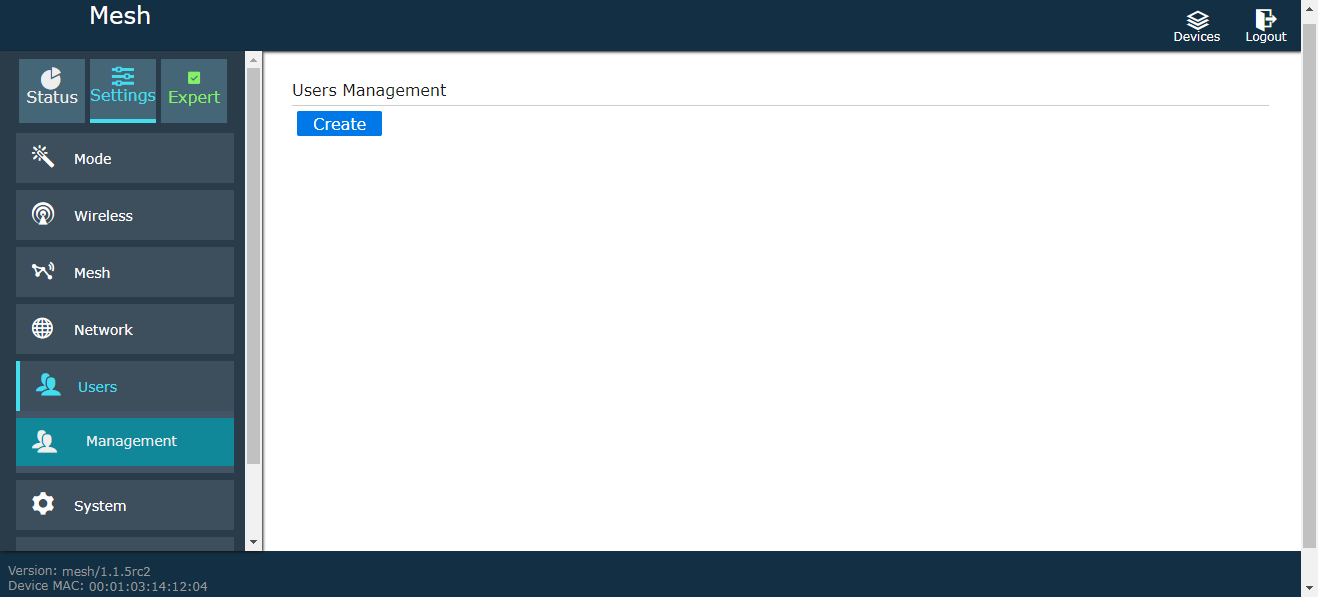
4. User management:
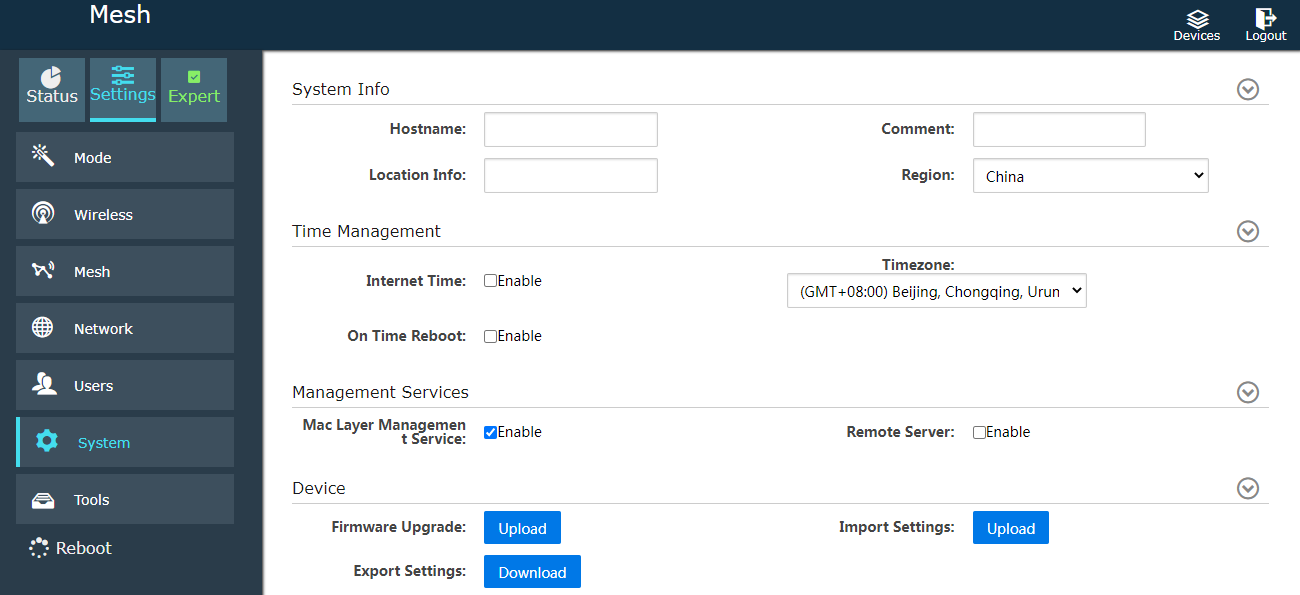
5. System
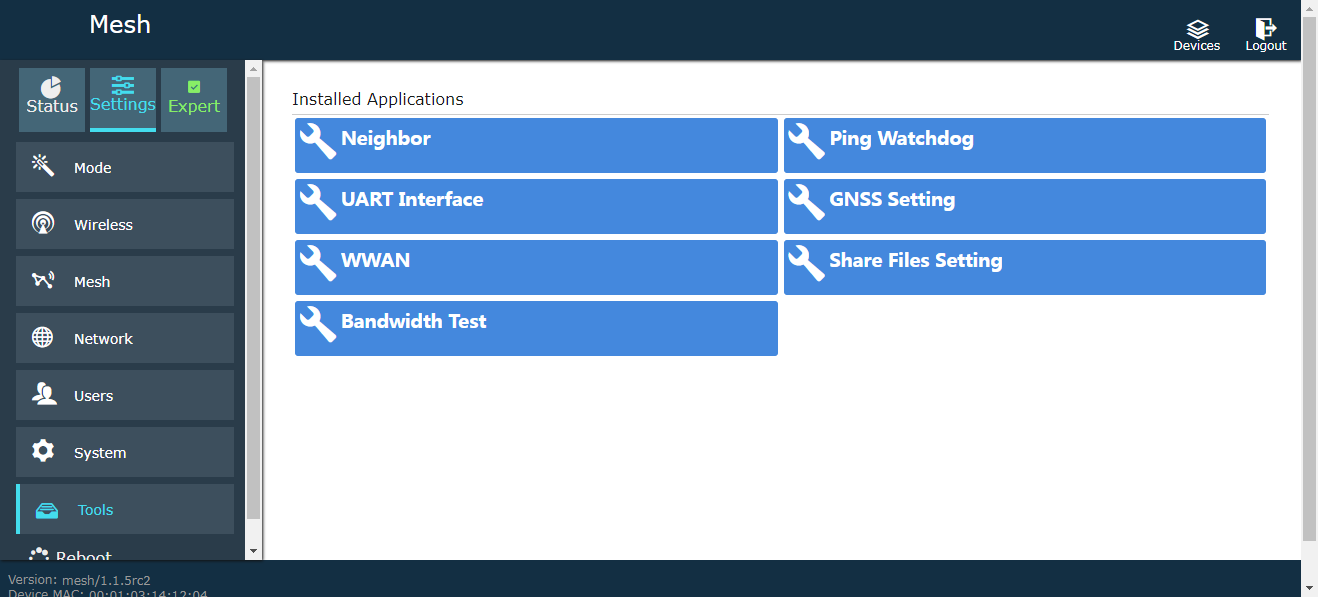
6. Tools Configure serial port, GPS/Beidou/GNSS, 4G/5G access, and other parameters
6.1 Multi-device management, in the upper right corner, you can log in and manage users remotely, and it is also a real-time dynamic interface display or map display.
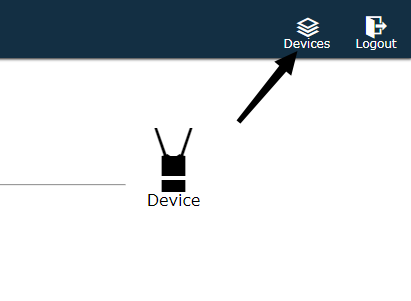
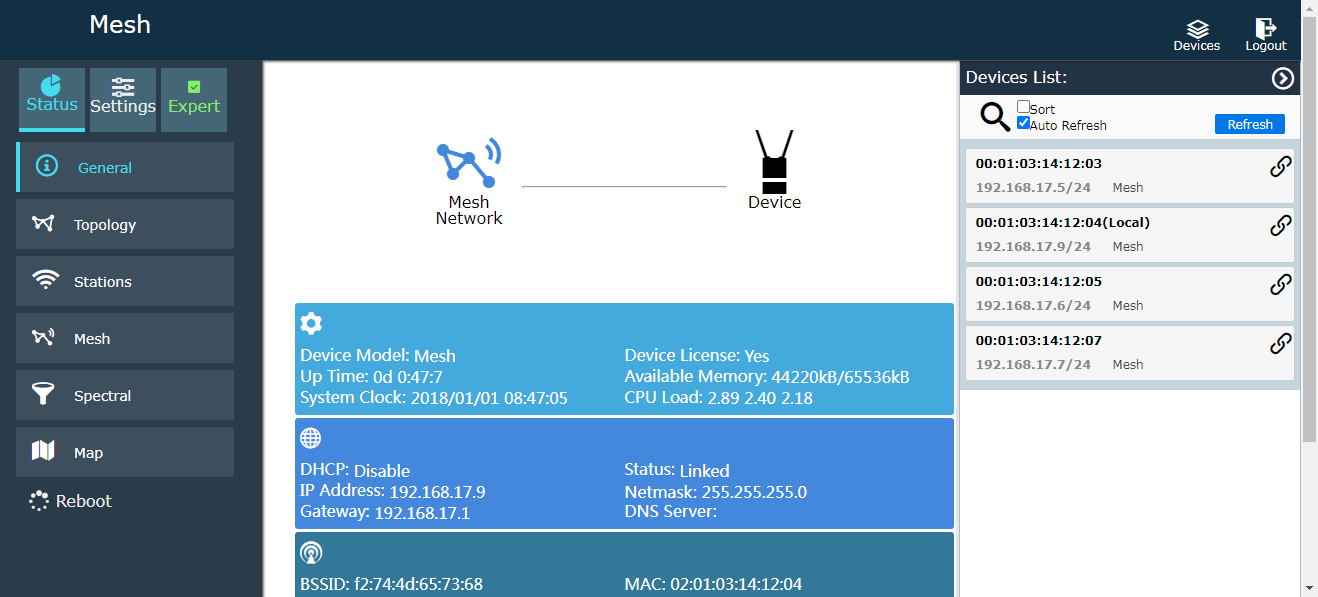
6.2 Serial port software settings:
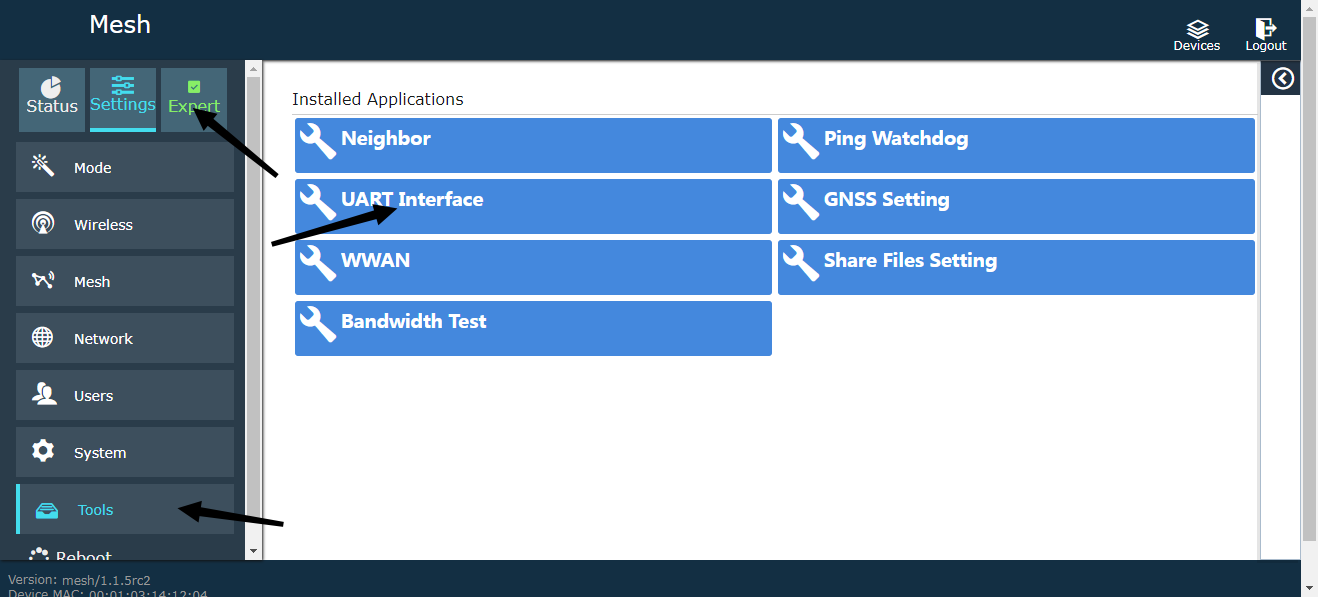
Select Expert Mode, Tools, and UART Interface.
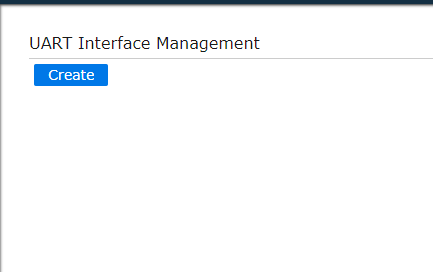
choose new
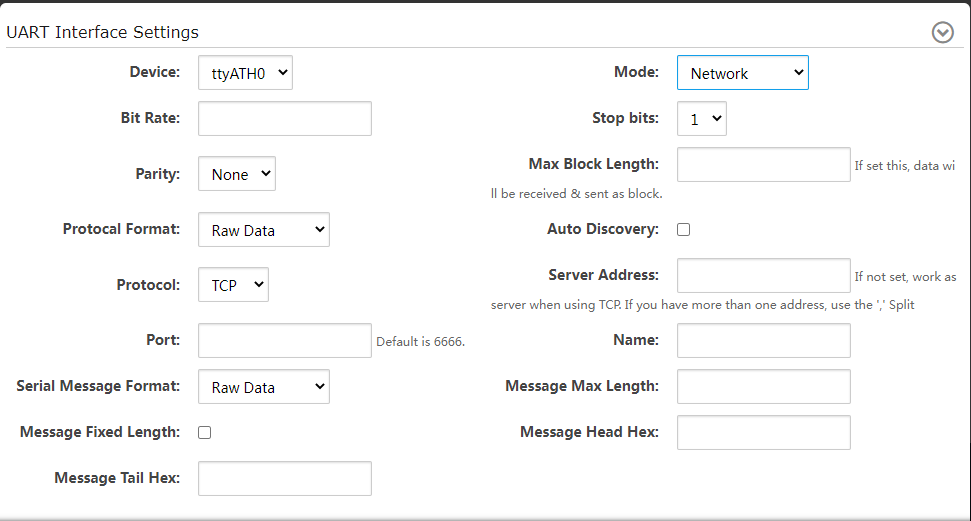
মনোযোগ, if you use the serial port to transmit serial data, you have to choose ttyS0 (COM1 of hardware) and ttyUSB0 (COM2 of hardware), ttyATH0 is invalid, মোড: network
বড হার 115200, একটু থামুন 1, parity none.
নাম 1, protocol UDP, IP address, 192.168.55.100 (the IP address here is the IP address of the other device, উদাহরণস্বরূপ, input the IP of the computer for the computer, and input the IP of the device for the device).
Port 20005, 20003. Choose a port number
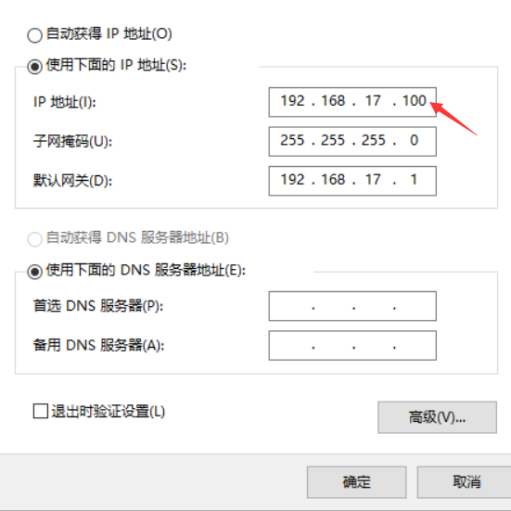
The computer’s IP is set to a fixed 192.168.17.100
Short the TX RX pins of COM1 and COM2 of the device.
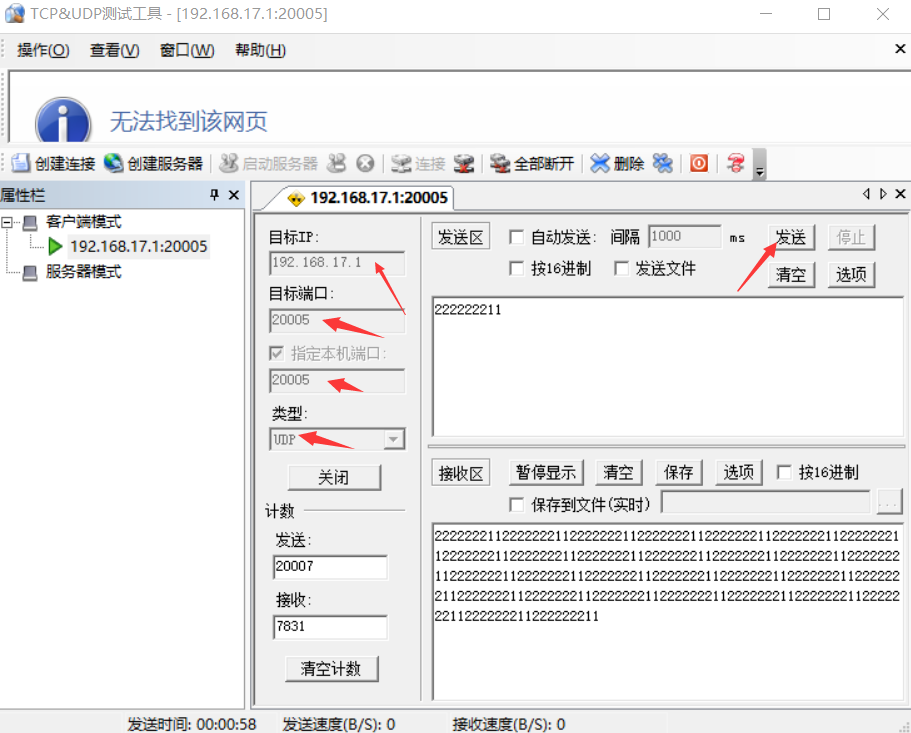
Use the TCP UDP test tool to fill in the IP and port of the device.
Send it to loop back the data.
প্রশ্ন জিজ্ঞাসা কর
আপনার বার্তা প্রেরণ করা হয়েছে