






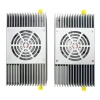
Drone swarm mesh network 100km 60Mbps radio link 4-nodes 2X frequency hopping 2X 5-watt power amplifier
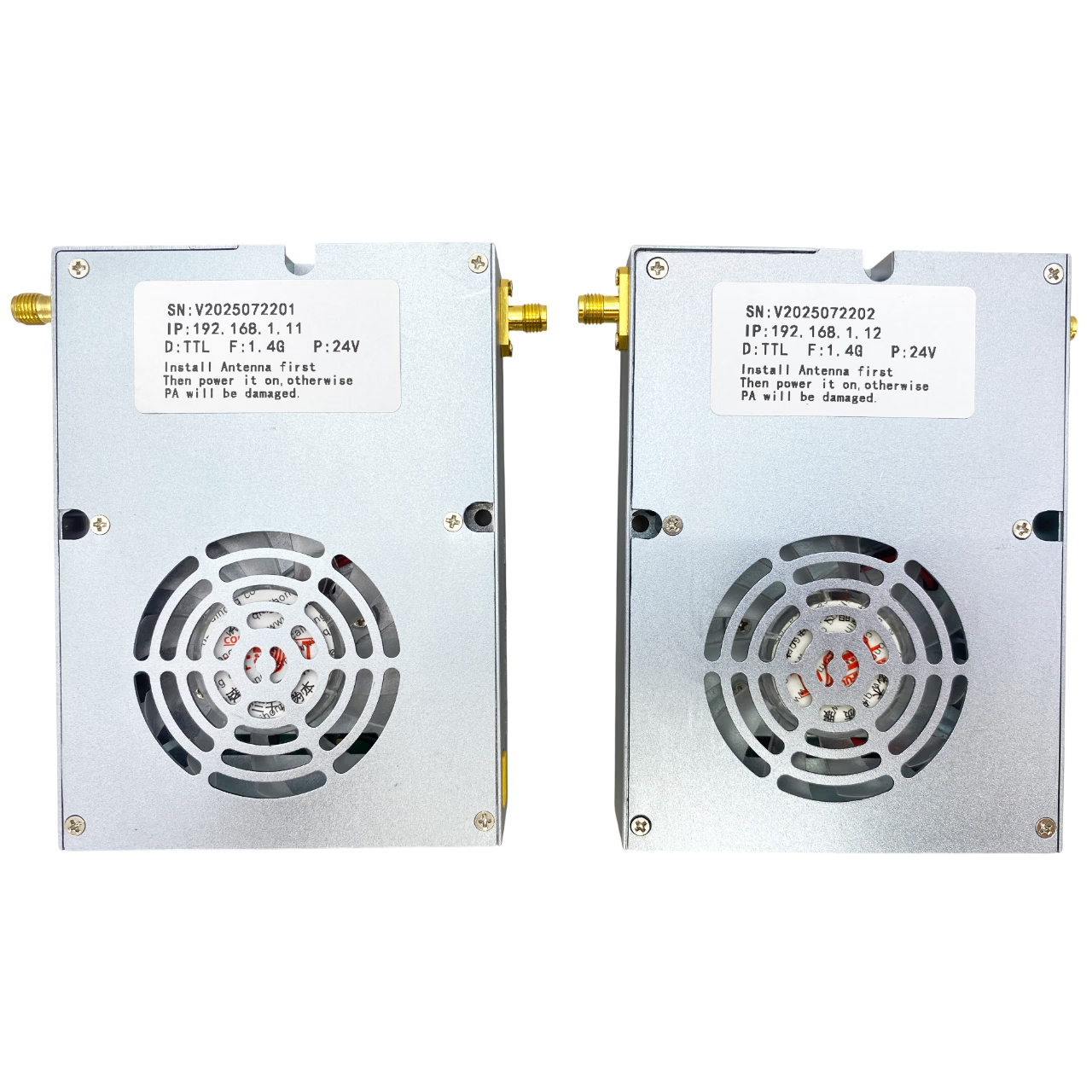
Table of Contents
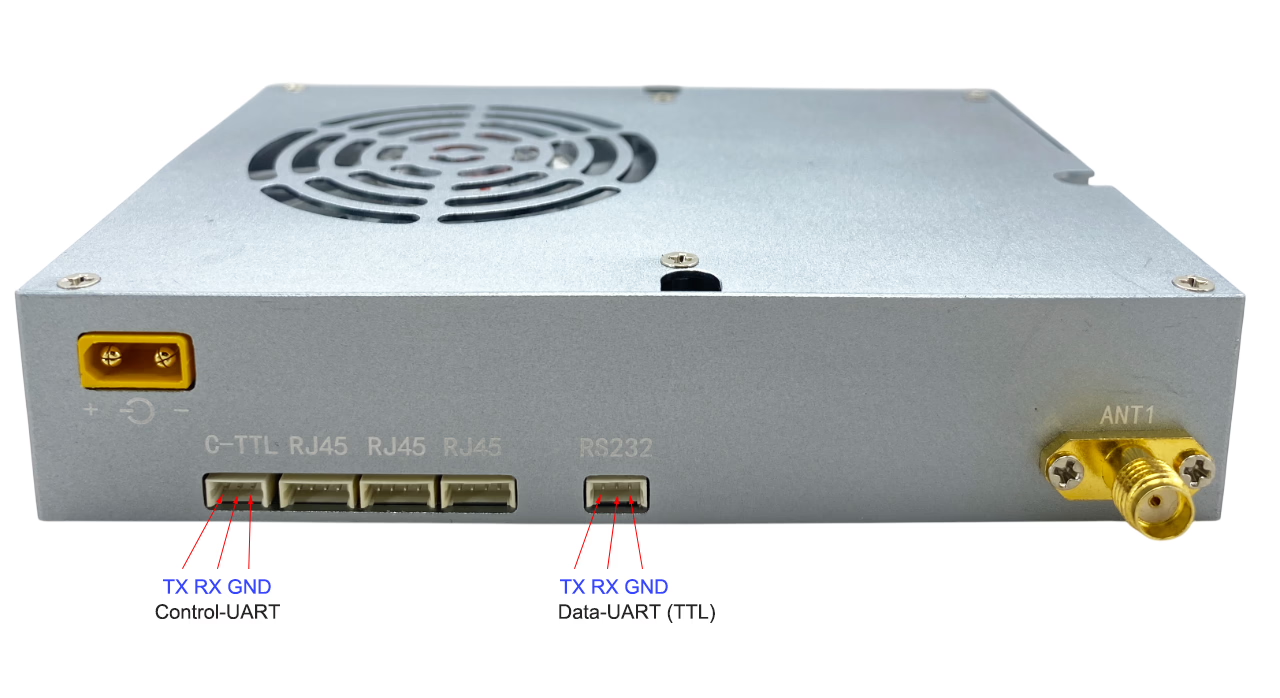
RJ45 and Data Connector
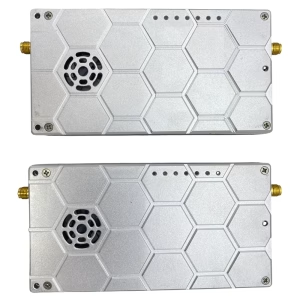
LED Indicator
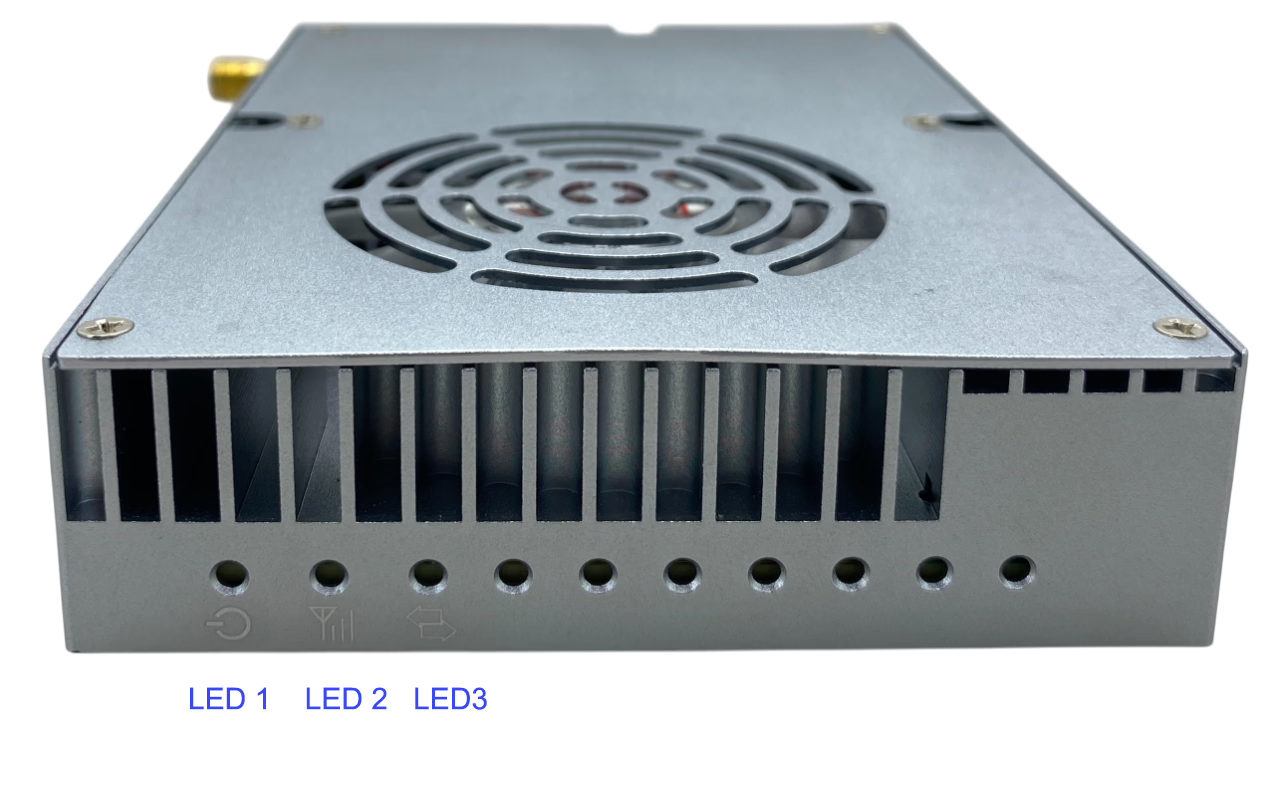
LED1, red light on normal powered;
LED2, blue light LED;
LED3, green light LED; Working status of LED2 and LED3 are listed as below table:
| 中心節點 | Blue LED2 continues to light during its normal working;
Green LED3 won’t light during its’s normal working; |
| 接取節點 | Green LED3 continues to light when the access node is connecting with the central node. |
| The blue LED2 shows the wireless link status:
LED2 blinks in 30s interval, the wireless link is strong; LED2 blinks in 6s interval, the wireless link is middle; LED2 blinks in 1s interval, the wireless link is weak. |
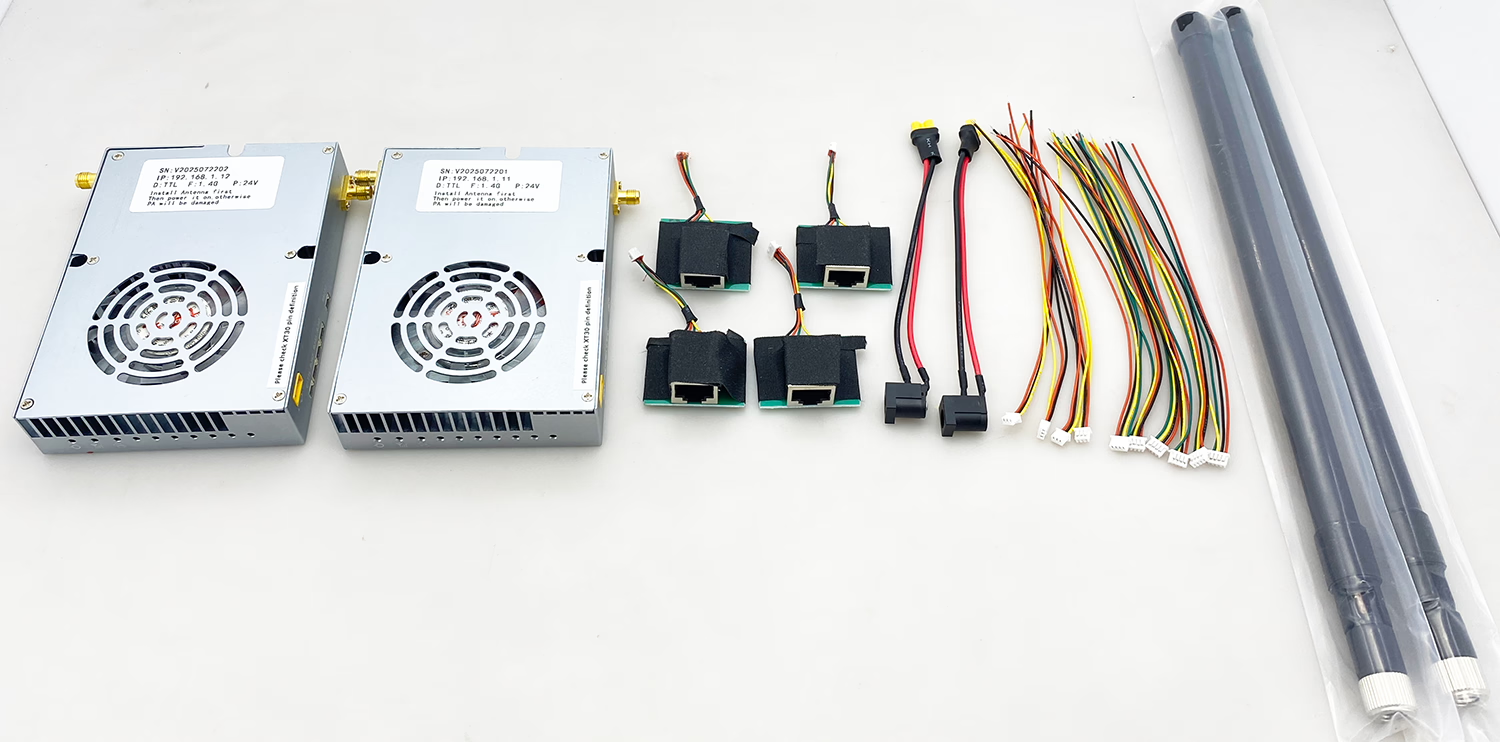
配件
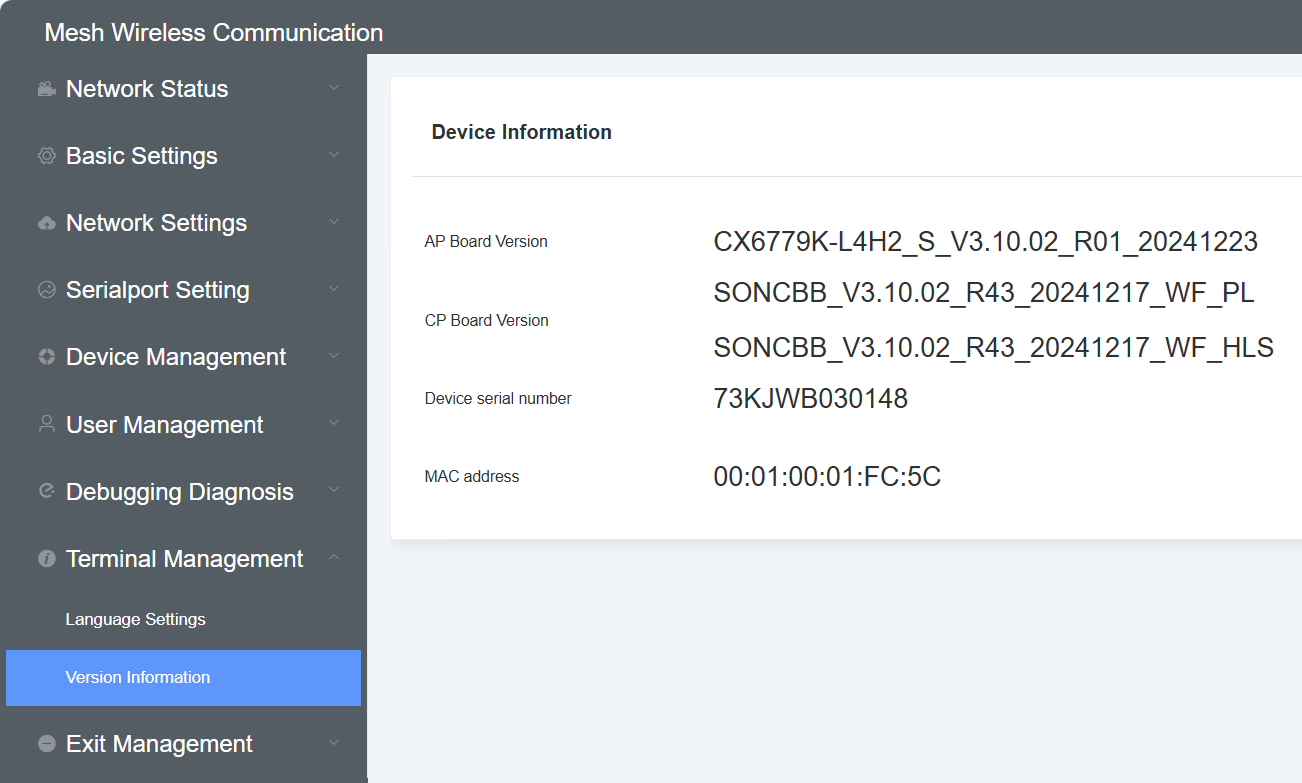
Firmware Version
FAQ
-
Q: What is the core capability of this drone swarm communication system?
A: 這 drone swarm mesh network provides resilient, long-range communication links up to 100km between max 4 節點 (other models also support 16 節點, 32 nodes and max 64 節點), enabling coordinated operations. -
Q: What data rate can I achieve between drones in this swarm?
A: The system delivers a robust 60Mbps radio link, sufficient for real-time HD video, 感測器數據, and command streams within the swarm. -
Q: How far apart can drones operate while maintaining network connectivity?
A: 這 網狀網路 is engineered for reliable communication over distances up to 100km between individual nodes under optimal conditions. -
Q: How many drones form the basic functional unit of this mesh?
A: The network seamlessly scales, but a core 4-節點 configuration demonstrates the full 100公里範圍 and 60Mbps 能力. -
Q: What technology protects the drone swarm communications from jamming?
A: It employs 2X frequency hopping (600Mhz 566~678Mhz or 1.4Ghz 1420-1530Mhz), rapidly switching channels to avoid interference and ensure signal integrity for the 60Mbps radio link. -
Q: How does the system enhance signal strength for long-range drone operations?
A: Each node integrates 2X 5-watt power amplifiers, significantly boosting transmit power to achieve the 100公里範圍. -
Q: Can this mesh network maintain the 100km range in challenging environments?
A: 的組合 2X 5-watt power amplifiers for 2T2R and advanced antenna design is optimized for reliable 100公里範圍 表現, though terrain and weather can affect real-world results. -
Q: Is the 60Mbps data rate sustained or peak?
A: 這 60Mbps radio link represents a sustainable data rate achievable under good conditions LOS line of sight within the 100公里範圍 為 網狀網路. (The actual test results show that the data rate for 100 km is about 10 到 25 Mbps.) -
Q: How does frequency hopping benefit my drone swarm mission?
A: 2X frequency hopping provides robust anti-jamming (AJ) and low probability of intercept (LPI) 安全, critical for sensitive operations over the 100公里範圍. -
Q: Why are there two 5-watt amplifiers per node?
A: 2X 5-watt power amplifiers provide redundancy and increased link margin, ensuring the 60Mbps radio link stability over the full 100公里範圍 and enhancing overall 網狀網路 可靠性. Two 5W amplifiers can be configured to 600Mhz and 1.4Ghz, making it possible to achieve frequency hopping and avoid interference. -
Q: What type of applications require a 100km drone swarm mesh network?
A: Applications include large-area ISR (Intelligence, 監視, 偵察), 邊境巡邏, disaster response mapping, and long-range logistics, enabled by the 100公里範圍 and 60Mbps 關聯. -
Q: Can the network handle more than 4 無人機?
A: 絕對地. 這 網狀網路 architecture inherently scales. 儘管 4-節點 demonstrate the max range spec, adding more nodes (16, 32 或者 64 節點) extends coverage and redundancy. -
Q: How does the mesh network improve drone swarm resilience?
A: 如果一個節點發生故障, 這 網狀網路 dynamically reroutes data via other 4-節點 (或更多), maintaining the 60Mbps radio link and overall swarm connectivity. -
Q: What is the real-world operational range I can expect?
A: While designed for 100公里範圍, actual distance depends on factors like altitude, 地形, and weather. 這 2X 5-watt power amplifiers maximize achievable range. If the usage scenario has complex electromagnetic interference, you can configure 2X10 watts or 2X20 watts to improve signal strength and anti-interference strength. -
Q: Is the 60Mbps speed shared or per link?
A: 這 60Mbps radio link typically refers to the capacity achievable between all nodes at one mesh link. Aggregate network bandwidth scales with the number of nodes in the 網狀網路. Adding more nodes reduces the available bandwidth across the entire network. Network bandwidth per node decreases as more nodes are added. -
Q: How does frequency hopping work with the 5-watt amplifiers?
A: 這 2X frequency hopping system coordinates channel changes across the 網狀網路. The transceiver module of this drone can be configured with 600MHz and 1.4GHz bands. If you want to maintain a high data rate, then configure two 1.4GHz amplifiers, still has 60Mbps. If configured with 600MHz and 1.4GHz, the frequency hopping range is bigger, 566-678兆赫茲 (110兆赫茲) and 1420-1530Mhz (110兆赫茲), but the transmission rate is half, with a peak of only 30Mbps. How to configure two 5-watt amplifiers depends on whether your project requires a high transmission rate or more frequency hopping range. -
Q: What is the power consumption like with the dual amplifiers?
A: 儘管 2X 5-watt power amplifiers consume significant power. 電源: DC24~28V. When configured as 1D4U, the average power consumption of access nodes is less than 45W, and the average power consumption of central nodes is less than 25W. -
Q: Can this system transmit video feeds from the drone swarm?
A: Yes, 這 60Mbps radio link within the 網狀網路 readily supports multiple HD video streams across the 100km operational area. (According to our experience, a 1080P IP camera network video streaming requires about 2-4 Mbps.) -
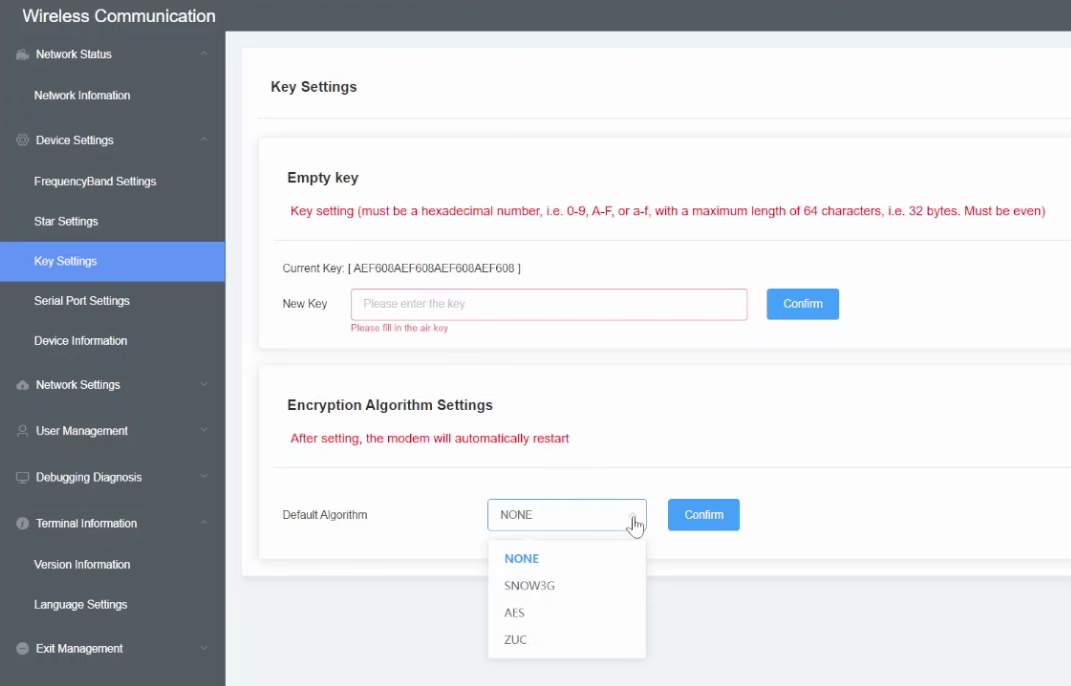
Q: How secure are communications within this drone mesh?
A: Security is very important. Our drone radio transmitter supports SNOW3G, AES and ZUC encryption algorithms.
Security supports SNOW3G AES ZUC encryption algorithms -
Q: Does weather affect the 100km range or 60Mbps speed?
A: Heavy rain or fog can attenuate signals. 這 2X 5-watt power amplifiers provide extra margin, 但是 傳輸範圍 becomes shorter. -
Q: What frequencies does this drone communication system use?
A: Default 600MHz and 1.4GHz frequency bands are optional. The 600MHz frequency range is 566-578MHz and the 1.4GHz frequency range is 1420-1530MHz. -
Q: Is this mesh network suitable for military drone swarms?
A: Yes, 這 100公里範圍, 60Mbps 數據, 4-nodes+ scalability, 2X frequency hopping (AJ/LPI), and robust design are ideal for tactical drone swarm deployments. -
Q: How quickly does the frequency hopping occur?
A: 這 跳頻 system operates at a very rapid rate (specifics depend on implementation), making jamming extremely difficult. -
Q: Can I integrate this mesh radio onto different drone platforms?
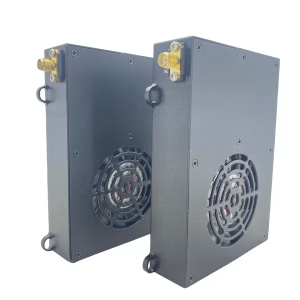
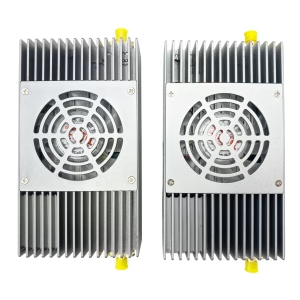
A: 方面: 113.9*83.7*23.3 mm and 250 克. Please consider the size, 重量, 力量 (交換), and antenna placement requirements to meet your drones. -
Q: What is the latency like in this 100km drone network?
A: Latency is typically very low due to efficient mesh protocols, suitable for real-time control and HD video within the 100公里範圍 網狀網路. -
Q: Does the system require a ground control station within 100km?
A: 未必. 這 網狀網路 can extend coverage. A GCS can connect via one node as a relay, potentially operating far beyond the direct 100公里範圍 through the swarm. -
Q: How does adding nodes impact the overall 100km range?
A: Adding max 4-節點 allows the 網狀網路 to cover areas significantly larger than 100km in diameter by relaying signals through intermediate drones. -
Q: What kind of data payloads are supported by the 60Mbps link?
A: 這 60Mbps radio link supports HD/UHD video, 遙測, 感測器數據 (LiDAR, 熱的, ETC。), voice comms, and command/control signals for the drone swarm. -
Q: Is the mesh network self-forming and self-healing?
A: Yes, 這 drone swarm mesh network automatically establishes connections (4-節點 and beyond) and reroutes data if a node fails or moves, maintaining the 60Mbps radio link. -
Q: How do the dual power amplifiers contribute to link reliability?
A: 2X 5-watt power amplifiers offer redundancy; if one fails, the other maintains connectivity, and together they overcome signal fading. -
Q: Can this system operate effectively in urban environments?
A: 這 網狀網路 and 2X frequency hopping help mitigate urban multipath and interference, but dense structures may reduce the effective 100公里範圍 compared to open areas. -
Q: What is the typical bandwidth requirement for a 4-node swarm operation?
A: Aggregate needs vary, 但是 60Mbps radio link capacity between key 4-節點 ensures ample bandwidth for demanding tasks like simultaneous video feeds over 100km. -
Q: How does frequency hopping help with interference from other devices?
A: 2X frequency hopping allows the actual effective 10-25Mbps radio link to automatically avoid crowded or noisy channels, maintaining cleaner communication across the 100公里範圍. -
Q: Is special licensing required for the radio frequencies used?
A: Licensing depends on the specific frequency bands employed by the hardware; consult local regulations. -
Q: Can the mesh network connect to satellite or cellular backhaul?
A: 不, This feature is not supported. -
Q: How does altitude affect the 100km range performance?
A: Higher altitude generally improves Line-of-Sight (LoS), making the 100公里範圍 easier to achieve consistently with the 2X 5-watt power amplifiers. -
Q: What is the expected operational lifespan of the 5-watt amplifiers?
A: 這 2X 5-watt power amplifiers are built for ruggedness, but lifespan depends on usage intensity and thermal management. They are designed for demanding drone swarm 使命. -
Q: Is this drone communication system suitable for commercial inspection?
A: 絕對地. Large infrastructure (管道, power lines, wind farms) inspection over 100km ranges benefits from the 60Mbps 網狀網路 for real-time HD video and data. -
Q: How does the system manage power for the amplifiers during flight?
A: Power management is crucial. 這 2X 5-watt power amplifiers are activated strategically for long-range links within the 100km 網狀網路 to conserve drone battery. -
Q: Can different data types be prioritized on the 60Mbps link?
A: Yes, Quality of Service (服務品質) features typically allow prioritization (例如, command signals over video) 於 60Mbps radio link within the 網狀網路. -
Q: What is the advantage of a mesh over point-to-point for drones?
A: A 網狀網路 provides inherent redundancy, extends coverage beyond 100km, and allows flexible routing, crucial for robust drone swarm operations compared to simple links. -
Q: How weatherproof is the radio hardware for the drone swarm?
A: In order to reduce its own weight and improve the cooling and heat dissipation effect, the outer shell uses heat dissipation holes and cooling fans, so it is not waterproof.. -
Q: Does the frequency hopping require synchronization between drones?
A: Yes, precise synchronization is essential for the 2X frequency hopping pattern to work correctly across all 4-節點 (或更多) 在 網狀網路. -
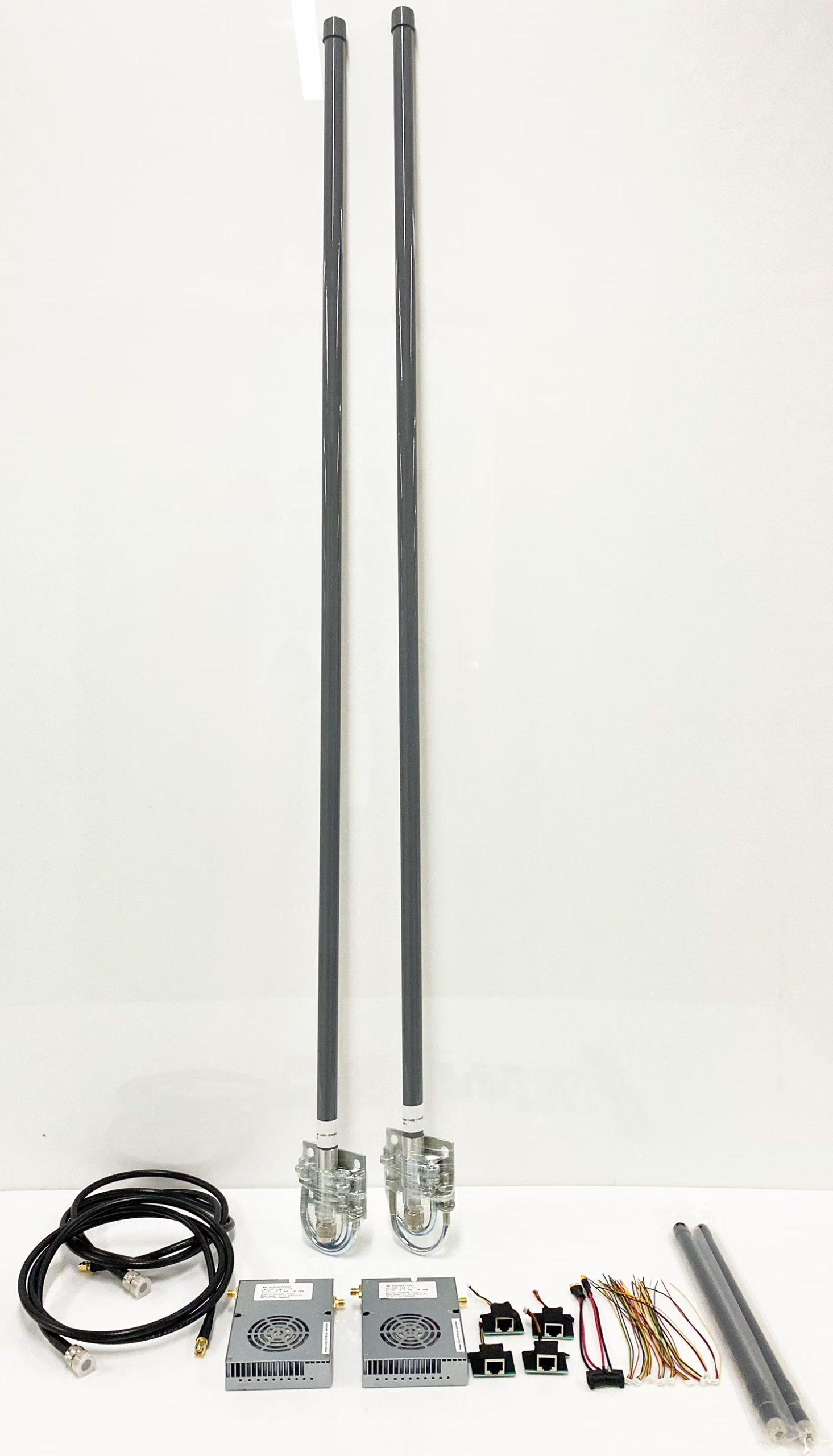
Q: What kind of antennas are used to achieve 100km on drones?
A: It is recommended to use a 2x29cm fiberglass omnidirectional antenna for the air drone unit.
It is recommended to use a 2x120cm 玻璃鋼全向天線 for the ground receiver unit. Or replace it with a high-gain directional antenna or an automatic antenna tracker. -
Q: Can this system support real-time drone swarm coordination?
A: Yes, the low latency and 60Mbps capacity of the 網狀網路 enable complex, real-time coordination algorithms for drone swarm behaviors over the 100km area. -
Q: How is the 60Mbps data rate measured?
A: Connect two of the nodes to a computer, run the iperf server and the iperf client at the same time, and view the actual sent and received data.. -
Q: Is there a mobile app for monitoring the mesh network status?
A: 通常, a ground control station (地面站) software provides comprehensive monitoring of all 4-nodes+, 連結品質 (60Mbps), 100公里範圍 connections, and network health. -
Q: What makes this system different from standard drone telemetry?
A: Standard telemetry offers limited range and data rate. This system provides a high-capacity (60Mbps), 遠距離 (100km), 安全的 (2X frequency hopping), resilient 網狀網路 for true swarming. -
Q: Can the network be used for search and rescue (SAR) 營運?
A: Perfectly. 這 100公里範圍 網狀網路 allows SAR drone swarms to cover vast areas, relaying HD video (60Mbps) and location data back to command in real-time. -
Q: Where can I get technical specifications or a datasheet for this drone swarm mesh?
A: Please contact us directly for the full technical datasheet detailing the 100公里範圍, 60Mbps radio link, 4-節點 scalability, 2X frequency hopping, and 2X 5-watt power amplifiers.





iVcan.com_buyer –
This drone swarm mesh network is an absolute revelation in the field. Needing reliable, high-bandwidth communication over vast distances was our constant headache – until now. Operating seamlessly across 100km with a solid 60Mbps radio link between our 4-node swarm feels almost miraculous. The double-layered frequency hopping is genius; it effortlessly slices through heavy interference and jamming that crippled our old systems, guaranteeing the link stays up when it matters most. Backed by dual 5-watt power amplifiers, the signal strength is consistently robust, ensuring crystal-clear data, video feeds, and command control without frustrating dropouts or lag, even in challenging terrain. The confidence this system gives our team is priceless. We can finally deploy our swarm freely, focus on the mission objectives – mapping, 檢查, or surveillance – and trust the network implicitly. It’s robust, incredibly long-range, fast enough for real-time HD video, and shrugs off electronic noise. A true game-changer for professional drone operations demanding resilience and performance. 強烈推薦!