






eu vou comprar COFDM-907Vídeo T – auditivo, Transmissor – Receptor HD 1080P. Vou usá-lo para FPV nos carros RC. Mas,
1.. A câmera 1080p HD PTZ funcionará?
2.. Você pode definir a frequência de operação entre 890 – 900MHz?
3.. Você pode fazer a largura de banda de trabalho acima de 6 MHz?
4.. Quão longe (km.) ele vai entre os prédios da cidade?
5.. O microfone está conectado?
Some clients want to use our digital tv receiver as COFDM Wireless Video Receiver, normal DVB-T frequency is from 170 para 860Mhz. In order to avoid interference from local tv channels, they hope the frequency to work at 890Mhz and 900Mhz. Neste vídeo, we can show you that we modify two special frequencies at 6Mhz bandwidth. it is working well and gets the signal from the wireless video transmitter COFDM-907T. We also can modify up to 930Mhz at the transmitter and receiver.
obrigado
-
 Melhor módulo transmissor de vídeo fpv, 170-860mhz, transmissor de áudio e vídeo rf sem fio para câmera fpv 3w pa 50km
 -
 IP malha de 100 Mbps transceptor de dados sem fio 2x5w PA 16 saltar
 -
 Link Drone para transmissão sem fio de telemetria de rádio de dados de vídeo de longo alcance entre o UAV e a estação de controle de solo
 -
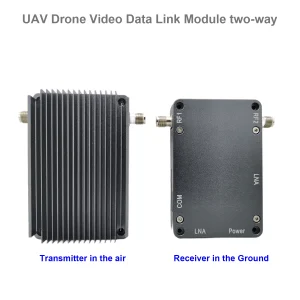 UAV drone módulo de link de dados de vídeo sem fio transmissor e receptor para câmera transceptor TDD de longo alcance bidirecional vcan1401
 -
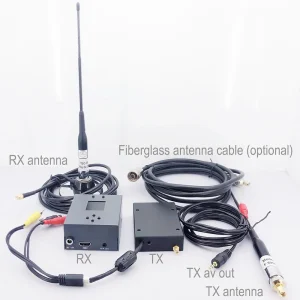 Transmissor-receptor de vídeo COFDM AV em saída HDMI FPV, Sem fio 10km-15km-30km de longo alcance mais barato e mais longo COFDM-912T
 -
 1740-1840MHZ 2WPa 30km de longo alcance Transmissor de vídeo e receptor com SBUS TTL
 -
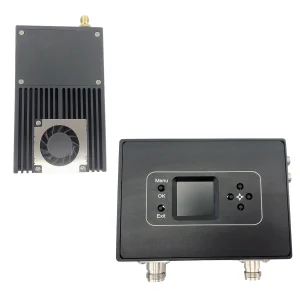 30Km de longa distância COFDM HDMI Transmissor de vídeo sem fio Receptor conjunto completo de áudio e vídeo TX RX para UAV Drone 1080P 908T
 -
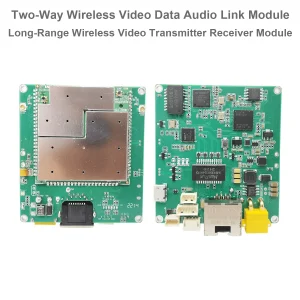 UAV bidirecional de dados de vídeo sem fio Módulo de link de controle RC Transceptor bidirecional de longo alcance Transmissor-Receptor Vcan1681
 -
 Transmissor e receptor de dados de vídeo sem fio de longo alcance para robô de drone uav robô
 -
 Transmissor e receptor de vídeo sem fio para câmera, HDMI HD H265 264 codificador 1W/2,5W PA 1080P60 Vcan1726
 -
 22km 55km de 80 km 100km 150km de longa distância transmissor de vídeo sem fio transceptor de transmissão PA 2W 5W 10W
 -
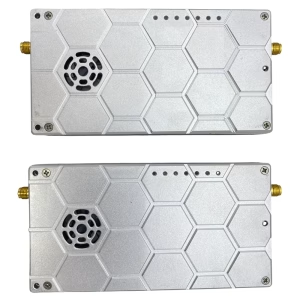 Dados de vídeo de drone Dados de telemetria Receptores de transmissor UAV Link TDD Transceptor TDD
 -
 10W PA 150KM link de dados de vídeo no ar de longo alcance UAV transmissor de transmissão sem fio receptor de banda larga tático
 -
 30-milissegundo Drone UAV Transmissor de vídeo sem fio HDMI Sistema de transmissão sem fio de latência ultrabaixa Vcan1729
 -
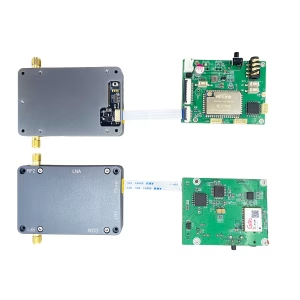 Transceptor de manet de malha IP com placa de áudio-ip bidirecional para robô uav drone
 -
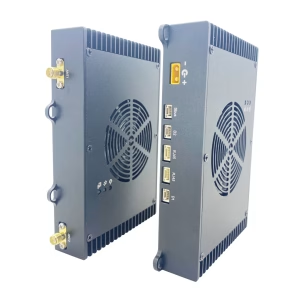 150km 100mpbs pulando de frequência em 2 bands Radio UAV Link Alta taxa de transmissão e anti-interferência
 -
 Link de dados de vídeo sem fio da malha do zangão 150-200km transceptor de rede ad hoc centerless de longo alcance
 -
 COFDM Modulador Demodulador Módulo Codificador Decodificador HDMI CVBS Entrada AV AES 256 Transmissão de RF em FHD
Índice
COFDM-907T Video–Audio Transmitter–Receiver (1080p HD) – Customer Inquiry and Technical Clarification
A customer has expressed interest in purchasing the COFDM-907T Video–Audio Transmitter–Receiver HD 1080P system for use in FPV (Visão em primeira pessoa) applications with RC cars. This type of system is commonly used in ground-based projects where stable, low-latency video transmission is required. Below are the customer’s key questions, followed by our detailed technical answers and additional clarifications regarding frequency range and bandwidth customization.
Customer Questions and Answers
1. A câmera 1080p HD PTZ funcionará?
sim, the COFDM-907T supports full HD 1080P video entrada. The important detail we must confirm is the type of video connector used by the PTZ camera. Our transmitter currently supports both HDMI e CVBS (vídeo composto) entradas, which cover the most common camera interfaces.
If the customer’s PTZ camera outputs via HDMI or CVBS, it can be connected directly. Contudo, if the PTZ camera requires remote control of its pan, inclinar, and zoom functions from the receiver side, then a bi-directional data link is necessary. This means the system must not only send video from the car to the ground station but also allow return control signals from the ground to the transmitter. Such a setup is possible but will increase cost and complexity. If the requirement is simply to view video without PTZ control, then the standard one-way COFDM-907T system is sufficient.
2. Can you set the operating frequency between 890–900 MHz?
Normalmente, COFDM wireless video systems, especially those compatible with DVB-T standards, are designed to operate in the 170–860 MHz range. Contudo, we understand that in some regions, customers want to avoid interference from local digital TV channels or other devices operating in the lower bands.
Por esse motivo, we can provide a custom modification to extend the supported frequency range. The COFDM-907T can be adjusted to work up to 930 MHz, meaning that 890–900 MHz is fully achievable. This provides a clean operating band outside of typical DVB-T usage, reducing the chance of interference and improving stability in urban environments.
3. Can you make the working bandwidth over 6 MHz?
sim, our COFDM transmitters and receivers support multiple bandwidth options, typically including 6 MHz, 7 MHz, e 8 MHz. Por padrão, many systems are configured at 6 MHz, but we can adjust the bandwidth to suit customer requirements.
Wider bandwidth (por exemplo., 7 ou 8 MHz) permite higher data rates, which can improve video quality and support higher resolution or frame rates. Contudo, wider bandwidth also requires more available spectrum and may be more susceptible to interference. For professional applications like HD FPV video, a 6–8 MHz bandwidth is common and well-supported.
4. Quão longe (km) ele vai entre os prédios da cidade?
Dentro ambientes urbanos, wireless video transmission is much more challenging compared to open line-of-sight (THE) condições. Buildings, paredes, and other obstacles create a sem linha de visão (NLOS) meio Ambiente, causando reflexão, absorption, e interferência.
While the COFDM-907T can reach 10–15 km under LOS conditions, the range is naturally reduced in a city setting. Based on our field tests, when operating between buildings, árvores, e ruas, the effective range is around 1 km in NLOS conditions. This is still stable enough for most FPV and RC car applications within a city. For improved range, using higher-gain antennas or selecting less congested frequency bands can help.
5. O microfone está conectado?
sim. Both HDMI and CVBS inputs on the COFDM-907T support audio and video together. Para HDMI, digital audio is embedded in the same signal as the video, while for CVBS, the system uses RCA connectors that carry composite video and audio. This means if the camera has a built-in microphone, the audio will be transmitted along with the video to the receiver.
Frequency Customization Example: 890–900 MHz Operation
Some clients have requested that our digital TV receiver be used as a COFDM wireless video receiver at frequencies outside the normal DVB-T allocation. Por padrão, DVB-T operates from 170–860 MHz. Contudo, to avoid interference with local TV broadcasting, some users prefer to operate at 890–900 MHz or even higher.
In response, we have successfully demonstrated that both the transmitter and receiver can be modified to work at 890 MHz e 900 MHz using 6 largura de banda MHz. Em nosso vídeo de teste, the system worked smoothly at these frequencies and successfully received video from the COFDM-907T transmitter. além disso, we can extend the supported frequency range up to 930 MHz, giving users more flexibility in selecting a clean operating channel.
Conclusão
The COFDM-907T is a versatile and reliable wireless video transmitter–receiver system suitable for HD 1080P applications in FPV RC cars and other mobile projects. It supports multiple video input formats, adjustable bandwidths, and customizable frequency ranges up to 930 MHz. While line-of-sight range is significantly greater, in urban environments it can still provide stable transmission up to 1 km, making it practical for city-based FPV projects. Adicionalmente, both video and audio (microfone) signals are supported, ensuring a complete transmission solution.
By addressing the customer’s questions, we can confirm that the COFDM-907T is a strong match for the project, and frequency customization ensures that interference can be avoided even in complex environments.
Faça uma pergunta
Sua mensagem foi enviada