



Spis treści
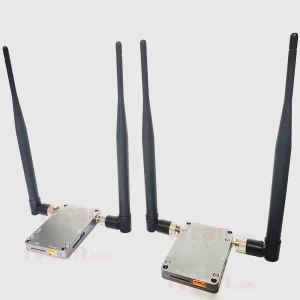
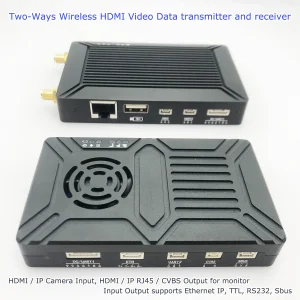
Two-Way Wireless Video Data Transceiver for UAV Relay Applications
In modern UAV (Bezzałogowy Statek Powietrzny) systemy, wireless video and data transmission plays a critical role in ensuring real-time situational awareness, command control, and feedback. Traditional COFDM or TDD-based transmitters are typically used in point-to-point communication. Jednakże, as mission distances increase and terrain becomes complex, the need for relay transmission between drones becomes essential.

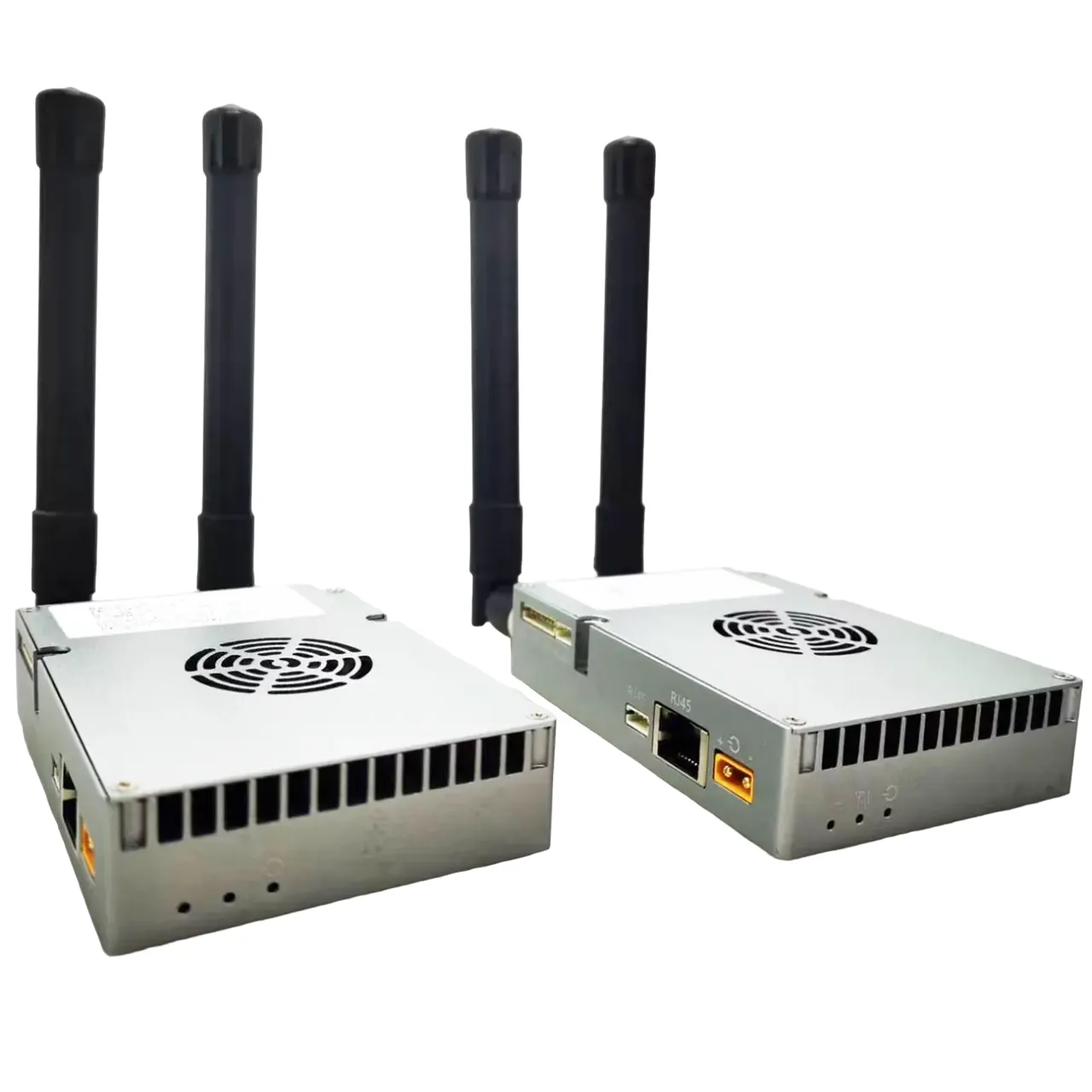
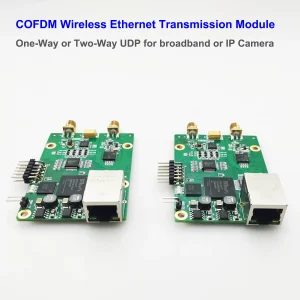
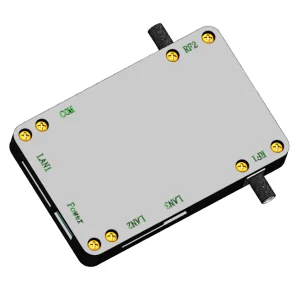
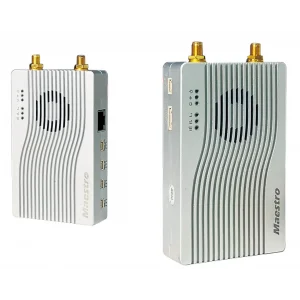
Z naszymi two-way COFDM wireless video data transceiver, UAV relay can be easily implemented — without changing the base system structure. All that’s required is one additional transceiver, and by adjusting the time slot ratio from 1:4 do 2:3, full-duplex two-way relay communication can be achieved.
Key Concept: Two-Way Transmission and Time Slot Adjustment
Our COFDM-based system operates on a TDD (Dupleks podziału czasu) mechanism, meaning the same frequency band alternates between transmit and receive time slots.
In a traditional single-link system, a 1:4 time slot ratio is used — one slot for uplink (video/data from UAV to ground) and four slots for downlink control or feedback.
For UAV relay applications, we adjust the slot ratio to 2:3, enabling both drones to transmit and receive alternately within the same frequency band.
This method allows:
- Drone A to send video/data to Drone B (przekaźnik)
- Drone B to forward data to the ground control station
- Ground control to send command data back via Drone B to Drone A
All achieved in a synchronized, niskie opóźnienia time slot cycle.
Technical Advantages
- Simple Hardware Upgrade
You only need to add one transceiver module as a relay node. No additional frequency allocation or complicated RF synchronization is required. - Małe opóźnienia, High Stability
Thanks to COFDM modulation and precise TDD slot control, latency remains under 50ms, even in relay operation. - Frequency Efficiency
Both UAVs share the same frequency channel, eliminating the need for multiple RF bands and minimizing interference. - Bi-Directional Transmission
Unlike one-way analog transmitters, the two-way transceiver supports simultaneous video + dane + kontrola przenoszenie. - Adaptive for Various Applications
Idealny dla long-range drones, relay stations, mountain terrain, maritime patrol, or emergency response where direct LOS (linia wzroku) is unavailable.
System Example
Scenariusz:
A drone flies behind a mountain ridge where direct communication with the ground station is lost.
Rozwiązanie:
Place another drone in the air to serve as a relay.
Konfiguracja:
- Naziemna Stacja Kontroli (GCS): Two-way COFDM transceiver
- UAV1: Two-way transceiver (Węzeł przekaźnikowy)
- UAV2: Two-way transceiver (Frontline Node)
Time Slot Setup:
- Original: 1 łącze nadrzędne : 4 łącze w dół (standard)
- Relay Mode: 2 łącze nadrzędne : 3 łącze w dół (balanced bidirectional flow)
Wynik:
UAV2 sends video to UAV1 → UAV1 forwards to GCS → GCS sends command → UAV1 relays back to UAV2 — all within one synchronized TDD frame.
Parametry techniczne (Przykład)
| Parametr | Opis |
|---|---|
| Zakres częstotliwości | 200MHz–6GHz customizable |
| Modulacja | COFDM, QPSK/16QAM/64QAM |
| Duplex Mode | TDD (Nastawny 1:4 lub 2:3 szczelina) |
| Utajenie | <50ms (od końca do końca) |
| Format wideo | H.265/H.264 up to 1080P |
| Interfejs danych | UART / Ethernet |
| Odległość transmisji | Up to 50km (LOS) or relay-extended |
| Moc | 10W amplifier optional for long-range |
| Aplikacja | UAV relay, wojskowy, ratunek, kontrola |
Scenariusze zastosowań
- Drone Relay for Long-Distance FPV
- Emergency Communication Extension
- Mountain or Forest Surveillance
- Maritime and Offshore Operations
- Temporary Network Relay in Field Missions
FAQ
Pytanie 1: Can I use different frequencies for uplink and downlink?
ZA: It’s not necessary. The system uses TDD on the same frequency, alternating time slots between send and receive. FDD models support set different frequencies for uplink and downlink.
Pytanie 2: What hardware do I need to add a relay function?
ZA: Just one extra two-way transceiver module configured as a relay node.
Pytanie 3: How do I configure the time slot ratio?
ZA: It can be modified in firmware or configuration software — change from 1:4 do 2:3 for two-way relay mode.
Pytanie 4: Will latency increase in relay mode?
ZA: Only slightly. The system’s OFDM frame design keeps total delay under 50ms even with one relay hop.
Pytanie 5: Can multiple relays be added for extended range?
ZA: tak, multi-hop relay is supported by chaining additional transceivers, though timing synchronization must be maintained.
Wniosek
By simply adding one more transceiver i adjusting the time slot ratio, UAVs can form a reliable two-way relay network that extends range, maintains low latency, and enables full bidirectional communication. This flexible design ensures mission success in complex terrains or beyond-visual-line-of-sight operations — all while keeping hardware integration simple and efficient.
Dwukierunkowe dwukierunkowe

Dwukierunkowe dwukierunkowe

Dwukierunkowe dwukierunkowe
Przetwornik wideo
Transmisja dronem

Zadać pytanie
Twoja wiadomość została wysłana