





Moduł kodera CVBS na IP i moduł dekodera IP na CVBS dla przekaźnika wideo FPV
System transmisji wideo FPV analogowo-IP do zdalnego monitorowania za pomocą kabla Ethernet
Real-time FPV video relay via CVBS to IP encoder and IP to CVBS decoder modules
Long-Range FPV Streaming Solution with CVBS-to-IP and IP-to-CVBS Conversion
FPV Receiver + IP Encoder/Decoder for Network-Based Video Relay
Stream FPV Video Anywhere—From Analog to IP in Seconds.
Real-time FPV Monitoring Over LAN, 4G, or Wi-Fi Networks.
Bridge the Gap: Convert CVBS to IP and Back to HDMI.
Remote FPV Access Made Easy—Plug, Kodować, Przekazać, Pogląd.
Deploy FPV Video Over Any Network—No Distance Limits.
Low-Latency IP Streaming for UAVs, w UGV, and Remote Cameras.
From Field to Control Room—Seamless FPV Video Relay.
Modular FPV Transmission System for Any Deployment Scenario.
Reliable analog-to-IP conversion for mission-critical video.
Your FPV Signal, Anywhere—Encoded, Streamed, and Displayed.
Spis treści
Przegląd
This modular system enables real-time transmission of analog FPV (Widok z pierwszej osoby) video over IP networks, allowing remote monitoring, kontrola, and display of UAV/UGV video feeds. Designed for flexibility and reliability, it converts CVBS or HDMI signals into IP streams via an encoder, transmits them over LAN/4G/Wi-Fi, and decodes them back to HDMI or CVBS for display. Ideal for long-range deployments, mobile operations, i aplikacje o znaczeniu krytycznym.
Cechy
- Converts analog FPV video to IP stream (H.264/H.265)
- Supports RTSP, RTMP, SRT protocols for flexible streaming
- Compatible with LAN, Wi-Fi, and 4G cellular networks
- Real-time decoding to HDMI or CVBS for local display
- Low-latency transmission (<300ms od końca do końca)
- Modular design for easy integration and customization
- Supports remote deployment and multi-client access
- Optional serial-over-IP for remote FPV receiver control
specyfikacje
| Parametr | Wartość / Opis |
|---|---|
| Wejście wideo | CVBS (PAL/NTSC), HDMI |
| Encoding Format | H.264 / H.265 |
| Streaming Protocols | RTSP, RTMP, SRT, HTTP |
| Network Interfaces | Ethernet (RJ45), Wi-Fi, 4G (via router) |
| Decoding Output | HDMI (1080P), CVBS |
| Utajenie (End-to-End) | 150ms – 300ms |
| Zasilanie | DC 5V–12V |
| Temperatura pracy | -10°C do +50°C |
| Interfejs sterowania | Optional UART/RS232 over IP |
Aplikacja
- UAV/UGV Remote Monitoring Transmit FPV video from drones or ground vehicles to control centers.
- Inspekcja Przemysłowa Real-time video relay from hazardous or inaccessible environments.
- Bezpieczeństwo publiczne & Reagowanie kryzysowe Deployable video feeds for search & ratunek, egzekwowanie prawa, and disaster zones.
- Transmisja na żywo & Event Coverage Stream analog camera feeds to remote production teams or online platforms.
- Nadzór bezpieczeństwa Extend legacy analog systems into IP-based remote viewing networks.
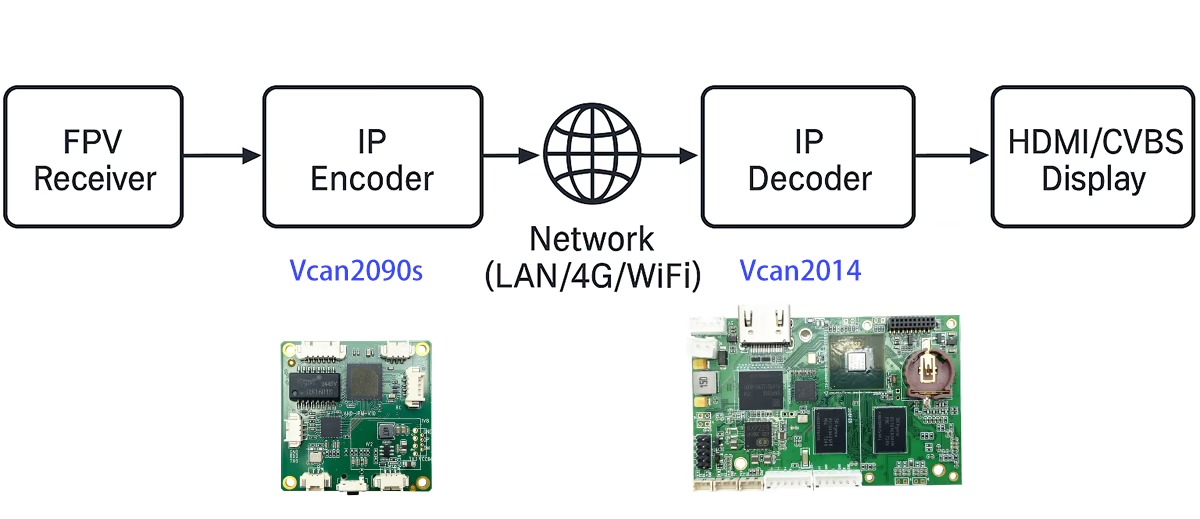
Detailed Explanation of System Architecture
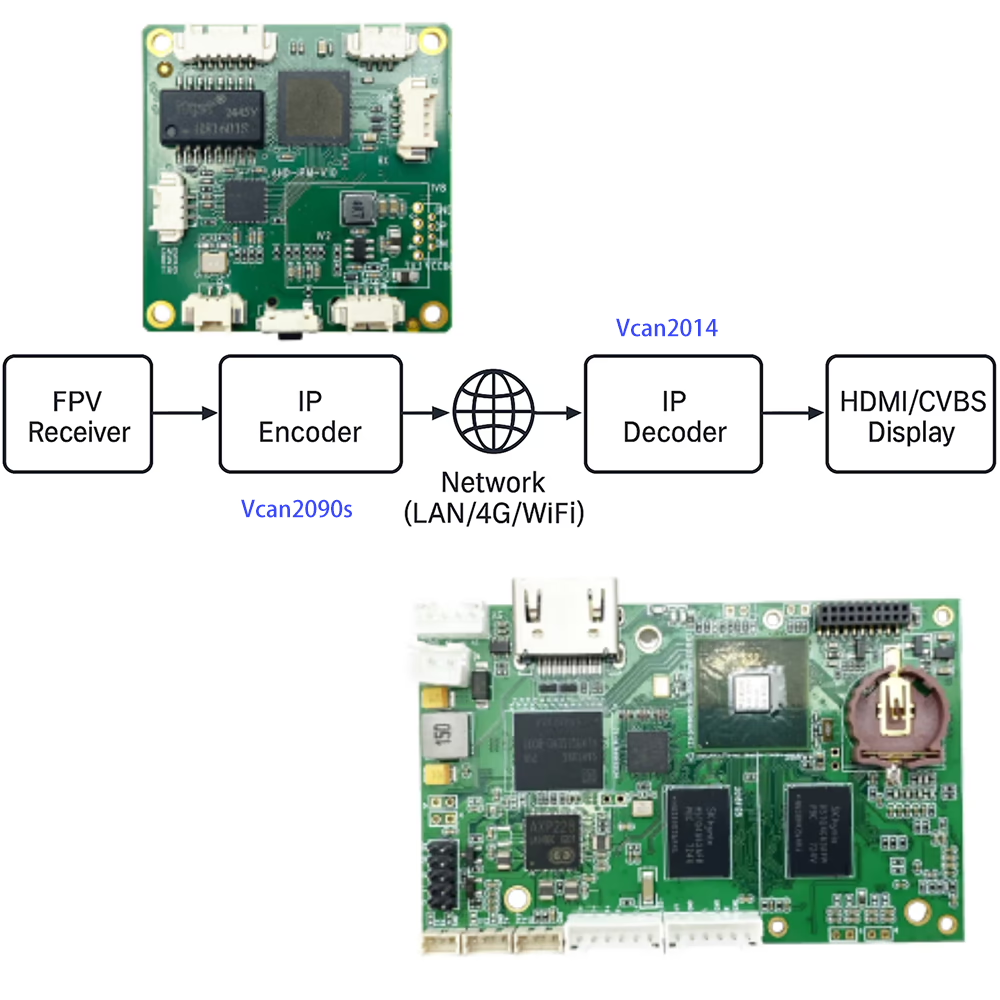
[FPV Receiver] → [IP Encoder] → 🌐 Network (LAN/4G/Wi-Fi) → [IP Decoder] → [HDMI/CVBS Display]1. FPV Receiver (Analog Video Receiver), nie włączając
- Funkcjonować: Receives analog video signals from UAVs or remote-controlled vehicles, typically via 5.8GHz RF transmission.
- Format wyjściowy: CVBS (PAL/NTSC); some models may support HDMI.
- Deployment Notes:
- Diversity receivers (podwójne anteny) are recommended for improved signal stability.
- Can be deployed as a relay node in elevated or fringe areas to extend coverage.
- Supports frequency switching and gain adjustment; remote control interface is recommended for advanced setups.
2. IP Encoder (Analog-to-IP Video Converter) , Vcan2090s
- Funkcjonować: Converts analog video (CVBS or HDMI) into a digital IP stream using H.264 or H.265 compression.
- Input Interfaces: CVBS (via BNC or AV jack), HDMI (opcjonalny).
- Streaming Protocols: RTSP, RTMP, SRT, HTTP.
- Key Parameters:
- Encoding format: H.264/H.265 (do wyboru)
- Supported resolutions: 720×576 (SD) to 1920×1080 (HD)
- Utajenie: Zalecony <150ms for real-time transmission
- Deployment Notes:
- Configure static IP or enable DHCP.
- Stream URL must match decoder or server settings.
- Recommended modules: HiSilicon Hi3516, embedded encoder boards, or USB capture + software encoder (np., OBS, VLC).
3. Sieć (LAN / 4G / Wi-Fi) , not including or choose our Vcan2090s-4G-Wi-Fi
- Funkcjonować: Transports the IP video stream from encoder to decoder.
- Opcje:
- LAN: Ideal for local setups; stable and low latency.
- Wi-Fi: Suitable for short-range wireless deployment; prone to interference.
- 4G/5G: Enables remote access; requires public IP or VPN tunneling.
- Deployment Notes:
- Use 4G routers with public IP or virtual networking tools like ZeroTier.
- Recommended bandwidth: ≥2 Mbps for SD, ≥5 Mbps for HD.
- Implement QoS policies to prioritize video traffic.
4. IP Decoder (IP-to-Video Output Converter) Vcan2014
- Funkcjonować: Receives the IP video stream and decodes it into HDMI or CVBS output for display.
- Input Protocols: RTSP, SRT, HTTP, UDP.
- Output Interfaces: HDMI (for HD display), CVBS (for legacy monitors).
- Key Parameters:
- Decoding format: H.264/H.265
- Resolution support: Must match encoder settings
- Buffering: Supports adaptive buffering and jitter correction
- Deployment Notes:
- Configure stream input (np.,
rtsp://xxx.xxx.xxx.xxx/live) - Recommended devices: Kiloview D series, Teradek Cube, or Raspberry Pi with ffmpeg/gstreamer.
- Supports multi-stream decoding and optional OSD overlay.
- Configure stream input (np.,
5. HDMI/CVBS Display (Video Output Device), nie włączając
- Funkcjonować: Displays the decoded FPV video in real time.
- Interface Types:
- HDMI: For modern HD monitors, Telewizory, or FPV terminals.
- CVBS: For analog monitors or legacy display systems.
- Deployment Notes:
- Ensure compatibility with decoder output resolution and format.
- Optional features: nagranie, screenshot capture, Nakładka OSD.

FAQ
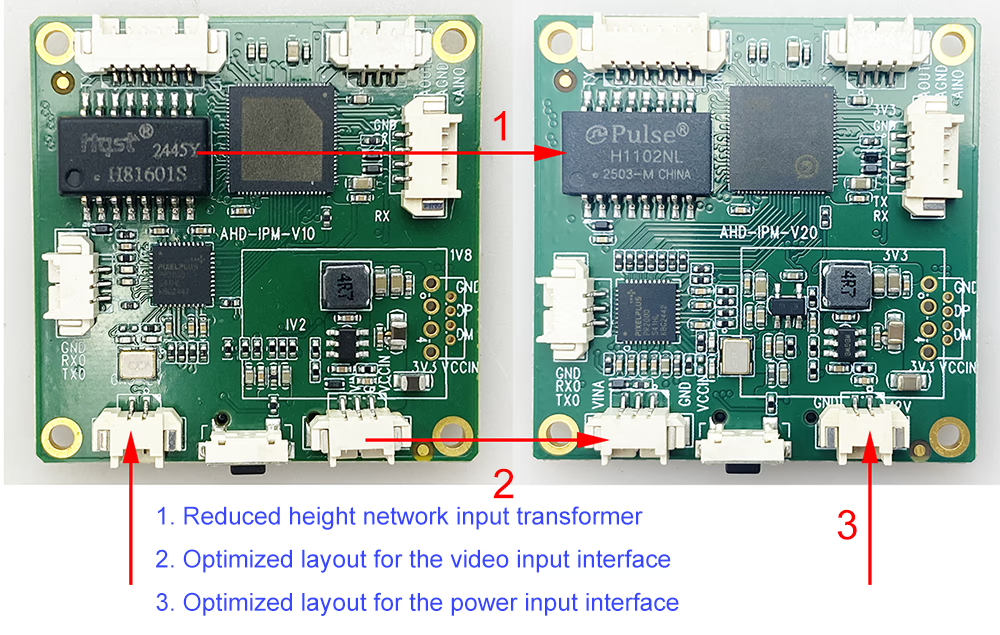
Pytanie 1: What are the main differences between AHD‑IPM‑V10 and AHD‑IPM‑V20?
A1: Please refer to the image for a visual comparison. The key improvements in the AHD‑IPM‑V20 are:
-
Reduced height network input transformer
-
Optimized layout for the video input interface
-
Optimized layout for the power input interface
Pytanie 2: Which model is recommended for procurement?
A2: Engineers recommend prioritizing the AHD‑IPM‑V20. It is easier to install and adjust height, making it more suitable for FPV applications.
Pytanie 3: What are the benefits of AHD‑IPM‑V20 over V10?
A3:
-
Lower network input transformer height allows better mechanical compatibility.
-
Optimized video input placement improves installation convenience.
-
Power input interface is closer to the power circuit, reducing the chance of power noise interfering with the video signal.
Q4: Why should I choose AHD‑IPM‑V20 for FPV applications?
A4: Its improved layout and lower-profile design make integration into FPV systems easier, safer, and more reliable, minimizing interference and simplifying assembly.
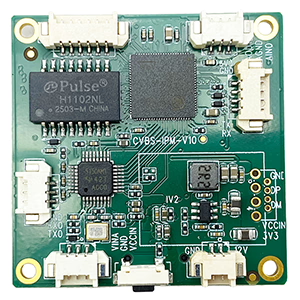
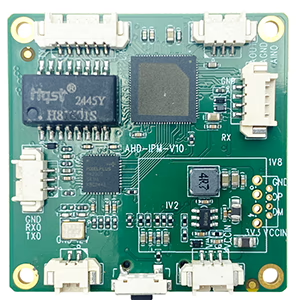
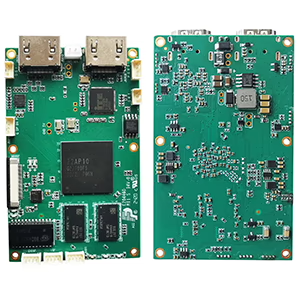
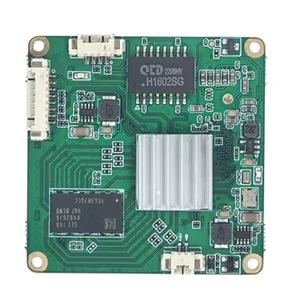
Płytki modułów enkoderów
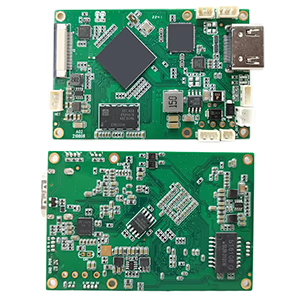
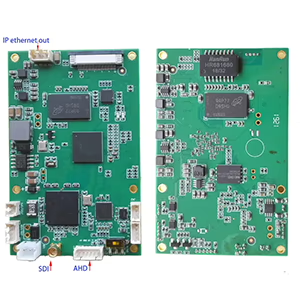
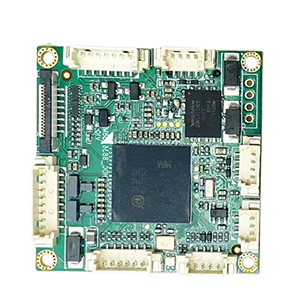
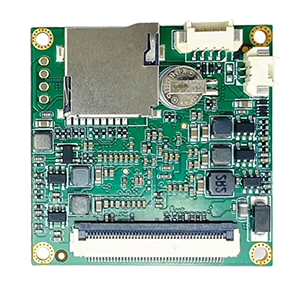
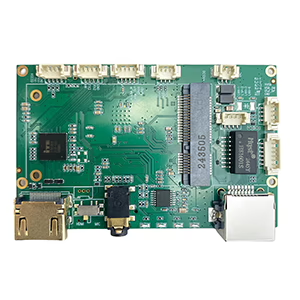
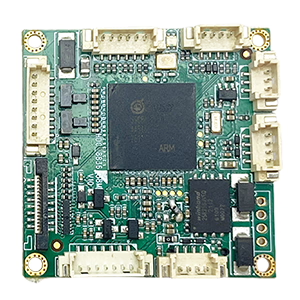
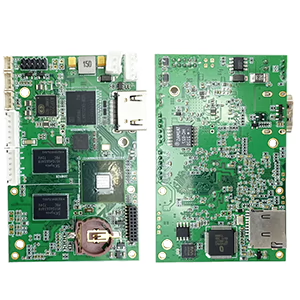
Płytki modułów dekodera
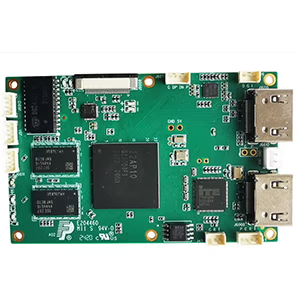
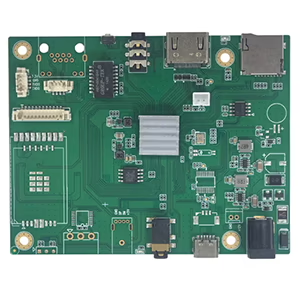
Dostępne do personalizacji
Nowe produkty kodujące
| Nie. | Nazwa produktu | Konfiguracja | Kluczowe cechy | Status |
|---|---|---|---|---|
| 1 | Dwukanałowy koder wideo USB UVC w świetle widzialnym | 2× Wejście USB | Obsługuje kodowanie wideo z podwójnej kamery USB, i strumieniowanie RTSP; lokalne wyjście CVBS/HDMI; przełączalne tryby wyświetlania | Produkcja masowa |
| 2 | Enkoder dwukanałowy (1× Światło widzialne USB + 1× Kamera termowizyjna USB) | 2× Wejście USB | Obsługuje podwójną kamerę USB (widoczny + termiczny) schwytać, kodowanie, i strumieniowanie RTSP; lokalne wyjście CVBS/HDMI; przełączalne tryby wyświetlania | Produkcja masowa |
| 3 | Dekoder RTSP Moduł wyświetlacza HDMI/CVBS | HDMI + Wyjście CVBS | Obsługuje dekodowanie strumienia RTSP do 4×1080p przy 30 klatkach na sekundę; Obsługa przesyłania protokołu przesyłania strumieniowego wideo; Wyświetlacz wyjścia HDMI/CVBS | Próbka dostępna |
| 4 | Dekoder RTSP Moduł wyświetlacza HDMI/CVBS z 4.3"/5" LCD | Wyjście HDMI + Ekran LCD | Obsługuje dekodowanie strumienia RTSP do 4×1080p przy 30 klatkach na sekundę; przekazywanie protokołu; Wyświetlacz wyjścia HDMI/CVBS | Debugowanie |
| 5 | Enkoder dwukanałowy (1× Światło widzialne USB + 1× CVBS Analog) | 1× CVBS + 1× Wejście USB UVC | Podwójne wideo (USB + CVBS), kodowanie i strumieniowanie RTSP; lokalne wyjście CVBS/HDMI; przełączalne tryby wyświetlania | Debugowanie |
| 6 | Enkoder dwukanałowy (1×USB UVC + 1× Analog AHD) | 1× AHD + 1× Wejście USB UVC | Podwójne przechwytywanie wideo (USB + AHD), kodowanie i strumieniowanie RTSP; lokalne wyjście CVBS/HDMI; przełączalne tryby wyświetlania | Debugowanie |
| 7 | Enkoder dwukanałowy (1× CVBS + 1× Wideo analogowe AHD) | CVBS + AHD 2 wejście wideo | Podwójne analogowe przechwytywanie wideo, kodowanie i strumieniowanie RTSP; lokalne wyjście CVBS/HDMI; przełączalne tryby wyświetlania | Debugowanie |
| 8 | Enkoder dwukanałowy (1× Kamera CMOS + 1× Kamera termowizyjna USB) | 1× Interfejs USB | Obsługuje CMOS + Przechwytywanie obrazu z kamery termowizyjnej USB, kodowanie i strumieniowanie RTSP; lokalne wyjście CVBS/HDMI; przełączalne tryby wyświetlania | Produkcja masowa |
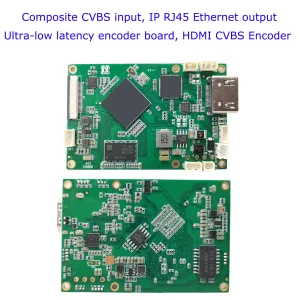
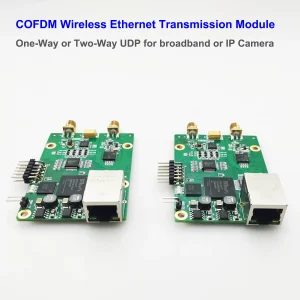
W przypadku niestandardowych rozwiązań konwersji wejścia/wyjścia wideo, które nie są wymienione w naszych produktach, skontaktuj się z nami, aby uzyskać wsparcie OEM/ODM. Możemy opracować produkty dostosowane do Twoich wymagań.






iVcan.com –
We deployed the CVBS-to-IP and IP-to-CVBS FPV video relay system for our UAV operations, and it exceeded expectations. The system reliably converts analog FPV video into IP streams and back with minimal latency (<300ms), enabling real-time monitoring over LAN, 4G, or Wi-Fi. The modular encoder and decoder design made integration straightforward, and multi-protocol support (RTSP, RTMP, SRT) ensures compatibility with various network setups. Both HDMI and CVBS outputs provide flexible display options, making this solution ideal for remote monitoring, inspekcja przemysłowa, and mission-critical FPV applications. The video quality is clear, stabilny, and perfectly suited for professional deployments.