





Liniowe wzmacniacze mocy vs. Dwukierunkowe wzmacniacze mocy TDD: Jaka jest prawdziwa różnica?
In modern wireless communication systems, power amplifiers (Nie) play a critical role in determining both signal quality and overall system performance. Terms like Liniowy wzmacniacz mocy i TDD Bi-Directional Power Amplifier are often used interchangeably, but in reality, they describe different concepts at different levels of system design.
This article explains the differences, relationships, and practical use cases of linear PAs and TDD bi-directional PAs, from an RF engineering perspective.
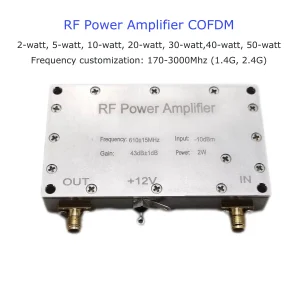
Wzmacniacz mocy PA
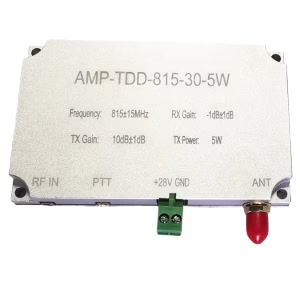
Wzmacniacz mocy PA rf do transmisji nadajnika DVB-T COFDM TX 1-2-5-10-20-30-40-50-wat
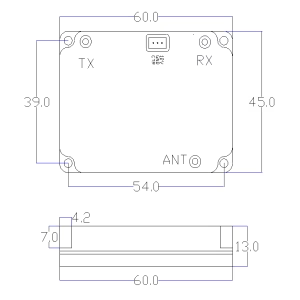
Wzmacniacz mocy PA
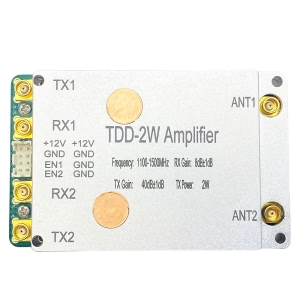
Moduł front-end RF w paśmie L 2W TDD z PA, LNA & Szybki przełącznik T/R (1100–1500 MHz)
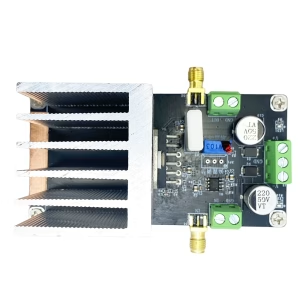
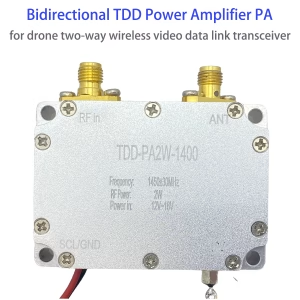
Wzmacniacz mocy PA
Wzmacniacz mocy PA
Moduł wzmacniacza mocy TDD 2T2R 1100-1500 MHz | 1300M 2W 5W 10W 30W Moduł czołowy RF PA RF

Wzmacniacz mocy PA
50 wzmacniacz mocy 320 MHz dla nadajnika COFDM 50WPA 305-335 MHz

Wzmacniacz mocy PA
Wzmacniacz mocy PA
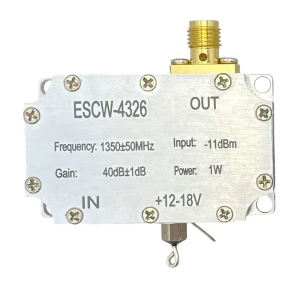
1Wzmacniacz mocy WPA 1 W ESCW-4326 MCX SMA RF 12-18 V 1300-1400 MHz

Wzmacniacz mocy PA
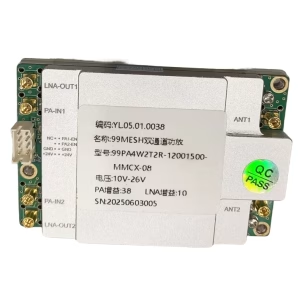
2-Watowy wzmacniacz mocy PA dla modułu nadawczo-odbiorczego transmisji Morning-core CX660x TDD.
Wzmacniacz mocy PA

Spis treści
Understanding the Core Difference
At a high level:
- Liniowy wzmacniacz mocy odnosi się do performance characteristic — how faithfully a signal is amplified.
- TDD Bi-Directional Power Amplifier odnosi się do system architecture — how transmission and reception share RF hardware over time.
These two concepts are not mutually exclusive. W rzeczywistości, they are often combined in real-world designs.
What Is a Linear Power Amplifier?
ZA Liniowy wzmacniacz mocy is designed to amplify RF signals while preserving the original waveform’s amplitude and phase relationship. High linearity is essential for modern digital modulation schemes.
Key Characteristics
- Niski Wielkość wektora błędu (EVM)
- Niski Adjacent Channel Leakage Ratio (ACLR)
- Support for wideband and high-order modulation (OFDM, QAM)
Zalety
- Excellent signal fidelity
- Suitable for spectrally efficient communication systems
- Complies more easily with regulatory emission limits
Trade-Offs
- Lower efficiency compared to saturated or switching amplifiers
- Higher power consumption and heat dissipation
- Typically operates in Class A or Class AB modes
Typowe zastosowania
- LTE / 5G NR
- ISDB-T / DVB-T
- Radio definiowane programowo (SDR)
- Base stations and test equipment
What Is a TDD Bi-Directional Power Amplifier?
ZA TDD (Dupleks podziału czasu) Bi-Directional Power Amplifier is part of a system where przekazać (TX) and receive (RX) functions share the same RF path and antenna, but operate at different times.
Instead of separate uplink and downlink frequency bands, TDD systems alternate between TX and RX in the time domain.
Typical Architecture
TX → PA → RF Switch → Antenna
RX ← LNA ← RF Switch ← Antenna
Key Design Considerations
- Fast TX/RX switching speed
- High isolation between transmit and receive paths
- Protection of sensitive RX components during TX operation
Zalety
- Reduced component count
- Smaller module size and lower system cost
- Efficient use of spectrum and hardware
Wyzwania
- More complex RF switching design
- Risk of RX damage if isolation is insufficient
- PA must tolerate rapid on/off operation
Typowe zastosowania
- TDD LTE and 5G private networks
- Wireless broadband and point-to-point links
- Radar and telemetry systems
- FPV and industrial wireless solutions
Linear PA vs. Dwukierunkowy system PA TDD: A Direct Comparison
| Aspect | Liniowy wzmacniacz mocy | Dwukierunkowy system PA TDD |
|---|---|---|
| Primary Focus | Signal linearity | System architecture |
| Defines | Signal quality | TX/RX sharing method |
| Concerned With | EVM, ACLR, zniekształcenie | Switching, izolacja |
| Mutually Exclusive? | Nie | Nie |
| Can Be Combined? | tak | tak |
How They Work Together in Practice
In most modern TDD communication systems, the ideal solution is a linear TDD bi-directional PA.
Na przykład:
- ZA 2T2R TDD Linear Power Amplifier Module
- Each channel delivers 5W output power
- Supports OFDM-based modulation
- Uses RF switches to bypass or protect the PA during RX periods
This combination ensures:
- High signal integrity during transmission
- Efficient hardware reuse
- Compact and cost-effective system design
Choosing the Right Solution
- If your priority is signal quality and modulation accuracy, focus on liniowość.
- If your system operates in TDD mode with a shared antenna, A bi-directional architecture is essential.
- For modern wireless systems, both are usually required.
- Check more PA power amlifier at Tutaj.
Zadać pytanie
Twoja wiadomość została wysłana