



목차
소개
In the world of live television production, aerial camera systems have become a vital part of sports broadcasting, 콘서트, 그리고 야외행사. Achieving a 안정적인, 낮은 지연 시간, broadcast-quality video link from a drone is no longer just about transmitting images—it’s also about remote camera control, precise color shading, and full HDR workflow integration.
최근에, we received an inquiry from a European broadcast engineer who is building a professional broadcast drone for live TV production. His setup includes a 4K HDR camera with SDR & HDR (HLG/PQ) support, color spaces Rec.709 / Rec.2020 / S-Log, 과 SDI output in Quad or 12G mode. The system also needs to support remote shading via CyanView—a leading IP-based camera control solution widely used in professional broadcast environments.
This kind of request is becoming increasingly common, so in this article we’ll share how such systems can be designed, what questions to consider before choosing hardware, and how COFDM 무선 기술 can be integrated with modern broadcast camera control systems.
The Challenge: Combining Broadcast-Grade Video and Real-Time Camera Shading
A typical broadcast drone must meet several critical technical requirements:
- 매우 낮은 대기 시간 — End-to-end delay must be below 50 MS (and ideally under 30 MS) for seamless live switching.
- Full HDR and color space compatibility — Maintaining HLG/PQ and Rec.2020 metadata through the wireless link is crucial for accurate shading.
- Robust transmission in dynamic environments — The drone may move quickly between LOS and NLOS conditions, with distances from 500 m up to several kilometers.
- Bidirectional IP control — Systems like CyanView RCP/RiO require a reliable return data channel to send and receive camera shading commands.
- Lightweight and power-efficient hardware — The transmitter must fit within the drone’s payload limits and operate on 12–24 V DC power.
The Solution: Low-Latency COFDM Transmission with IP Passthrough
COFDM (코딩된 직교 주파수 분할 다중화) remains one of the most robust technologies for long-range, interference-resistant video transmission.
When properly configured, a modern H.265 COFDM system can deliver:
- 엔드투엔드 지연 시간은 다음과 같습니다. 30-50ms
- 4케이 / 12G-SDI input support for high-end cameras
- 가득한 AES 암호화 for secure broadcast operations
- IP data passthrough, enabling seamless CyanView camera control over the same RF link
With an integrated bidirectional IP channel, the CyanView RCP can communicate directly with the camera’s control interface (via Cy-RiO or similar), allowing real-time color correction and exposure adjustments during flight—just as if the camera were cabled in a studio.
Key Questions Before Selecting a System
Before choosing a COFDM transmitter/receiver pair, every integrator should clarify the following:
- Required latency and resolution (예를 들어, < 50 ms at 4K 60p)
- Transmission range and environment (LOS/NLOS, 거리, 그리고 이동성)
- Camera output format (3G/6G/12G-SDI, Quad-SDI, or HDMI)
- CyanView workflow (which devices are used — RCP, RiO, Cy-RiO, 기타)
- Power and payload limits on the drone platform
- Operating frequency band and certification (FCC, CE, or regional license)
- Interference conditions (urban RF noise, multi-drone operations, 기타)
These parameters determine whether a compact airborne transmitter, a rack-mounted receiver, or a modular OEM board solution is best suited for the application.
Example System Architecture
A typical broadcast drone workflow could look like this:
- 카메라: 4K HDR SDI output → connected to COFDM transmitter (H.265 인코더)
- COFDM 송신기: encodes and modulates the video; provides an IP return link for control data
- COFDM 수신기: mounted at the OB van or control room; decodes video to SDI output
- CyanView RCP: communicates over the same IP channel with the camera through the wireless link
- 선택 과목: diversity antennas, external amplifiers, or custom frequency allocation for extended range
This setup allows live directors and vision engineers to remotely shade the camera during flight, matching color and exposure across all cameras in a multi-camera broadcast.
Product Categories to Consider
Depending on project priorities (숨어 있음, 범위, or integration flexibility), the following product types may be considered:
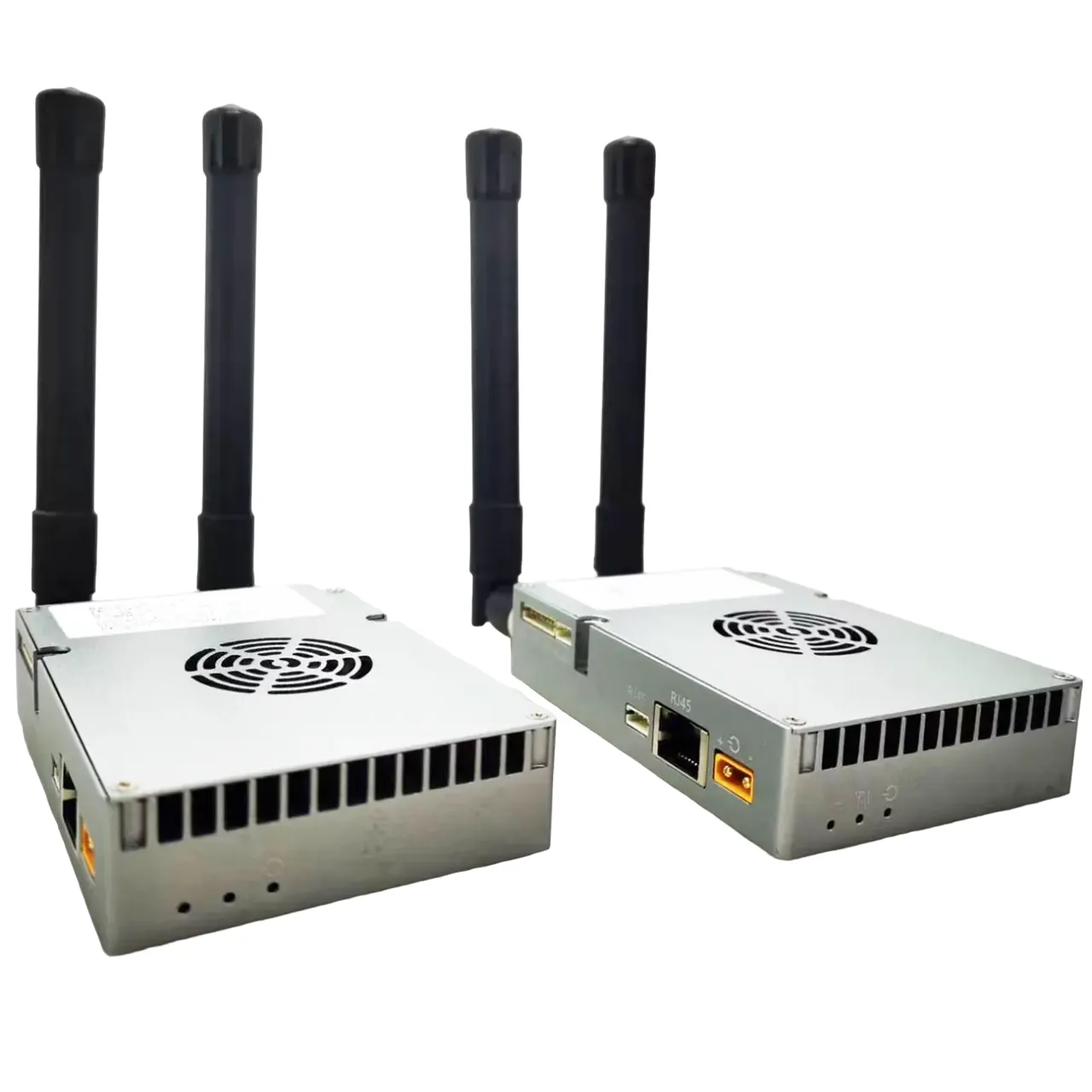
- Compact broadcast-grade COFDM transmitters with 12G-SDI input and IP passthrough
- Lightweight OEM COFDM modules (ideal for drone integration) supporting 720p–4K, H.265, and AES128 encryption
- Diversity receiver stations with Ethernet output for integration with broadcast routers and CCUs
- Custom-designed COFDM IP transceivers supporting two-way control channels for CyanView or other RCP systems
Systems can be tailored to meet specific drone payload, 빈도, and latency constraints.
결론
The integration of low-latency COFDM video transmission ~와 함께 CyanView remote shading unlocks true broadcast-level quality for aerial production. It ensures synchronized color, precise control, and a reliable HDR signal path—all in real time.
As more broadcasters adopt aerial camera systems for live TV, 필요성 건장한, low-delay, and IP-controllable wireless links will continue to grow.
If you’re developing a similar system or looking for a custom-designed COFDM transmitter/receiver solution with CyanView compatibility, our engineering team can provide tailored recommendations — from module-level integration to complete turnkey systems.
질문하기
응답해 주셔서 감사합니다. ✨