







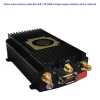
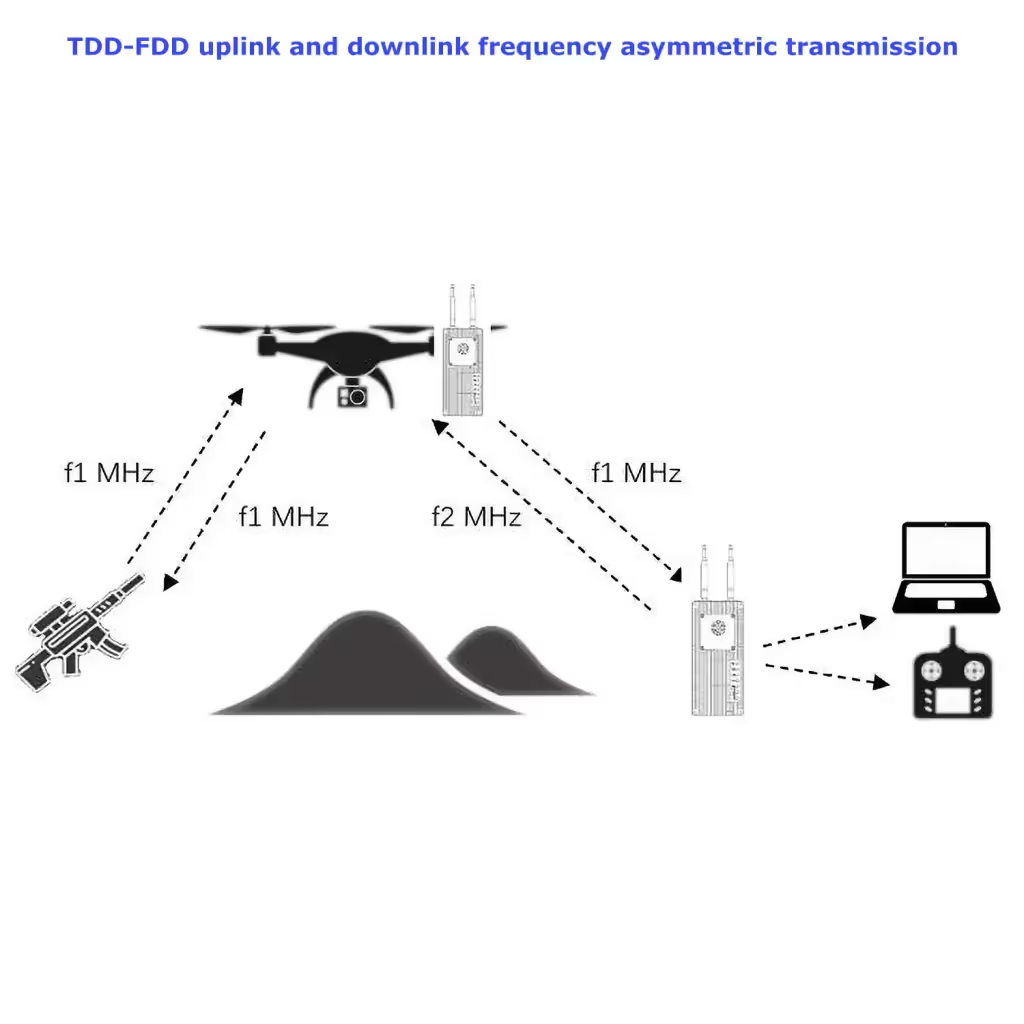
Trasmissione asimmetrica della frequenza di uplink e downlink TDD-FDD vcan2002
 caratteristica
- Supporta la trasmissione asimmetrica delle frequenze di uplink e downlink
- Supporta il rilevamento del rumore di fondo e la selezione automatica della frequenza
- Supporta la crittografia AES256
- Supporta la trasmissione a larga banda a lunga distanza
Parametro
| Parametri di sistema | Indicatori tecnici |
| Modello del dispositivo | VCAN2002 |
| frequenza di lavoro | f2 MHz (uplink), f1 MHz (downlink) (ad esempio uplink 1.4G, collegamento in discesa 17.G
altre bande di frequenza possono essere personalizzate) |
| Canale RF | 2T2R |
| potenza di trasmissione | 40dBm (10W) |
| distanza di trasmissione | 150KM (portata visiva aria-terra) |
| Canale di banda | 10MHz |
| Modulazione | QPSK、16QAM |
| tariffa massima | 16Mbps@16QAM3/4 |
| Crittografia della comunicazione | rilevato automaticamente dopo l'avvio del sistema |
| Ritardo di trasmissione | ≤10 ms |
| interfaccia RF | SMAx2 |
| Interfaccia di potenza | XT30PW-M |
| Interfaccia del dispositivo | Ethernet*2, TTL/RS232*2, RS422*1, SBUS/TTL*1 |
| Consumo energetico della macchina | Unità aerea ≤66W; Unità di terra ≤15W. |
| Taglia del prodotto | 180mm*81 mm*29 mm |
| Peso del prodotto | 415g |
| Tensione di funzionamento | CC 22~30 V, valore tipico: 28V@3A |
| Temperatura di esercizio | -40~ + 65 ℃ |
Il canale può fornire una capacità di 4Mbps, e il pod può essere impostato su 2Mbps
150Video prova km
FAQ
Q: Can the uplink and downlink working frequencies be configured by the user?
UN: For standard models, the working frequencies are factory preset and cannot be modified by the user.
- Collegamento in salita (f2): 1.4 GHz
- Downlink (f1): 17 GHz
If your application requires user-adjustable frequencies, we recommend using the FDD transceiver module.
- TX (uplink): User configurable from 170 MHz a 6000 MHz
- RX (downlink): User configurable from 170 MHz a 860 MHz
- For RX frequencies over 860 MHz, un ulteriore down-conversion stage is required.
Please select the appropriate model based on whether fixed or user-configurable frequency operation is needed.
Q: What are the advantages of the FDD + TDD hybrid technology in this video & data transmission system?
UN: This system combines the best features of FDD (Divisione di frequenza duplex) e TDD (Duplex a divisione temporale) to deliver superior performance for professional drone operations.
- Real-time two-way communication with ultra-low latency (FDD advantage): Separate frequencies are used for downlink (video & data to ground) and uplink (control commands from ground). This enables true simultaneous transmission, so you get smooth live video and instant control response without any waiting or switching delays.
- High spectrum efficiency and flexible bandwidth allocation (TDD advantage): The system dynamically adjusts bandwidth between video and control/data as needed. This allows higher overall data rates and makes the best use of available radio spectrum.
- Excellent anti-interference capability and reliability: With real-time interference detection, selezione automatica della frequenza, adaptive bitrate, ritrasmissione automatica, and smart power control, the link remains stable even in complex environments with multipath interference or crowded radio frequencies.
- Long range and high-quality transmission: Supporta fino a 200 km air-to-ground range and up to 16 Mbps la larghezza di banda, allowing you to transmit clear HD video while simultaneously sending telemetry and control data in both directions.
In termini semplici: Pure FDD offers excellent low-latency two-way performance but can be less spectrum-efficient. Pure TDD is very efficient and flexible but may introduce slight delays. Il FDD + TDD hybrid gives you the perfect balance: bassa latenza + high efficiency + forti prestazioni anti-interferenza, making it ideal for demanding drone applications such as power line inspection, risposta all'emergenza, rilevamento aereo, and long-range surveillance.


iVcan.com –
I have been using the VCAN2002 for several weeks, e ha superato le mie aspettative sotto ogni aspetto. The asymmetric TDD-FDD uplink and downlink transmission works flawlessly, providing stable high-speed data even over long distances. The automatic frequency selection and noise floor detection make setup simple and reliable in complex environments. AES256 encryption ensures secure communication, while the low latency of less than 10ms is ideal for real-time control. The unit is robust, energy-efficient, and performs exceptionally well under extreme temperatures. Highly recommended for professional UAV and long-range wireless applications.