





long range 5km 1080p50 Wireless Video Transmission Solution Guide
A recent inquiry from an AV integrator highlighted a common question:
Can we transmit 1080p50 HDMI or SDI video over 5 km without pairing?
Ciao. Our company is searching for extra long range HDMI (or SDI) video transition systems that DO NOT require Pairing. We would like to know if IVcan has any solutions that allow 1080p50 video transmission for distances of, at least, 5km.
La risposta è: Yes — but only with the right setup and technology.
Sommario
Why Standard Wireless HDMI Falls Short
Conventional wireless HDMI systems are typically limited to short-range applications (<100 M).
To achieve 5km 1080p50 wireless video transmission, the system must use:
- RF-based transmission instead of direct HDMI
- Compressione video (H.264/H.265)
- Robust modulation like COFDM
COFDM is a wireless transmission technology used for high-quality video and data over long distances. Here’s an easy way to understand it:
- Multiple Frequencies: Instead of sending all the video data on a single frequency, COFDM splits it into many small “sub-channels” (frequenze).
- Robust Against Interference: If one frequency encounters interference or obstacles, the other frequencies can still carry the data, so the video stays stable.
- Ideal for Long Distances: COFDM handles reflections, edifici, and other obstacles better than traditional single-frequency wireless links.
- Applicazioni: Broadcast TV, professional drone video, live event streaming, and any situation where you need reliable video transmission over several kilometers.
Analogy: Imagine sending a long message using many couriers along different roads. If one road is blocked, the message still reaches the destination via other roads — this is essentially how COFDM keeps video transmission stable.
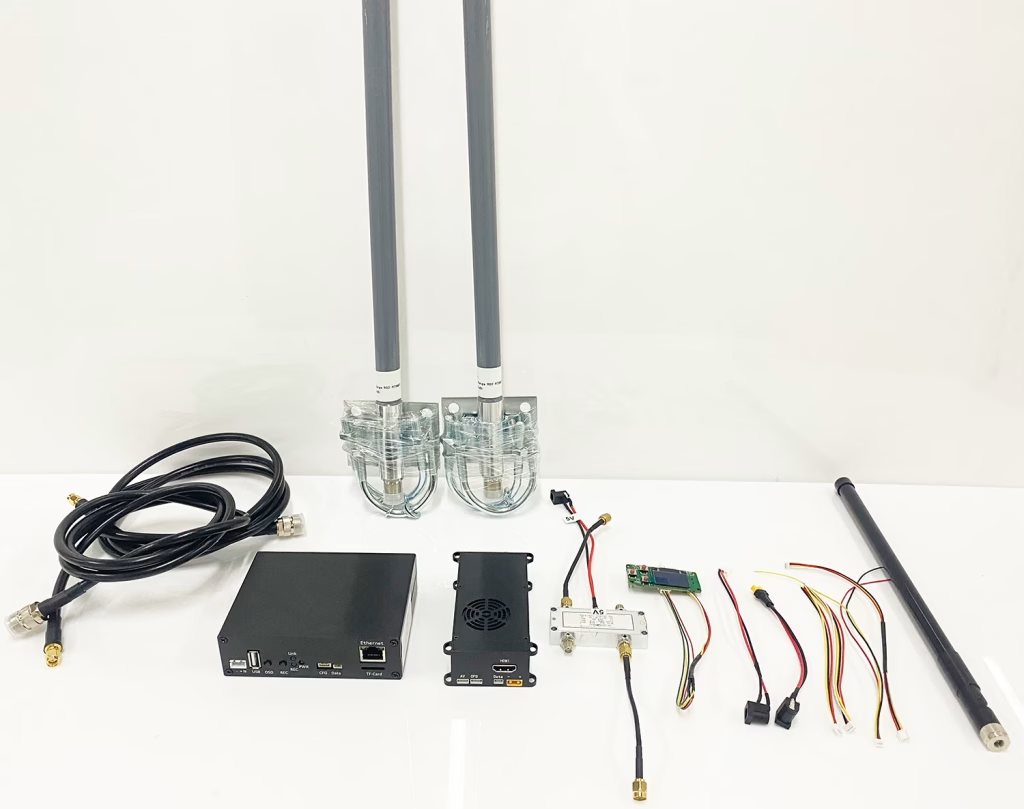
When 5km Transmission is Feasible
For a reliable 5km 1080p50 wireless video transmission solution, the critical factor is:
✔ Line-of-Sight (LOS)
- Clear LOS between transmitter and receiver
- Adequate antenna height (20–50 m+)
- Minimal obstruction in the Fresnel zone
⚠ Non-Line-of-Sight (NLOS)
- Signal attenuation rises sharply
- 5 km transmission becomes unreliable
- Performance highly dependent on environment
Video Quality vs Link Stability
One key decision for 5km 1080p50 wireless video transmission solutions is how to handle weak signals:
Option A: Maintain Quality
- Keep full 1080p50 resolution
- Weak signals may cause freezes or drops
Option B: Prioritize Stability
- Adaptive bitrate reduces video quality
- Ensures continuous transmission even under poor conditions
COFDM systems allow flexible configuration to balance these modes.
Consider Latency
Latency also impacts performance:
- Low latency → less error correction → lower robustness
- High robustness → more buffering → higher latency
Applications dictate the choice:
- Live production → ultra-low latency
- Surveillance or long-term links → stable connection preferred
Applicazioni tipiche
UN 5km 1080p50 wireless video transmission solution è l'ideale per:
- UAV/drone video downlink
- Event broadcasting
- Point-to-point building connections
- Sicurezza e sorveglianza
- Temporary outdoor installations
Conclusione
A successful 5km 1080p50 wireless video transmission solution depends on:
- Clear LOS
- Proper antenna setup
- Velocità in bit & video quality strategy
- Latency requirements
With COFDM technology, professional-grade wireless HDMI/SDI transmission over 5 km is achievable.
Ready to Deploy Your Solution?
If you need guidance on a 5km 1080p50 wireless video transmission solution, contact us with your project details. We can design the optimal COFDM-based setup for your application.
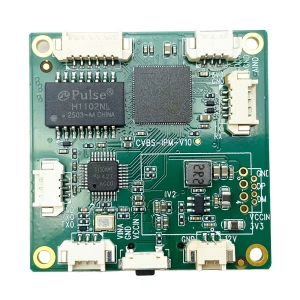
CVBS HDMI a IP encoder
Encoder IP da CVBS a Ethernet stabile a prova di segnale debole, Blocco del segnale basso
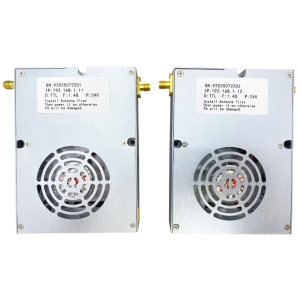
Wireless Video trasmissione


Wireless Video trasmissione
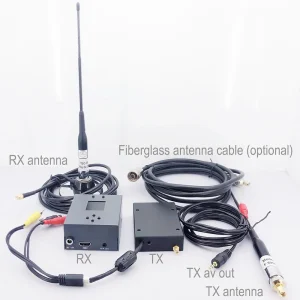
IP Mesh 100 Mbps Video Wireless Video Transceèiver 2x5W Pa 16 salto

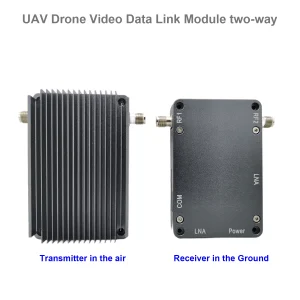

Wireless Video trasmissione
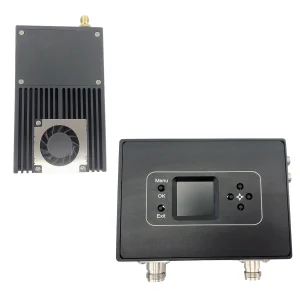
1740-1840MHZ 2WPA 30km Transmit e ricevitore video drone a lungo raggio con SBUS TTL

Telecamera FPV
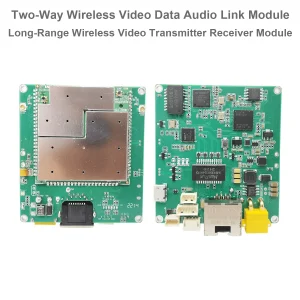
FPV Analog video scrambler and descrambler module for video encryption and decryption board
Bidirezionale A Due Vie
Broadcast-Grade vs. Security-Grade Wireless Video Transmission
When talking about professional wireless video transmission, there are generally two main categories: broadcast-grade E security-grade. Although both transmit video wirelessly, their design priorities and performance characteristics are different.
1️⃣ Broadcast-Grade Wireless Video Transmission
Scopo: Used for live TV production, eventi sportivi, concerts, and professional film/video production.
Caratteristiche principali:
- High Video Quality: Supports 1080p50, 4K, and low-latency HD video with minimal compression.
- Latenza ultrabassa: Often <100Signorina, so video is in sync with live events.
- Robust RF Modulation: Uses COFDM or other advanced modulation to maintain signal over long distances (several km) anche in ambienti difficili.
- LOS Preferred: Typically requires line-of-sight (LOS) for maximum stability.
- High Reliability: Designed to avoid signal dropouts or frame loss at all costs, even if the system temporarily interrupts during very weak signals.
Analogy: Like a live TV broadcast truck — the goal is crystal-clear, uninterrupted video for millions of viewers.
2️⃣ Security-Grade (Sorveglianza) Wireless Video trasmissione
Scopo: Used for CCTV, drones for security monitoring, traffic cameras, and long-term surveillance systems.
Caratteristiche principali:
- Continuous Transmission Priority: Stability over quality. The system will lower video resolution or increase compression to maintain the link.
- Higher Tolerance for Latency: Real-time latency is less critical (often 0.5–2 seconds acceptable).
- NLOS Capabilities: Some systems can operate in non-line-of-sight (NLOS) conditions using repeaters, wall penetration, or lower frequencies.
- Lower Bandwidth Requirement: Often optimized for long-term streaming, not broadcast-quality HD.
Analogy: Like a security camera network — the goal is to always have a live feed, even if the image is slightly blurry or compressed.
3️⃣ Key Difference Summary
| Caratteristica | Broadcast-Grade | Security-Grade |
|---|---|---|
| Qualità video | Ultra-high (1080p50 / 4K) | Medio (compressed) |
| Latenza | Molto basso (<100Signorina) | Medium–high (0.5–2s acceptable) |
| Transmission Priority | Quality first, may drop if weak | Link stability first, allows compression |
| LOS/NLOS Requirement | LOS strongly preferred | Can tolerate NLOS |
| Typical Use Case | Live TV, sport, concerts | CCTV, droni, traffic monitoring |
Insomma:
- Broadcast-grade = crystal-clear, bassa latenza, professional video for live events.
- Security-grade = reliable, continuous video feed for monitoring, sacrificing some quality if needed.
Fai una domanda
Grazie per la risposta. ✨