






UVC USB Camera to IP Encoder Low Latency 1080p120fps for Wearable Video Streaming Systems
Understanding Real-Time Video Encoding Challenges in Modern Wireless Applications
Наскоро, we received a technical inquiry regarding our UVC USB камера към IP енкодер с ниска латентност 1080p120fps solution for a next-generation wearable video system.
The customer requested the following requirements:
“I am interested in your UVC USB Camera to IP Ethernet Streaming Encoder Board (H.265/H.264 1080P60) and wanted to ask whether it would be possible to develop a custom version capable of supporting:
- 1080p at 120fps
- UVC USB camera input
- H.265/HEVC encoding
- very low latency UDP/IP output
- compact form factor
- low power consumption”
“The intended application is a wearable live video transmission system using a high-frame-rate UVC camera source connected to a wireless IP link.”
This reflects a typical demand for high frame rate, low latency video encoder systems използвани в wearable wireless video transmission, FPV системи, роботика, и приложения за дистанционно управление.
Съдържание
Key Technical Challenge: 1080p120fps vs Low Latency Video Encoding
In real-time UVC to IP streaming encoder дизайн, the biggest engineering challenge is balancing:
- резолюция на видео (1080р)
- скорост на кадрите (120кадъра в секунда)
- Encoding efficiency (H.265 / надявам се)
- Ultra-low latency UDP/IP streaming
- Power consumption and thermal limits
While 1080p120fps sounds attractive for motion clarity, it significantly increases system load in a low latency video encoder board:
1080p60 → 1080p120 = 2× data bandwidth + encoding workloadThis directly impacts:
- USB bandwidth in UVC camera input systems
- Real-time H.265 encoder processing speed
- Buffering inside IP streaming pipeline
- End-to-end latency stability
Като резултат, поддържане ultra-low latency video transmission becomes significantly more difficult.
H.265 Encoder and Latency Trade-Off
Най-модерно H.265 encoder boards for IP streaming are optimized for compression efficiency rather than ultra-low latency.
въпреки това, H.265 (надявам се) introduces:
- More complex motion estimation
- Larger encoding buffers
- Increased processing delay compared to H.264
This is why many low latency video encoder systems still prefer:
- H.264 encoding for ultra-low latency mode
- MJPEG or lightweight compression for real-time FPV
- FPGA-based pipelines for deterministic latency
UVC USB Camera Input Limitations
In most UVC USB camera to IP encoder systems, input limitations are also a key factor.
Typical UVC camera support:
| Резолюция | Честота на кадрите |
|---|---|
| 1080р | 30кадъра в секунда |
| 1080р | 60кадъра в секунда |
| 720р | 120кадъра в секунда |
True 1080p120 UVC output is extremely rare, even if the image sensor itself supports high frame rates.
Следователно, in most USB camera to IP streaming encoder applications, the system bottleneck is not the encoder — but the camera input pipeline itself.
Wearable Low Latency Video Transmission Systems
The application described belongs to a rapidly growing category:
- Wearable video transmission system
- FPV wireless video link
- Real-time remote monitoring
- Robotics video streaming
- AR/VR low latency video pipeline
These systems require:
- Компактен UVC USB camera to IP encoder boards
- Стабилен low latency UDP/IP streaming
- Low power embedded design
- Reliable wireless transmission performance
въпреки това, combining all requirements with 1080p120fps creates a significant engineering trade-off between:
- производителност
- Консумация на енергия
- Thermal design
- Latency stability
Practical Engineering Reality
Based on current embedded video encoder technology:
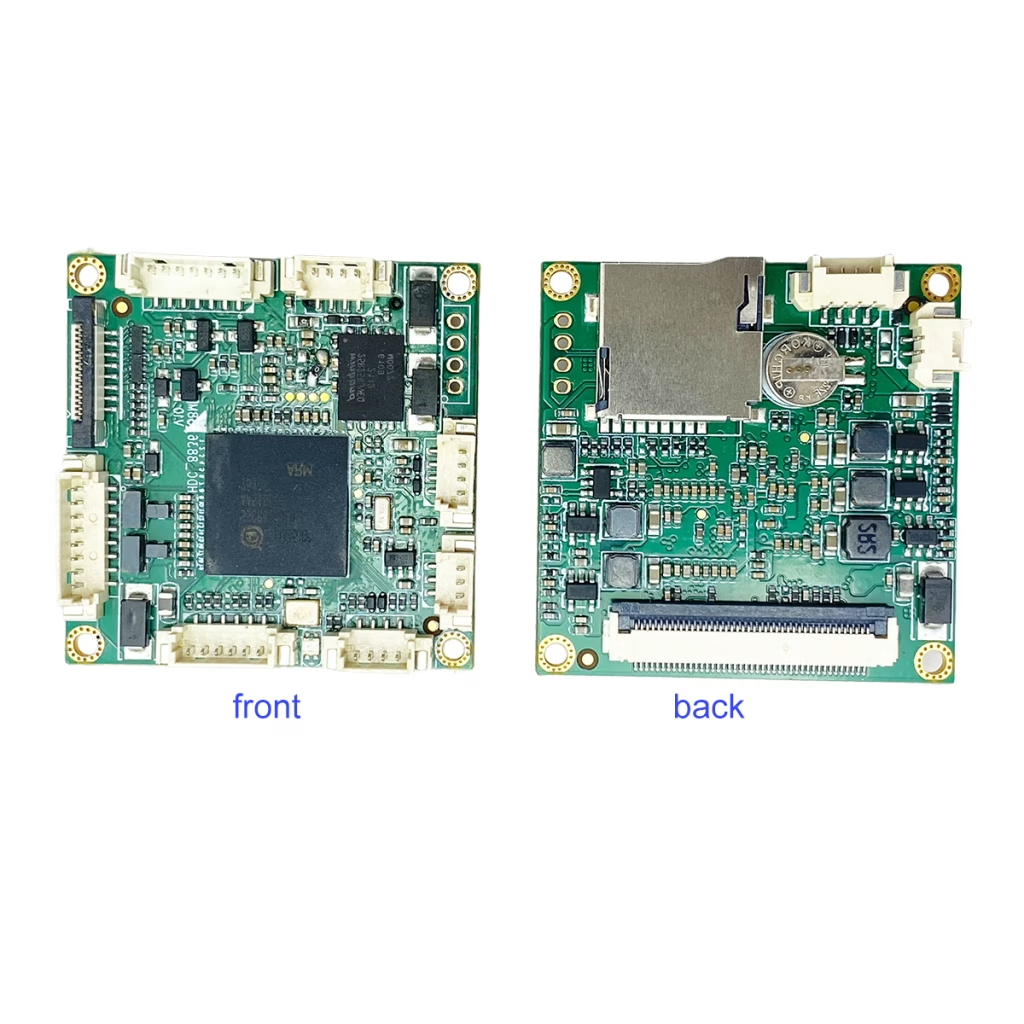
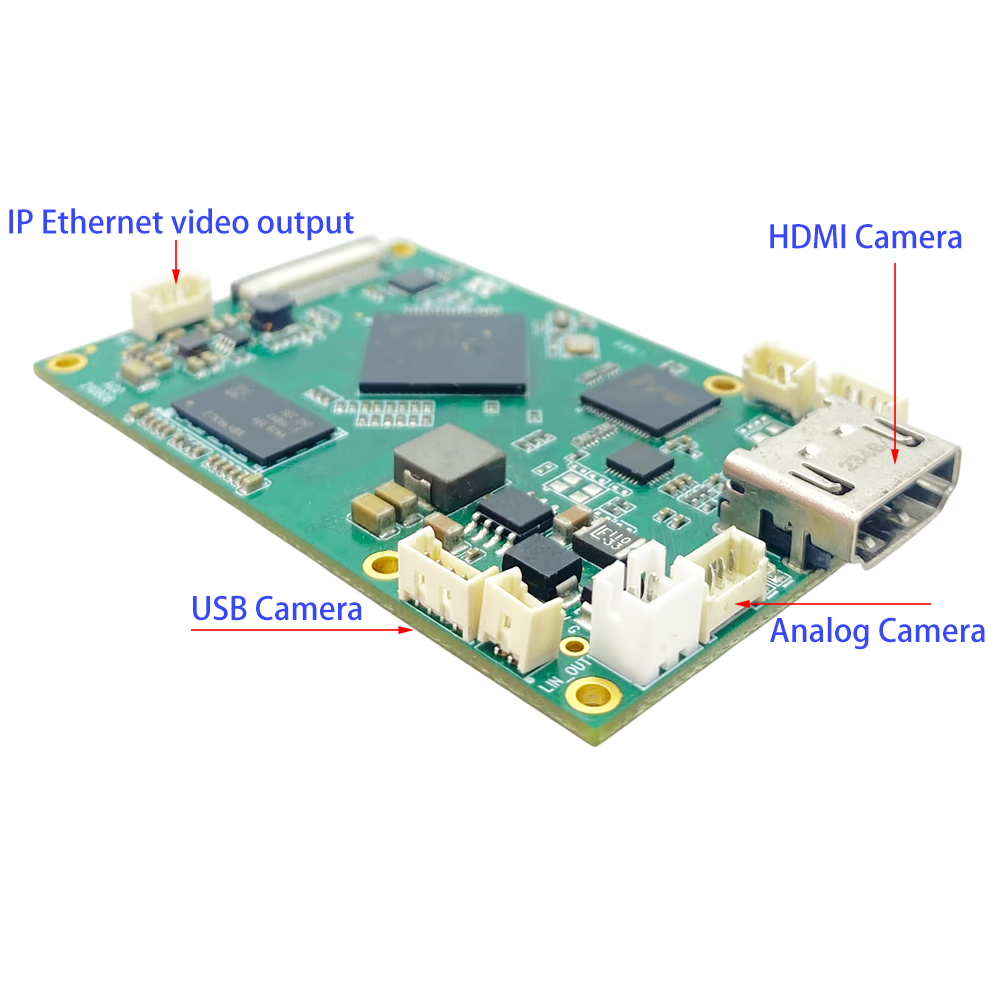
- Our existing UVC USB Camera to IP Encoder boards support up to 1080p60fps
- 1080p120fps is not supported on current USB-based encoder architecture
- Achieving 1080p120fps would require a new hardware design (non-UVC architecture)
This typically involves:
- High-speed MIPI CSI camera input
- FPGA-based video processing pipeline
- Higher-performance encoding chipset
- Increased power and thermal design requirements
- Custom firmware development for low latency optimization
Such development would require:
- Nre (Non-Recurring Engineering) разходи
- Minimum order quantity (MOQ)
- Full system-level validation
Recommended Low Latency Video Encoder Solution
For most low latency IP video streaming applications, the optimal balance is:
✔ 1080p60 + Ultra-Low Latency Optimization
This configuration provides:
- Стабилен low latency video encoder performance
- съвместим UVC USB camera input
- Ефективен H.265/H.264 encoding options
- Compact wearable hardware design
- Practical wireless transmission stability
This approach is widely used in:
- FPV drone video systems
- Robotics teleoperation
- Tactical body-worn cameras
- Industrial remote inspection
- Wireless real-time video links
Заключение
The inquiry for a UVC USB камера към IP енкодер с ниска латентност 1080p120fps highlights an important industry trend:
Demand for higher frame rate real-time video is increasing, but must be balanced with latency, мощност, and encoding constraints.
In most practical UVC to IP streaming encoder applications, 1080p60 remains the optimal balance between:
- Качество на изображението
- Стабилност на системата
- Ultra-low latency performance
- Hardware feasibility
For future systems requiring higher frame rates, a complete architectural shift beyond UVC USB input will be necessary.
Задай въпрос
Вашето съобщение е изпратено