




A client asked us if there is a way to customize and do frequency selection using some IO or maybe serial data command. We looking to add it to our product and enable selection through our interface.
如何通過控制電纜高和低水平切換FM音頻發射器頻率
目錄
FM Transmitter Product
是, many FM audio transmitter modules support frequency selection and configuration via IO or serial interfaces, such as I2C, SPI, or UART. Below are some common implementation methods:
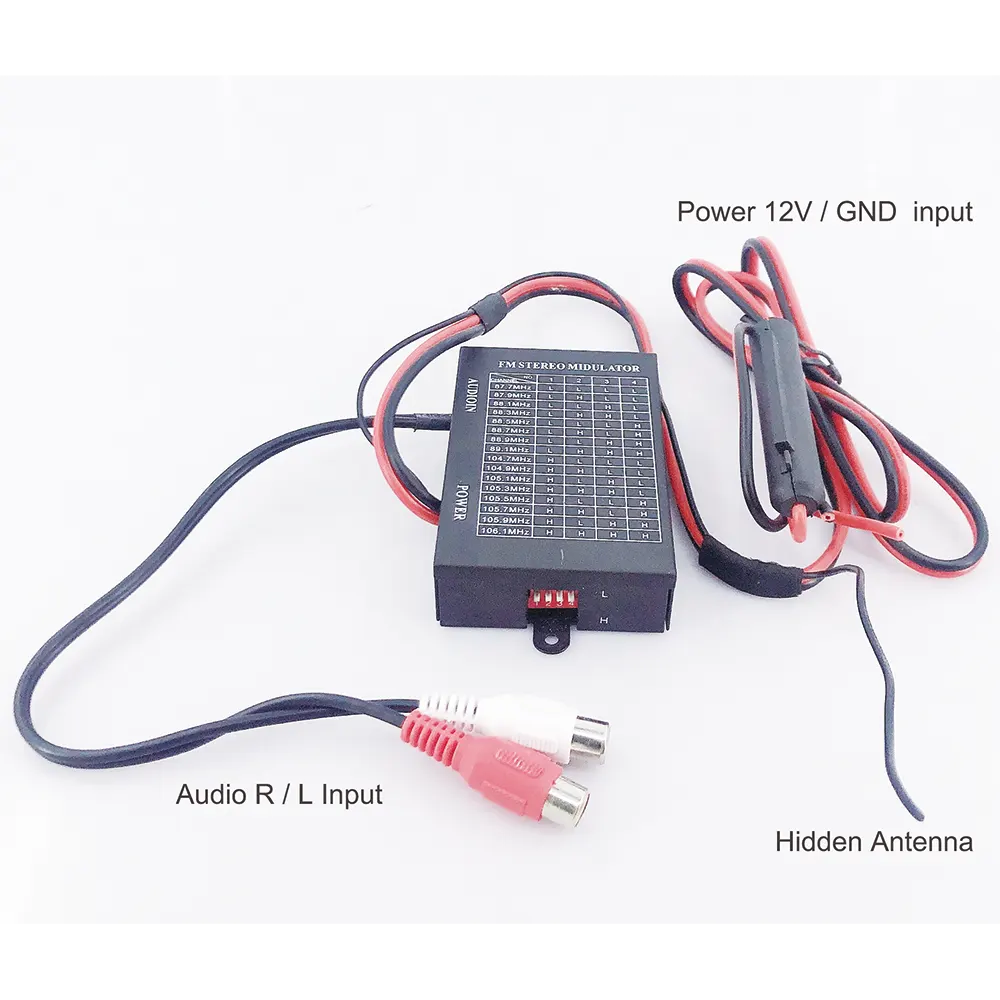
- On the PCB board of FM-16 audio transmitter, these four pins are turned on and off by the external CPU.
- The switch is in an open state at the bottom. The logic is 1. The master can use the IO port to short-circuit to the ground, the logic becomes 0.


影片中的文字
現在我們將展示如何使用高和低級別切換FM發射器的頻率.
如何通過控制電纜切換FM發射機頻率? 這四個開關現在轉到底部. 這四個開關目前處於高水平. HHH相應的頻率為106.1MHz. 控制這一點是高水平或低水平, 現在,我們已經對此進行了焊接以達到切換頻率的目的.
這是最後一個. (4點), 然後,我們將其連接到地面並使其成為低水平. HHL相應的頻率為105.3MHz. 讓我們將此FM收音機調整為105.3MHz. 現在我將第四點連接到地面. 短路. 頻率已切換. 聲音在那裡. 我們可以聽到音樂. 帶走. 沒有音樂.
您需要在外圍電路中添加MCU,以控制四個高和低水平的輸出. 要切換FM立體聲音頻發射器的工作頻率. 如果您還有其他問題,請與我們聯繫.
1. I2C/SPI Interface
- 頻率選擇: 通過I2C或SPI發送特定命令和數據以設置傳輸頻率.
- 配置寄存器: 許多FM發射器芯片具有可以通過I2C/SPI編寫的內部寄存器以配置頻率, 功率, 及其他參數.
例子:
- 使用I2C, 將頻率數據發送到指定的寄存器地址.
- 使用SPI, 發送包含頻率信息的命令框架.
2. UART接口
- 在命令: Some modules support setting the frequency via UART using AT commands.
- Custom Protocol: If the module supports a custom protocol, you can send specific data packets via UART to configure the frequency.
例子:
- Send a command like
AT+FREQ=98.5to set the frequency to 98.5 兆赫.
3. GPIO Control
- 數字輸入: Use GPIO pins to input digital signals for selecting preset frequencies.
- PWM Signal: Some modules may support frequency adjustment via PWM signals.
例子:
- Use multiple GPIO pins in combination to select different frequencies.
4. MCU Integration
- Microcontroller: If your product already has a microcontroller (MCU), you can program it to handle frequency selection and configuration.
- 固件更新: Update the MCU firmware to support new frequency settings.
5. Software Libraries and APIs
- Existing Libraries: Some FM transmitter modules provide ready-to-use software libraries and APIs for easy integration.
- Custom Development: If no library is available, 您可以根據模塊的數據表開發自定義驅動程序和控制代碼.
Implementation Steps
- 選擇一個模塊: 選擇一個支持所需接口的FM發射器模塊 (I2C, SPI, UART, 等等).
- 查看數據表: 仔細閱讀模塊的數據表,以了解如何通過接口配置頻率.
- 開發接口代碼: 根據數據表編寫代碼以實現頻率選擇和配置.
- 集成到您的產品中: 將代碼集成到您的產品中,並通過接口提供頻率選擇.
- 測試和驗證: 在現實情況下測試和驗證頻率選擇功能,以確保穩定性和準確性.
Example Code (Assuming I2C Interface)
#包括 <電線>

#定義fm_module_address 0x60

void setfmfquency(浮頻) {
  uint16_t freqvalue = (uint16_t)(頻率 * 10); // 例如, 98.5 MHz-> 985
  Wire.BeginTransmission(fm_module_address);
  Wire.Write(0x01); // Assume 0x01 is the frequency setting register
  Wire.write((freqValue >> 8) & 0xFF); // High byte
  Wire.write(freqValue & 0xFF); // Low byte
  Wire.endTransmission();
}

void setup() {
  Wire.begin();
  setFMFrequency(98.5); // Set frequency to 98.5 兆赫
}

void loop() {
  // Main loop
}
按照這些步驟, you can flexibly integrate the FM audio transmitter into your product and enable frequency selection through your interface.
問一個問題
感謝你的回應。 ✨