






Here are some FAQ for CVBS over IP video stream converter of drone or industrial use.

Phạm vi giá: $118.00 bởi vì $178.00
- Q: What is a CVBS to IP converter?
Một: A CVBS to IP converter (also calledAV encoder board hoặc làcomposite to IP encoder) encodes analogVideo tổng hợp & audio signals into digital IP streams for transmission over Ethernet networks. - Q: Can this converter turn my old CCTV cameras into IP cameras?
Một: Vâng! It acts as acamera to IP transformer, allowing legacyCVBS cameras to connect to modernIP-based NVRs hoặc làvideo management software.
- Q: What video resolutions does a CVBS to IP encoder support?
Một: Most supportNTSC / PAL tiêu chuẩn (lên đến720×576@25 khung hình/giây hoặc là720×480@30 khung hình/giây), Lý tưởng chođầu vào video tổng hợp. - Q: Does it support audio encoding?
Một: Vâng! Audio over IP is enabled viaRCA audio input alongsideVideo CVBS, synced in the IP stream. - Q: What is the typical latency of a CVBS to IP converter?
Một: Cấp độ chuyên nghiệpAV encoder boards achieve <150độ trễ ms, Thích hợp choGiám sát thời gian thực. - Q: Can multiple encoders work on one network?
Một: Vâng! Assign uniqueđịa chỉ IP to each device formulti-camera IP streaming.
- Q: How do I set up a CVBS to IP converter for security cameras?
Một: Kết nốiCVBS camera output to the encoder’sRCA/BNC input, then link itsCổng mạng đến aPoE switch (or useDC power). - Q: Does it require special software?
Một: Many supportONVIF protocol, working withVLC, Iris màu xanh, hoặc làMilestone NVRs without extra software. - Q: Can I power the encoder via Ethernet (Poe)?
Một: Không, của chúng tôi compact AV encoders does not support Poe.
- Q: Will this work with my analog VCR or DVD player?
Một: Tuyệt đối! Use it to digitizecomposite AV sources (Vcrs, DVD players) vìLive streaming hoặc làarchiving over IP. - Q: Is it compatible with existing NVR systems?
Một: Vâng! ONVIF-compliant encoders integrate withIP NVRs like Hikvision, Dahua, or Synology.
- Q: What streaming protocols are supported?
Một: Common protocols includeRTSP, UDP, RTMP, vàHTTP, cho phépnguồn cấp dữ liệu video trực tiếp on websites or apps. - Q: How much bandwidth does a CVBS to IP stream use?
Một: có thể điều chỉnhbitrate control (VÍ DỤ., 500Kbps–8Mbps) allows optimization fornetwork constraints. - Q: Can I access video over the internet?
Một: Vâng! Định cấu hìnhChuyển tiếp cổng or useP2P cloud services vìgiám sát từ xa.
- Q: Why use this for retail store surveillance?
Một: Cost-effectively upgradeanalog CCTV to IP cameras without replacing coaxial cables. - Q: Can I use this for live church broadcasts?
Một: Vâng! Mã hóacomposite video feeds (VÍ DỤ., from mixers) vìYouTube/Facebook streaming via RTMP.
- Q: Why is my video stream choppy?
Một: Kiểm tranetwork bandwidth, reduceencoder bitrate, or enableMã hóa H.265 (Nếu được hỗ trợ) for efficiency. - Q: No video after setup – what to check?
Một: Xác minhCVBS input connections, cung cấp năng lượng, vàcấu hình IP (sử dụngARP/Ping tools).
- Q: Can I add motion detection?
Một: Some encoders includePhân tích video vìmotion-triggered recording or alerts. - Q: Is two-way audio supported?
Một: Lấy làm tiếc, this model supported only one-way audio encoder,it does not support two-wayaudio input/output vìintercom systems over IP.
- Q: What’s the price range for a compact CVBS encoder?
Một: Budget encoders start at$300, trong khiprofessional AV boards với4K downscaling trị giá$300+. - Q: Where to buy CVBS to IP converters?
Một: Our website https://ivcan.com supports shop on line. Or please click contact or WhatsApp button to get more support from us.
- Q: How to integrate with home automation (VÍ DỤ., Home Assistant)?
Một: Sử dụngRTSP feeds trongHome Assistant thông quaGeneric Camera Platform. - Q: Does it work with wireless networks?
Một: Sử dụng mộtEthernet-to-WiFi adapter vìwireless IP video transmission.
- Q: Can I record video directly to an SD card?
Một: Của chúng tôi AV encoder boards Vcan1746 bao gồmmicroSD slots vìstandalone recording. - Q: What’s the maximum cable length for CVBS input?
Một: Video tương tự degrades beyond100m – place theencoder board near the source. - Q: Is there a web interface for configuration?
Một: Vâng! Access settings viaembedded web GUI using any browser. - Q: Can multiple users view the stream simultaneously?
Một: Most support10+ concurrent RTSP viewers (thay đổi theo mô hình). - Q: Does temperature affect encoder performance?
Một: Cấp công nghiệp-20°C~60°C operation ensuresreliable surveillance in harsh environments. - Q: How to secure the video stream from hacking?
Một: Cho phépHTTPS, IP whitelisting, and change defaultadmin passwords. - Q: Can I stream to multiple platforms at once?
Một: Vâng! Sử dụngRTMP simulcasting đếnYouTube, Twitch, and Facebook simultaneously. - Q: What’s the difference between a CVBS encoder and a video capture card?
Một: Encoders output Ethernet/IP streams; capture cards (VÍ DỤ., USB) connect to PCs for local processing. - Q: Do I need a static IP address?
Một: No – useDDNS services (like No-IP) vìdynamic IP networks. - Q: Can I control PTZ cameras through the encoder?
Một: Only if the encoder hasRS485 ports vìPTZ protocol support (VÍ DỤ., Pelco-D). If the PTZ of your camera is serial port control, you can use the transparent serial port on our CVBS over IP video stream converter (used with the codec board); if it is network port control, you can control it yourself through the wireless link without the need for a codec board. - Q: Why choose H.265 over H.264?
Một: Mã hóa H.265 reducesbandwidth usage by 50% at similar quality. H.264 encoding offer the super low latency if you need it for drone use. - Q: Is de-interlacing supported for analog video?
Một: Vâng! Auto de-interlacing convertsinterlaced CVBS đếnprogressive scan for smoother IP video. - Q: How many encoders can a network handle?
Một: Depends onswitch capacity – a 24-port Gigabit switch supports20+ encoders comfortably. - Q: Can I use this with a Raspberry Pi?
Một: Vâng! Một sốencoder boards interface withRaspberry Pi GPIO for DIY projects. - Q: Does it output 4K video?
Một: No –đầu vào CVBS LàSD resolution (max 720×576). For HD, sử dụngVcan1746-4K-HDMI encoders thay thế. - Q: What’s the power consumption?
Một: Điển hình150mA@12V – ideal forenergy-efficient IP systems. - Q: Can I integrate with Alexa/Google Home?
Một: Via third-party tools likeHome Assistant sử dụngRTSP feeds. - Q: Cách đặt lại về cài đặt gốc?
Một: Nhấnnút reset phần cứng vì 10 giây (tham khảoencoder manual). - Q: Is there a mobile app for viewing?
Một: Sử dụngONVIF-compatible apps (VÍ DỤ., TinyCam Pro, ONVIF Viewer) trêniOS/Android. - Q: Can it overlay timestamps on video?
Một: Vâng! Cho phépOSD (Màn hình trên màn hình) vìlớp phủ thời gian/ngày/văn bản. - Q: Điều gì xảy ra nếu máy ảnh của tôi không có đầu ra âm thanh?
Một: Thêm mộtmicro bên ngoài to the encoder’scổng đầu vào âm thanh. - Q: Bộ mã hóa có hỗ trợ truyền phát đa hướng không?
Một: Một mô hình khác VCAN1746 làm - hỗ trợ Truyền phát video kép qua IP Ethernet (CVBS+HDMI hoặc CVBS + SDI hoặc CVBS+AHD). - Q: Những thiết bị này tồn tại được bao lâu?
Một: Linh kiện cấp công nghiệp đảm bảo50,000+ giờ MTBF (5+ năm sử dụng liên tục). - Q: Nơi tìm SDK để tích hợp tùy chỉnh?
Một: Nhà sản xuất cung cấpSDK dành cho Linux/Windows - tìm kiếm“SDK bộ mã hóa CVBS” để tải xuống.
Bảng mô-đun bộ mã hóa
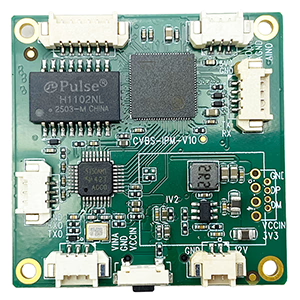
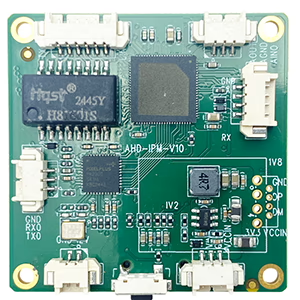
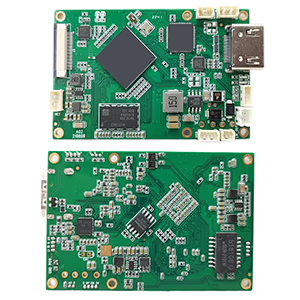
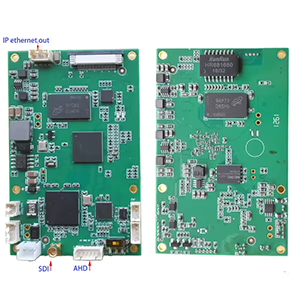
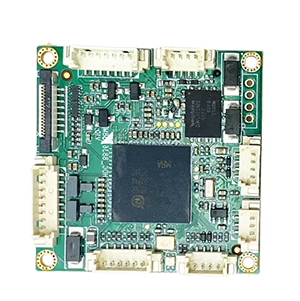
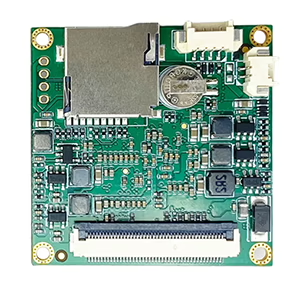
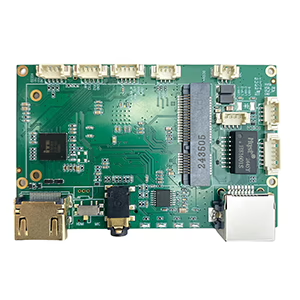
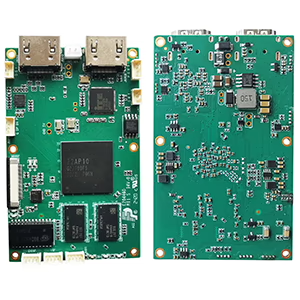
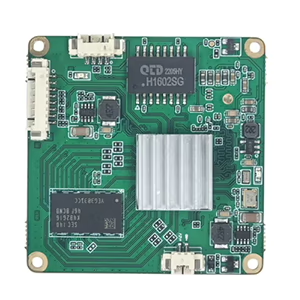
Bảng mô-đun giải mã
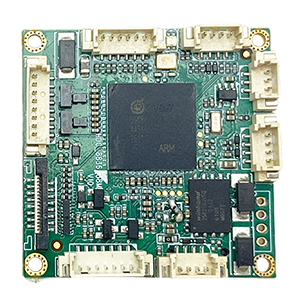
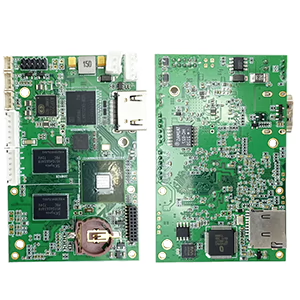
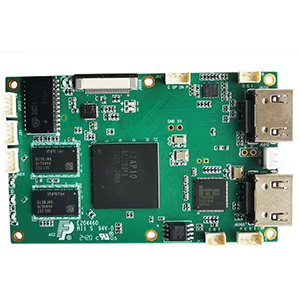
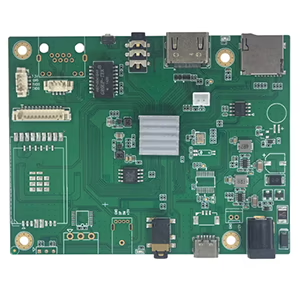
Có sẵn để tùy chỉnh
Sản phẩm mã hóa mới
| Không. | tên sản phẩm | Cấu hình | Các tính năng chính | Trạng thái |
|---|---|---|---|---|
| 1 | Bộ mã hóa video ánh sáng nhìn thấy USB UVC hai kênh | 2× đầu vào USB | Hỗ trợ mã hóa video camera USB kép, và truyền phát RTSP; đầu ra CVBS/HDMI cục bộ; chế độ hiển thị có thể chuyển đổi | Sản xuất hàng loạt |
| 2 | Bộ mã hóa kênh đôi (1× Đèn nhìn thấy được USB + 1× Camera chụp ảnh nhiệt USB) | 2× đầu vào USB | Hỗ trợ camera USB kép (dễ thấy + nhiệt) chiếm lấy, mã hóa, và truyền phát RTSP; đầu ra CVBS/HDMI cục bộ; chế độ hiển thị có thể chuyển đổi | Sản xuất hàng loạt |
| 3 | Mô-đun hiển thị HDMI/CVBS của bộ giải mã RTSP | HDMI + Đầu ra CVBS | Hỗ trợ giải mã luồng RTSP lên tới 4×1080P@30fps; Hỗ trợ chuyển tiếp giao thức truyền phát video; Màn hình đầu ra HDMI/CVBS | Mẫu có sẵn |
| 4 | Mô-đun hiển thị HDMI/CVBS Bộ giải mã RTSP với 4.3"/5" LCD | đầu ra HDMI + Man hinh LCD | Hỗ trợ giải mã luồng RTSP lên tới 4×1080P@30fps; chuyển tiếp giao thức; Màn hình đầu ra HDMI/CVBS | Gỡ lỗi |
| 5 | Bộ mã hóa kênh đôi (1× Đèn nhìn thấy được USB + 1× CVBS Tương tự) | 1× CVBS + 1× Đầu vào USB UVC | Video kép (USB + CVBS), mã hóa và truyền phát RTSP; đầu ra CVBS/HDMI cục bộ; chế độ hiển thị có thể chuyển đổi | Gỡ lỗi |
| 6 | Bộ mã hóa kênh đôi (1× USB UVC + 1× AHD Tương tự) | 1× AHD + 1× Đầu vào USB UVC | Quay video kép (USB + AHD), mã hóa và truyền phát RTSP; đầu ra CVBS/HDMI cục bộ; chế độ hiển thị có thể chuyển đổi | Gỡ lỗi |
| 7 | Bộ mã hóa kênh đôi (1× CVBS + 1× Video tương tự AHD) | CVBS + AHD 2 đầu vào video | Quay video analog kép, mã hóa và truyền phát RTSP; đầu ra CVBS/HDMI cục bộ; chế độ hiển thị có thể chuyển đổi | Gỡ lỗi |
| 8 | Bộ mã hóa kênh đôi (1× Máy ảnh CMOS + 1× Camera chụp ảnh nhiệt USB) | 1× Giao diện USB | Hỗ trợ CMOS + Chụp ảnh nhiệt USB, mã hóa và truyền phát RTSP; đầu ra CVBS/HDMI cục bộ; chế độ hiển thị có thể chuyển đổi | Sản xuất hàng loạt |
Dành cho các giải pháp chuyển đổi đầu vào/đầu ra video tùy chỉnh không được liệt kê trong các sản phẩm của chúng tôi, vui lòng liên hệ với chúng tôi để được hỗ trợ OEM/ODM. Chúng tôi có thể phát triển các sản phẩm phù hợp dựa trên yêu cầu của bạn.
Đặt một câu hỏi
Tin nhắn của bạn đã được gửi