

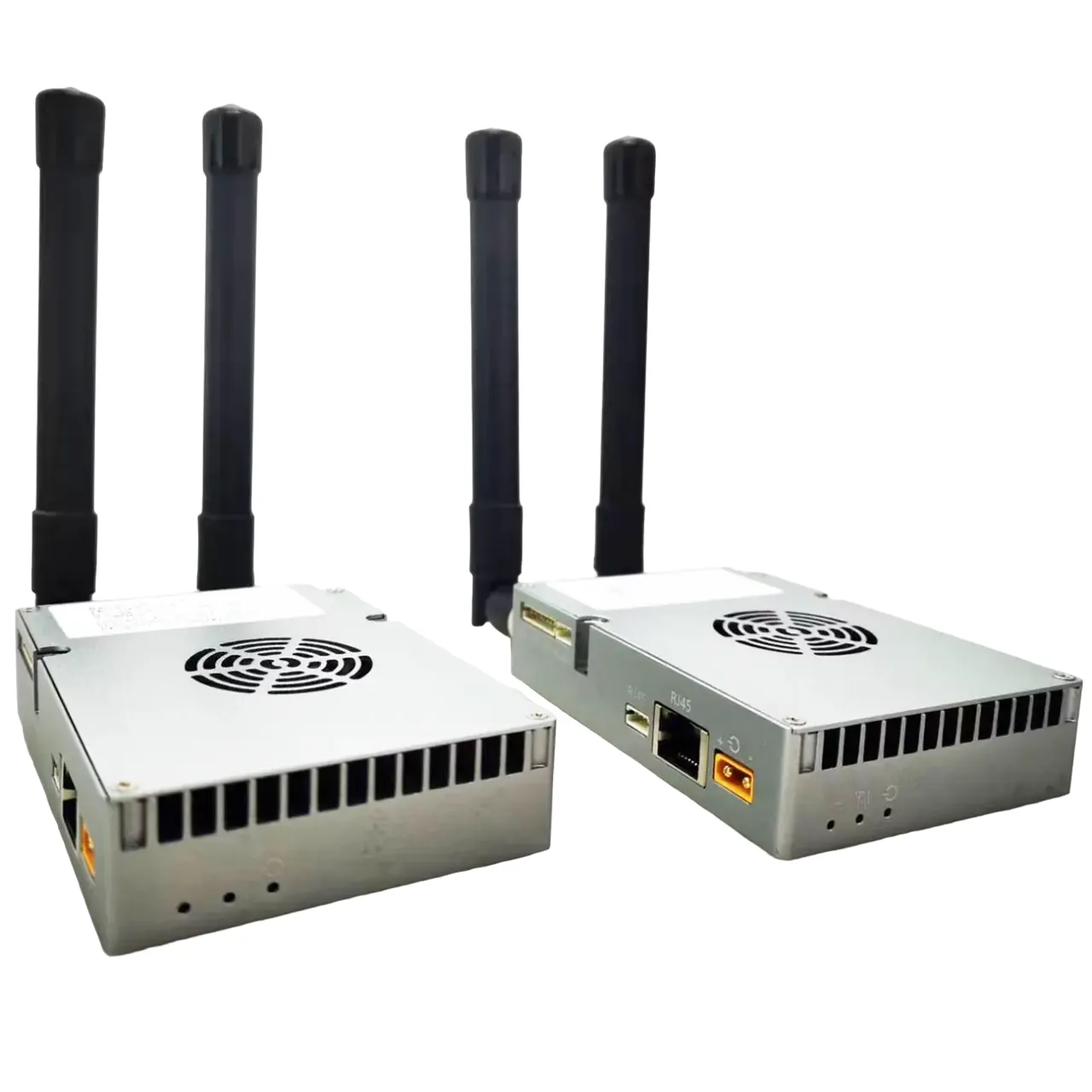
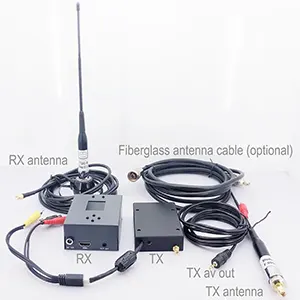


W bezprzewodowym systemie nadajnika i odbiornika danych wideo, oba wzmacniacze niskoszumowe (LNA) and bandpass filters play critical but distinct roles. Here’s a structured comparison of their functions and importance:
Spis treści
LNA (Wzmacniacz o niskim poziomie hałasu)
- Primary Role: Amplifies weak incoming signals in the odbiornik with minimal added noise, improving sensitivity.
- Key Characteristics:
- Niski poziom hałasu (NF): Ensures signal integrity by minimizing noise introduction.
- Wysoki zysk: Boosts weak signals early in the receiver chain for better downstream processing.
- Placement: Typically placed early in the receiver chain, sometimes after a preliminary filter (preselector) to block strong out-of-band interference.
- Importance in Video Systems:
- Critical for maintaining signal-to-noise ratio (SNR) in high-bandwidth video transmission, where weak signals are common.
- Enables reliable recovery of data in the presence of path loss or interference.
Bandpass Filter
- Primary Role: Selectively allows a specific frequency band to pass while attenuating others, used in both nadajnik i odbiornik.
- Key Characteristics:
- Frequency Selectivity: Ensures compliance with regulatory standards (np., FCC) by restricting emissions to licensed bands.
- Interference Rejection: Blocks unwanted signals (np., adjacent channels, hałas) in the receiver.
- Placement:
- Nadajnik: After the power amplifier (ROCZNIE) to limit out-of-band radiation.
- Odbiornik: Often split into two stages—a preselector filter before the LNA (to protect it from strong interferers) i a post-LNA filter (to refine signal purity).
- Importance in Video Systems:
- Prevents distortion from out-of-band signals (np., komórkowy, Wi-Fi) in high-bandwidth applications.
- Reduces noise floor by eliminating irrelevant frequencies.
Comparison Table
| Aspect | LNA | Bandpass Filter |
|---|---|---|
| Funkcjonować | Amplifies weak signals with low noise | Filters unwanted frequencies |
| Key Metric | Liczba szumów (NF), Osiągać | Pasmo, Utrata wtrąceniowa, Selectivity |
| Transmitter Role | Not used (PA instead) | Limits transmitted spectrum |
| Receiver Role | Boosts signal early in the chain | Rejects interference and noise |
| Critical for | Czułość odbiornika | Signal purity and regulatory compliance |
Rozważania projektowe
- Order of Components:
- ZA preselector filter before the LNA prevents strong interferers from saturating it.
- Post-LNA filtering refines the signal but requires the LNA to handle in-band noise.
- Trade-offs:
- Filter insertion loss before the LNA weakens the signal, but protects the LNA.
- LNAs without prior filtering risk amplifying interference, causing distortion.
- Video-Specific Needs:
- Wideband Filters: Must accommodate high data rates without distorting the video signal.
- High-Gain LNAs: Ensure sufficient amplification across the entire video bandwidth.
Wniosek
- LNA vs. Bandpass Filter: Not an either/or choice—both are essential. The LNA ensures weak signals are amplified cleanly, while the bandpass filter maintains spectral integrity.
- Optimal Design: Użyj preselector bandpass filter before the LNA to block major interferers, followed by amplification and additional filtering. In the transmitter, the bandpass filter ensures compliance and reduces interference.
Podsumowując, LNAs and bandpass filters are complementary components that address different challenges (amplification vs. selectivity) in wireless video systems. Proper integration of both is key to achieving high-performance, reliable transmission.
Zadać pytanie
Twoja wiadomość została wysłana