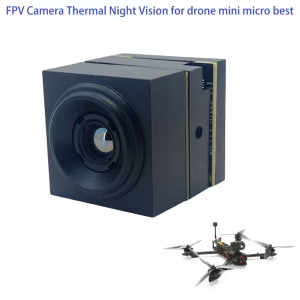
An FPV thermal camera (First Person View thermal camera) is a specialized imaging device that combines thermal infrared technology with real-time video transmission, enabling users to view heat signatures and temperature variations in environments through a live feed. These cameras are commonly integrated into drones, RC vehicles, or other remote-operated systems for applications like surveillance, ricerca e salvataggio, industrial inspections, and tactical operations. Below is a detailed breakdown:
Key Components & Caratteristiche
- Thermal Imaging Sensor
- Uses uncooled long-wave infrared (LWIR) sensors to detect heat radiation, typically with resolutions like 640×512 pixels.
- Detects temperature differences and converts them into visual data, often displayed in grayscale or color palettes (per esempio., “ironbow” modalità).
- FPV Integration
- Transmits live video via analogico (CVBS) o digital protocols (per esempio., H.264/H.265) to goggles, monitors, or ground stations.
- Compatible with FPV drones and RC systems, supporting low-latency transmission for real-time control.
- Lens & Optics
- Caratteristiche 9mm or 10mm lenses optimized for thermal imaging, balancing field of view and detail capture.
- Some models include dual-light systems (termico + luce visibile) for hybrid imaging.
- Durability & Form Factor
- Designed for rugged use with impermeabile e vibration-resistant housings.
- Compact and lightweight for integration into drones (per esempio., SKYDROID C12 for FPV gimbals).
applicazioni
- Ricerca e salvataggio
- Locate missing persons or animals in low-visibility conditions (per esempio., smoke, darkness).
- Industrial Inspections
- Detect overheating components in electrical systems, condutture, or machinery.
- Surveillance & Sicurezza
- Monitor borders, facilities, or wildlife at night without visible light.
- Firefighting
- Identify hotspots in wildfires or structural fires using thermal imaging.
- Tactical Operations
- Military or law enforcement reconnaissance in obscured environments.
Example Models
- XK-C132 (9mm Lens)
- 640×512 resolution, analog CVBS output, designed for RC FPV vehicles.
- SKYDROID C12
- 2K thermal imaging with 3-axis gimbal stabilization, dual-light (termico + visibile) for drones.
- XK-V103TDS Transmitter
- COFDM-based system for long-range, stable video transmission in firefighting robots.
Technical Considerations
- Latenza: Analog systems (per esempio., CVBS) offer lower latency (~30ms) compared to digital systems, critical for high-speed FPV drones.
- Allineare: COFDM modulation enables multi-kilometer transmission in urban or obstructed environments.
- Consumo energetico: Thermal sensors and transmitters may require robust power systems (per esempio., LiPo batteries).
Limitations
- Cost: High-resolution thermal cameras are expensive compared to standard FPV cameras.
- Risoluzione: Thermal sensors generally have lower resolution than visible-light cameras (per esempio., 640×512 vs. 4K).
- Environmental Sensitivity: Performance can degrade in extreme temperatures or heavy rain.
Integration with FPV Systems
FPV thermal cameras are often paired with:
- COFDM Transmitters: For encrypted, long-range video links.
- Ground Control Stations: To analyze thermal data in real time.
- AI Analytics: Some systems use machine learning to auto-detect anomalies (per esempio., overheated equipment).
In sintesi, an FPV thermal camera merges thermal imaging with real-time video transmission, empowering users to “see” heat in challenging environments. Its applications span from lifesaving missions to industrial efficiency, driven by advancements in sensor technology and wireless communication.

Telecamera FPV
Termocamera analogica per telecamera per visione notturna a infrarossi drone quadcopter fpv
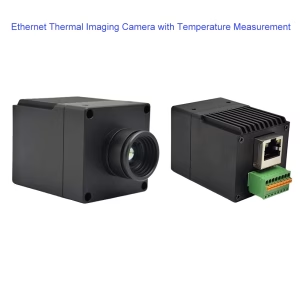
Telecamera FPV