






56110MHZ-7210MHz 6-7 GHZ FPV VTX 3 Watts Power Amplifier 6.1-7.2GHz 5WPA Transmitter
Sommario
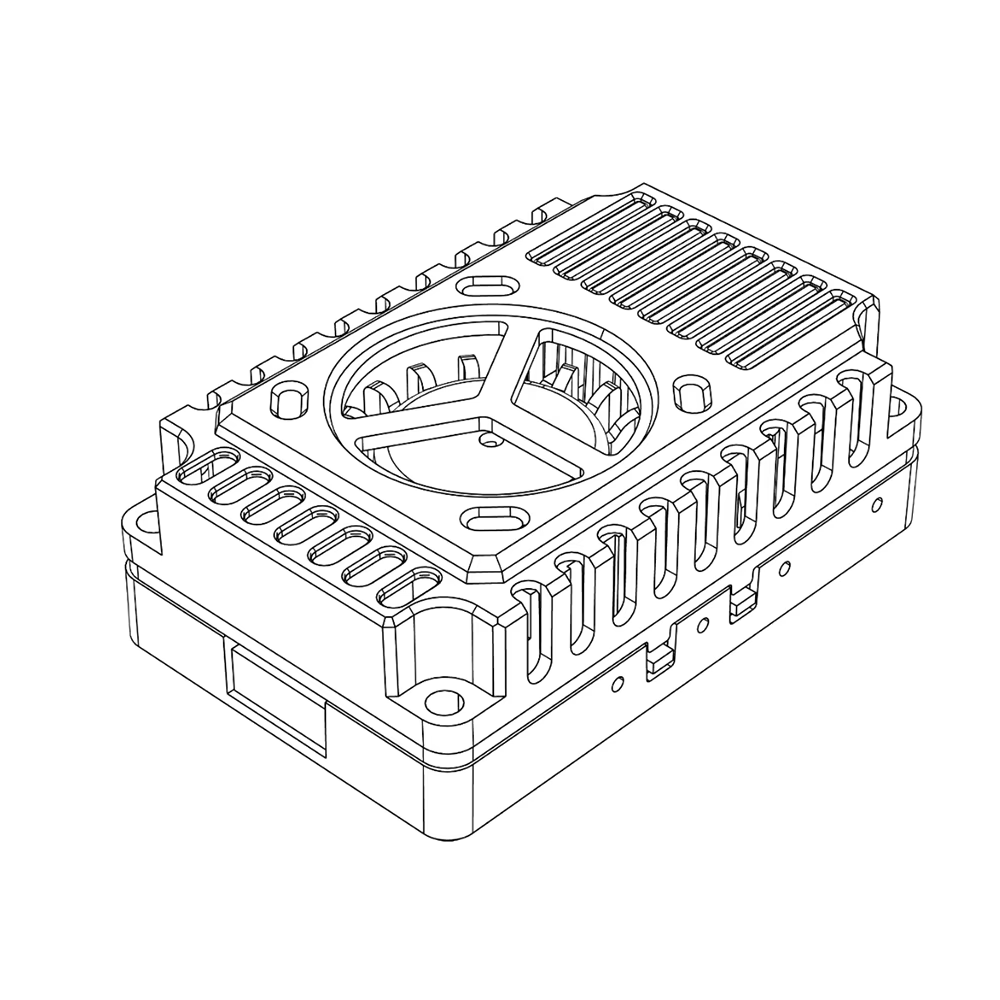
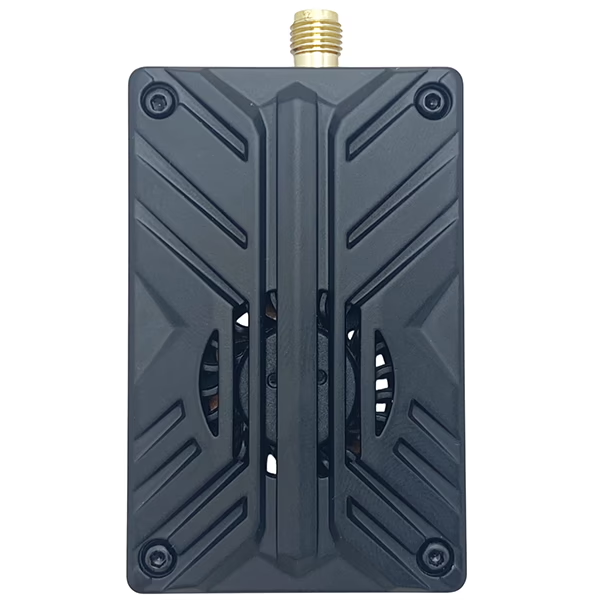
Aspetto esteriore
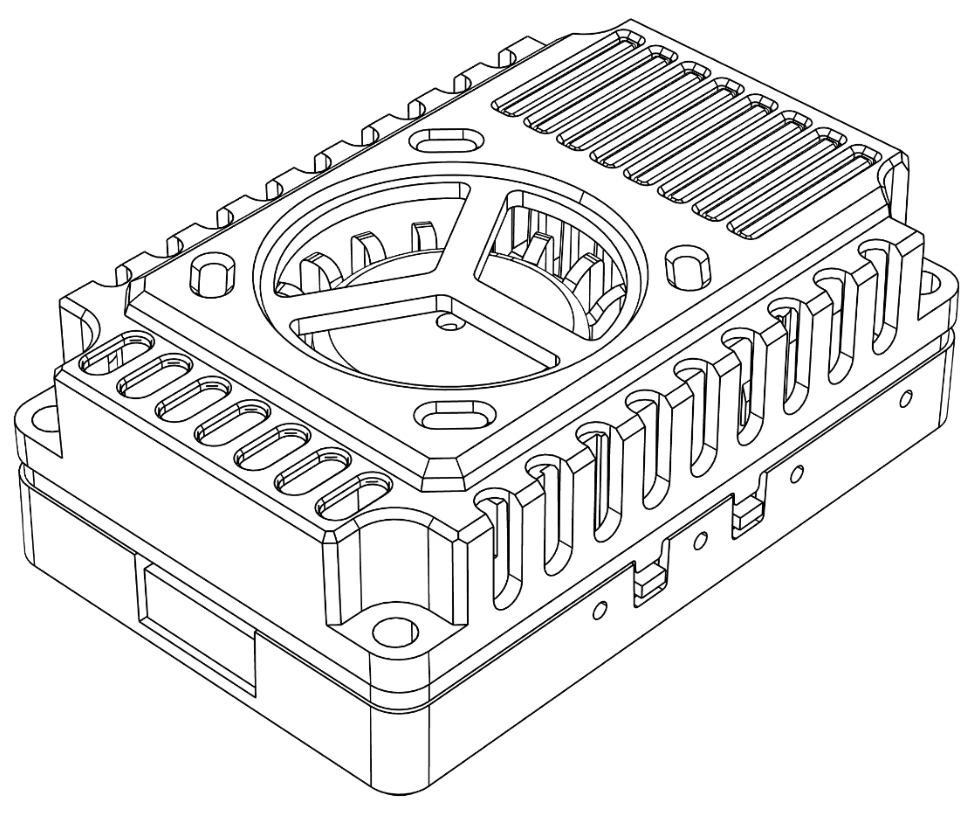
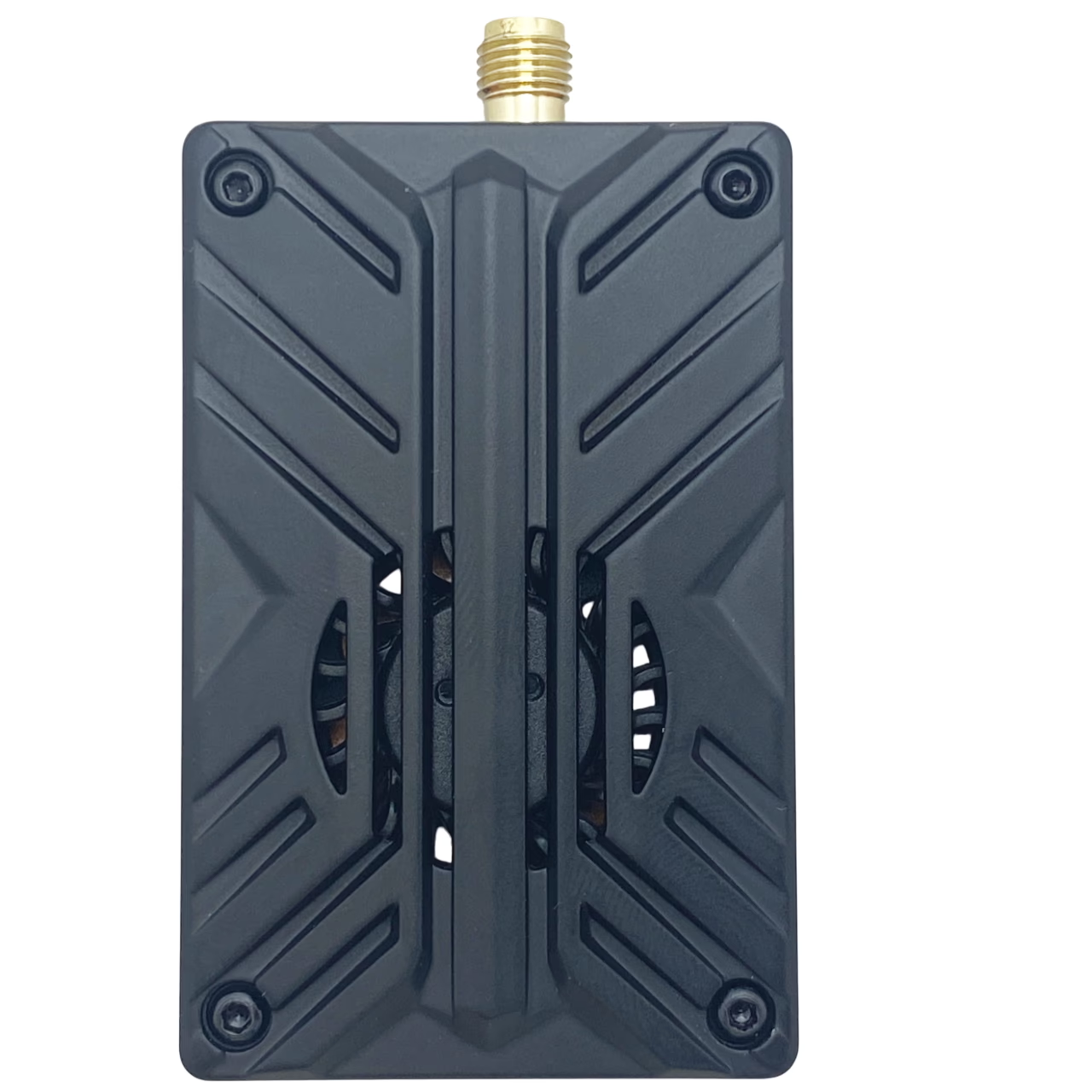
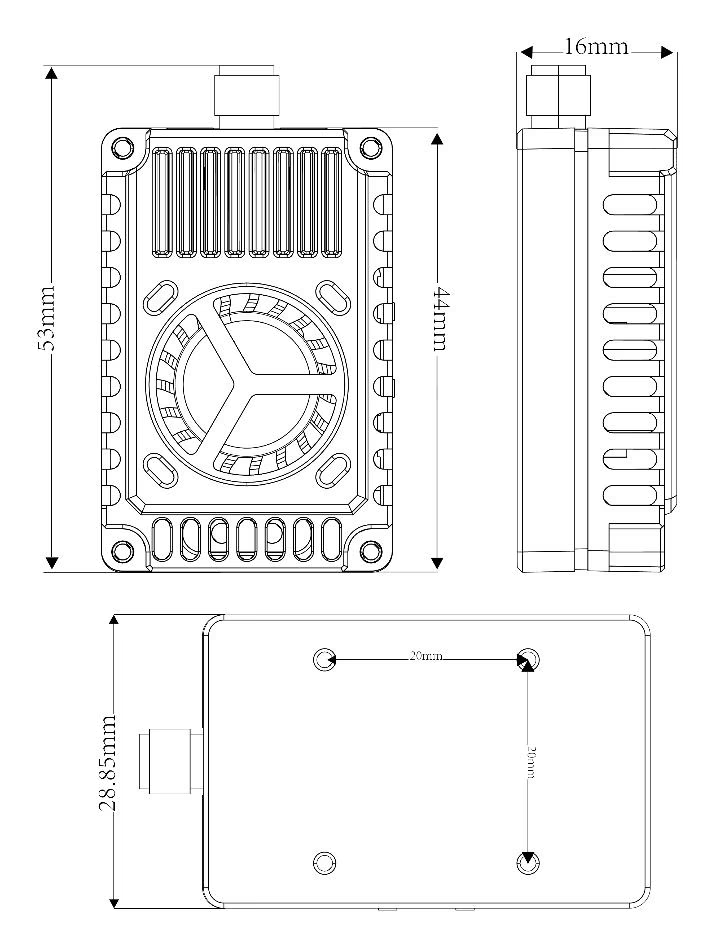
Dimensione
specificazione
- 7.2 GHz, 64 punti di frequenza: 6110 MHz – 7210 MHz;
- Massima potenza: 5W (25mW/1000mW/5000mW, regolabile);
- Tensione di ingresso: DC 15V-36V, supports 2-8S battery input 4. interfaccia Antenna: SMA female socket 5. Communication protocol: Vagabondo dell'IRC
- Heat dissipation method: aluminum alloy heat sink + fan
- Mounting hole: 20mm*20mm /ø2mm
- Taglia del prodotto: 53mm x 28,85 mm x 16 mm
- Peso del prodotto: 25.85g
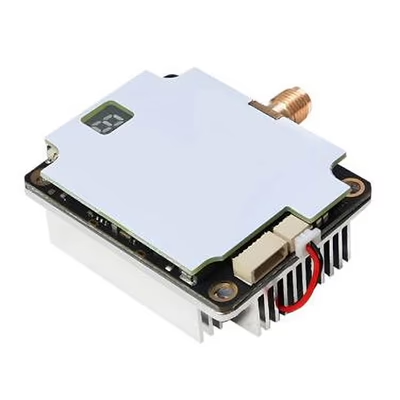
Interface and button LED layout
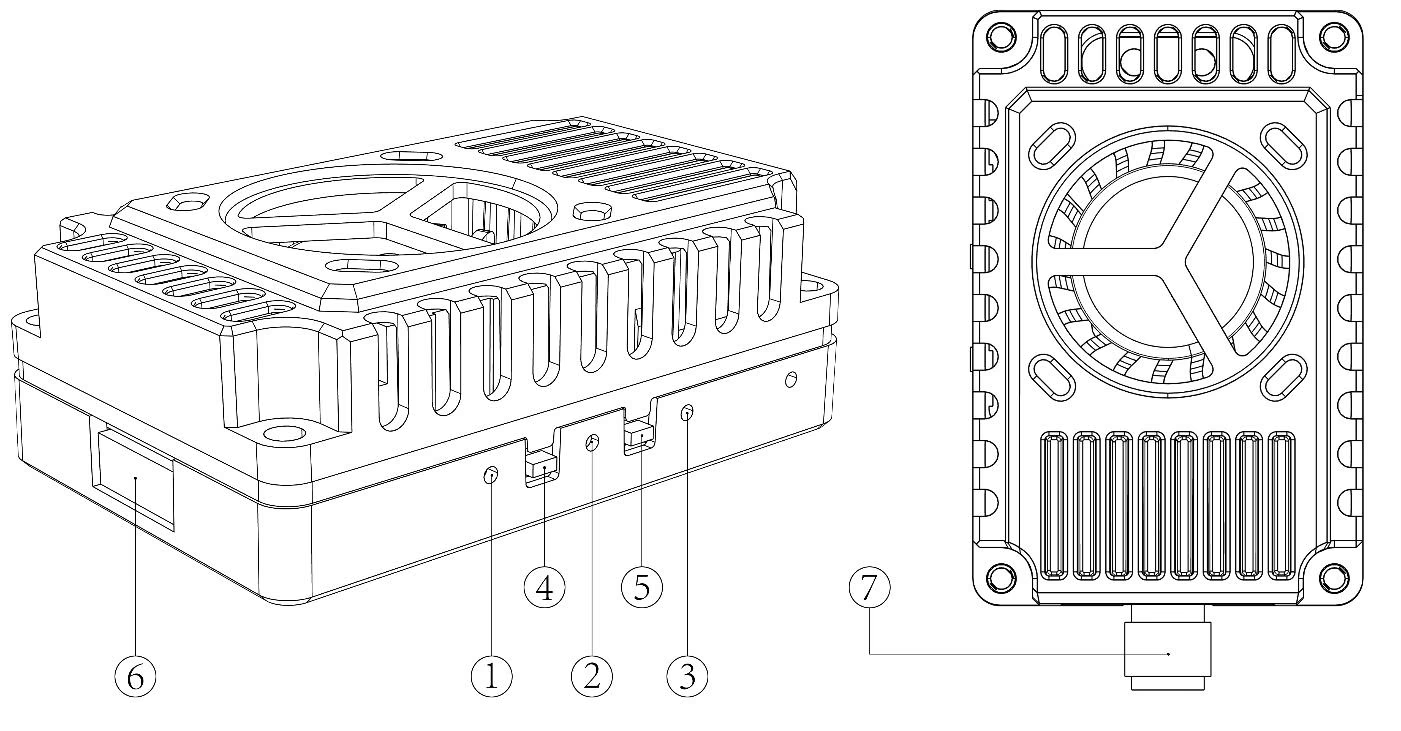
- Frequency indicator: LED rosso
- Band indicator: LED blu
- Indicatore di energia: LED verde
- Band and frequency adjustment button
- Power adjustment button
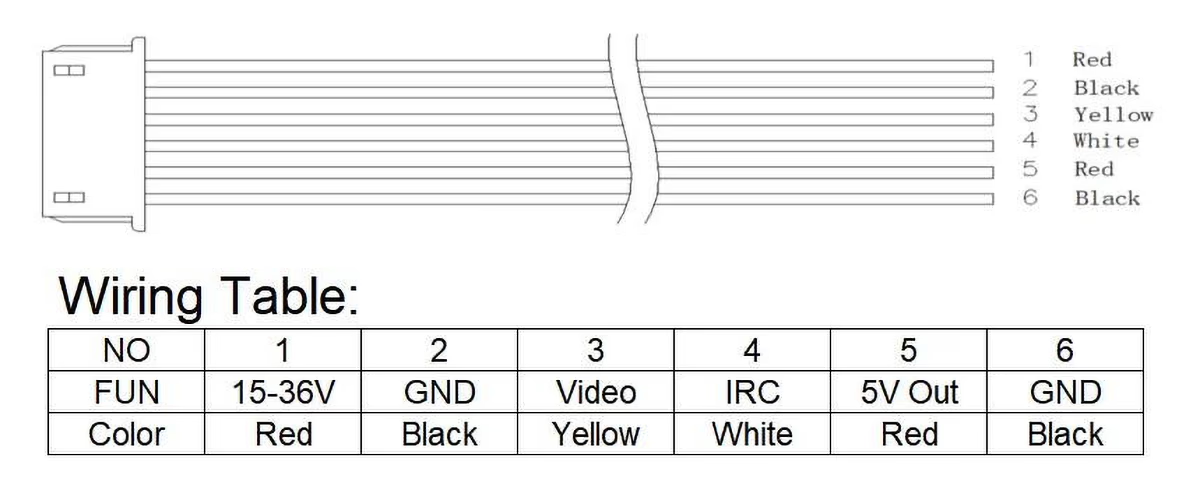
- 1.0 6P cable holder
- SMA female antenna socket
Button Control Method and LED Indicator Definition
Button ④ switches between frequency points and frequency bands. Each time you briefly press button ④, the corresponding red LED will flash, switching from one frequency point to the next. This cycle repeats; see the figure below for details.
| CH1 | CH2 | CH3 | CH4 | CH5 | CH6 | CH7 | CH8 | |
| LED rosso | Battito di ciglia 1 tempo | Battito di ciglia 2 tempo | Battito di ciglia 3 tempo | Battito di ciglia 4 tempo | Battito di ciglia 5 tempo | Battito di ciglia 6 tempo | Battito di ciglia 7 tempo |
Battito di ciglia 8 tempo |
Press and hold button ④ to switch frequency bands. Press and hold for 5 seconds and the corresponding blue LED will flash.
Frequency group A.B.E.F.R.P.H.U. This operation can be cyclic; see the figure below for details!
| Battito di ciglia 1 tempo | Battito di ciglia 2 tempo | Battito di ciglia 3 tempo | Battito di ciglia 4 tempo | Battito di ciglia 5 tempo | Battito di ciglia 6 tempo | Battito di ciglia 7 tempo | Battito di ciglia 8 tempo | |
| LED blu | UN | B | E | F | R | P | H |
U |
Button ⑤ is the power adjustment button. Each short press cycles through the three power settings: 25mW, 1000mW, e 3000 mW. The green LED is the power indicator, come mostrato nella figura seguente: 25mW flashes once, 1000mW flashes twice, and 3000mW flashes three times. Press and hold for 3 seconds to enter pit mode, where the green light remains on. See the figure below for details.
| Constantly on | Battito di ciglia 1 volte | Battito di ciglia 2 volte | Battito di ciglia 3 volte | |
| Green Led | Modalità PIT | 25mW | 1000mW |
3000mW |
Nota: This video / image transmitter has a temperature protection function. When the temperature of the image transmitter is higher than 100℃,, the image transmission power will be reduced by one level. If the temperature is still higher than 100When the temperature drops to 95℃, the transmit power will return to the originally set power level.
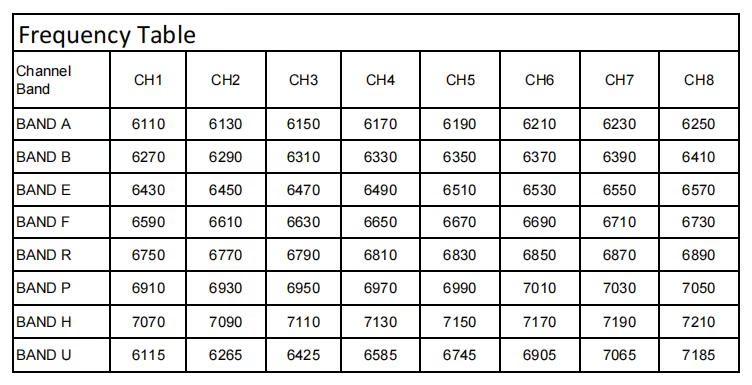
Channel Corresponding Parameter Table
6P 1.0 Cable Interface Definition
Precautions for use
- When installing the image transmission module, be sure to leave enough space around it to ensure adequate air circulation and heat dissipation. Altrimenti, the module’s overheat protection will activate, reducing or even shutting down the transmission power.
- Before connecting the power cord, ensure the correct voltage range and polarity to avoid damaging the components.
- Before connecting the power supply, it is recommended to ensure that the antenna is installed at the RF output terminal to extend the service life of the module.
- Please read the instructions before use to ensure correct wiring and extend the service life of the module.
Customizable Items for FPV VTX:
-
Intervallo di frequenze – Adjustable working bands (for example 1.2GHz / 2.4GHz / 5.8GHz / 6.7GHz, 7.2GHz) to meet regional regulations or application needs.
-
Potenza di uscita – Different RF power levels (25mW, 200mW, 600mW, 1W, 2W, 3W, 5W, eccetera.) for short- or long-distance transmission.
-
Tipo di modulazione – Analog or Digital (COFDM, DVB-T, custom protocols).
-
Interfaccia video - HDMI, SDI, CVBS, or IP stream input.
-
Audio/Data Channel – Additional audio input or telemetry data channel.
-
Fattore di forma & Dimensione – Board type, enclosed module, or lightweight compact version for UAVs and drones.
-
Gamma di alimentazione – Wide voltage input (per esempio., 7–24V, 12V, 28V) depending on system requirements.
-
Connettore antenna – Custom RF connectors such as SMA, RP-SMA, MMCX, or custom cable.
-
crittografia – Optional AES or proprietary encryption for secure transmission.
-
Metodo di raffreddamento – Passive heatsink or active fan cooling depending on power output.
-
Numero del canale & Commutazione – Fixed channels, Interruttore DIP, or software control for frequency selection.
-
Abitazione & Protezione - impermeabile, a prova di polvere, or ruggedized case for outdoor/military use.
-
Logo & firmware – OEM/ODM branding and firmware customization.
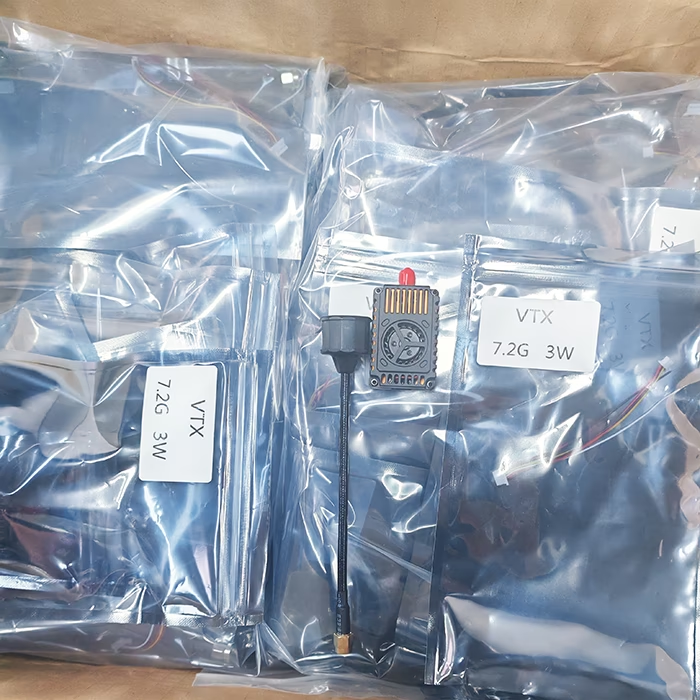
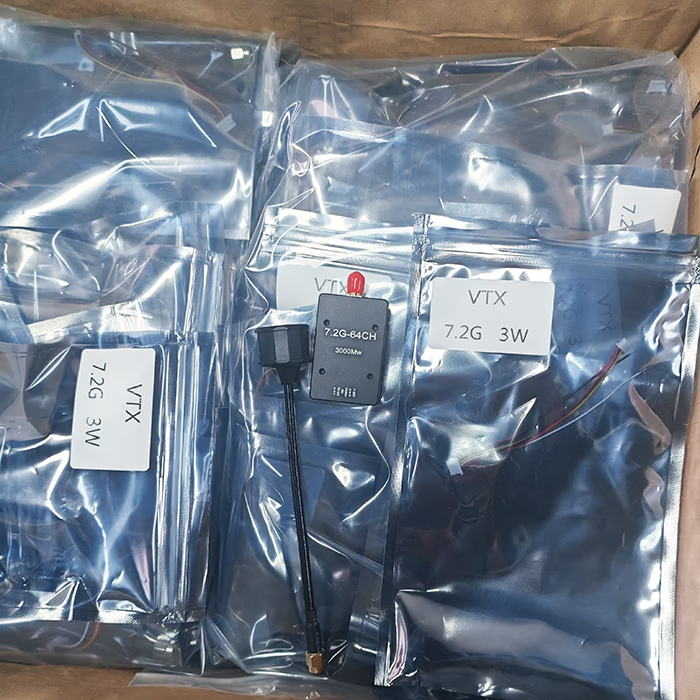
Manuale utente
VTX: 7.2Manuale G5W VTX
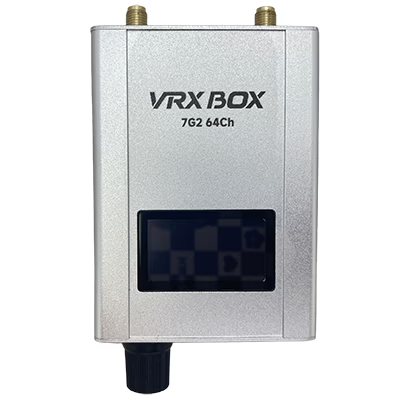
VRX: 6SCATOLA VRX G7 64CH
Galleria
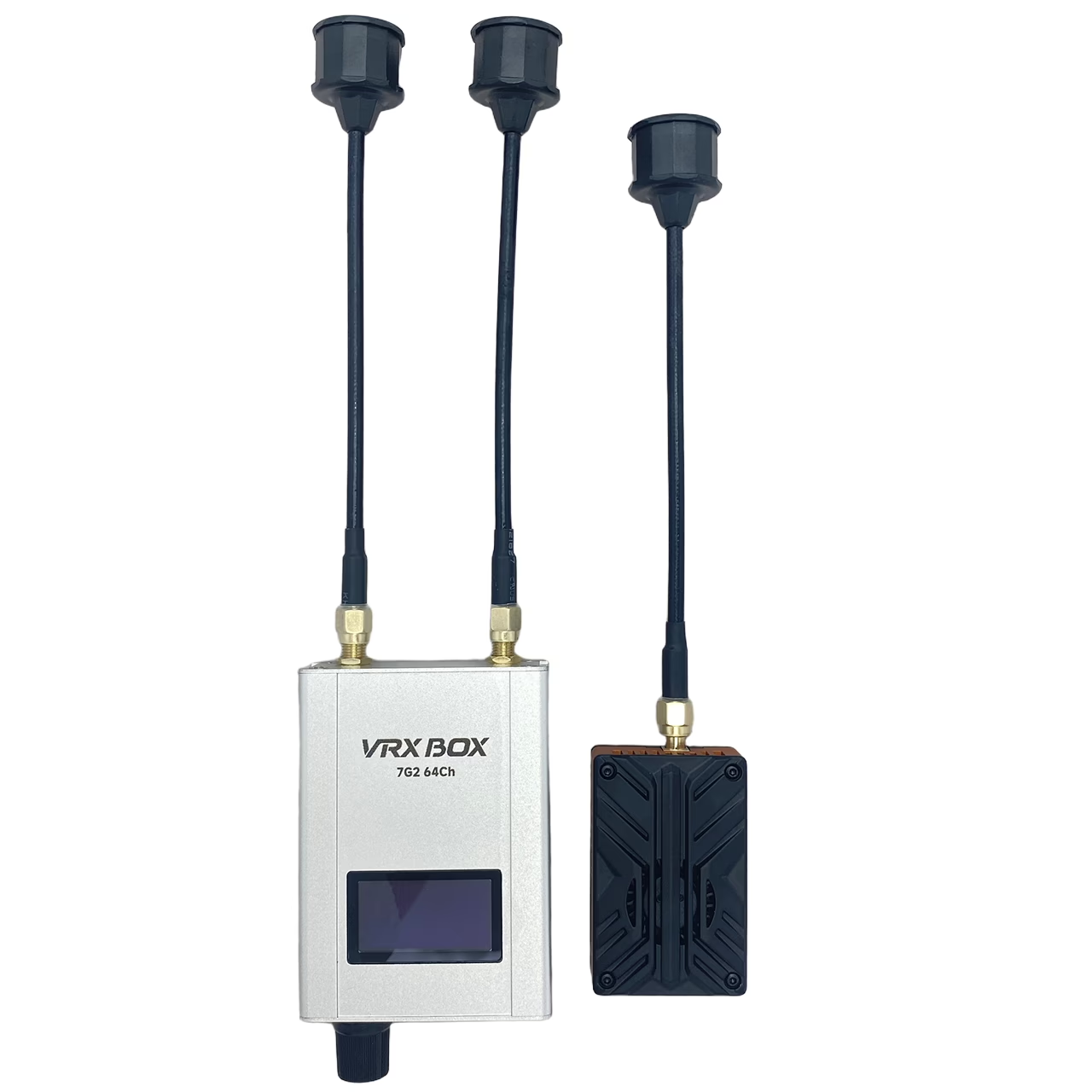
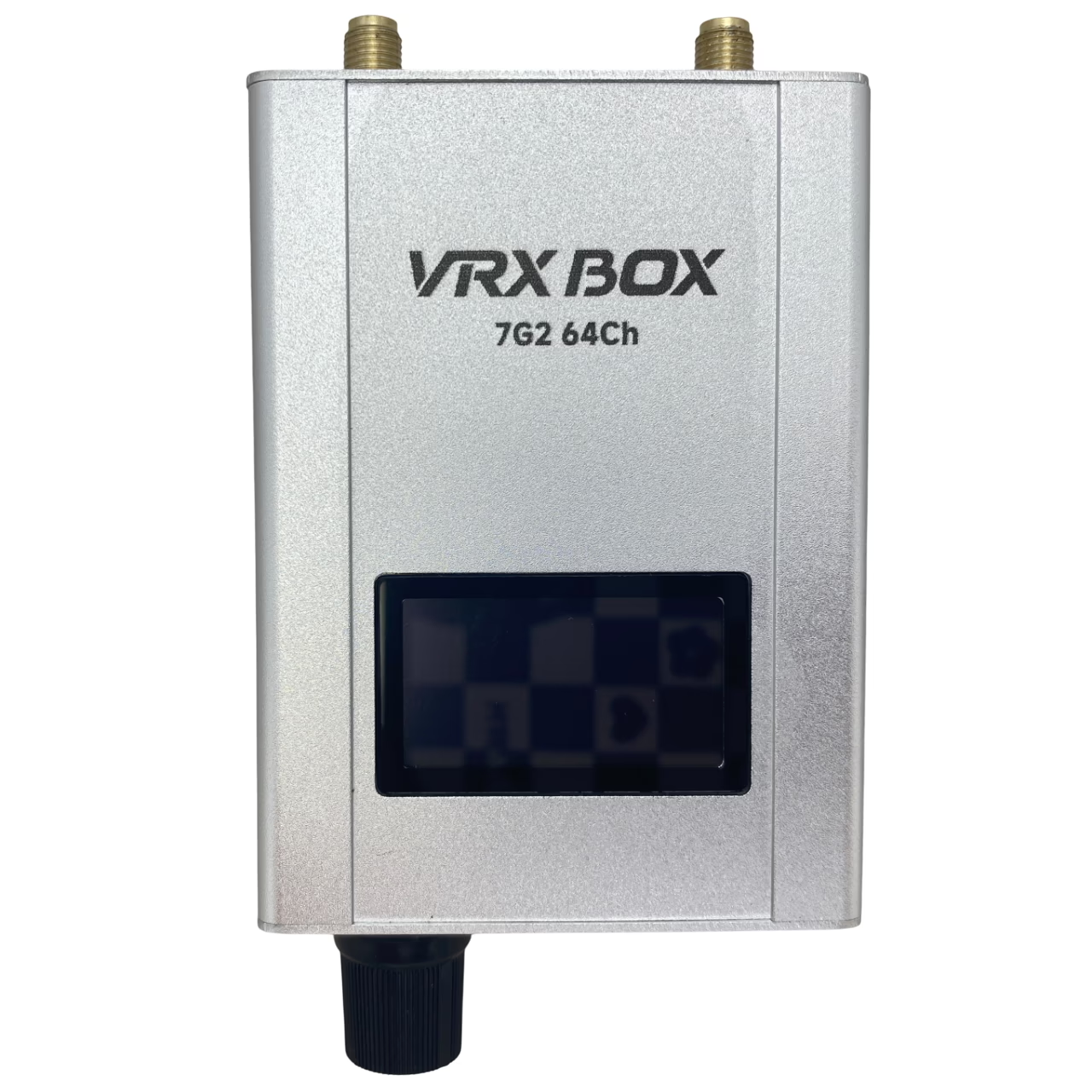
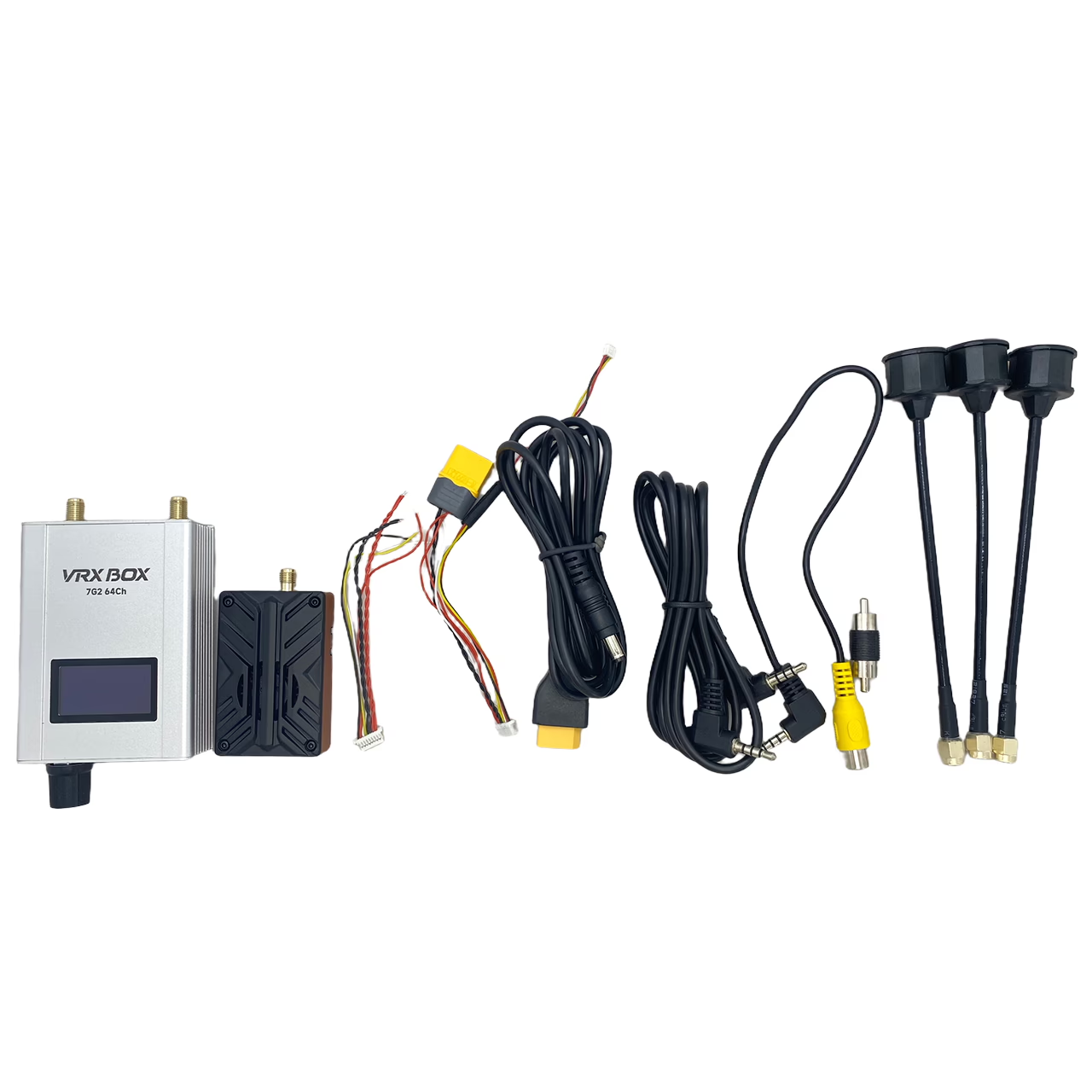
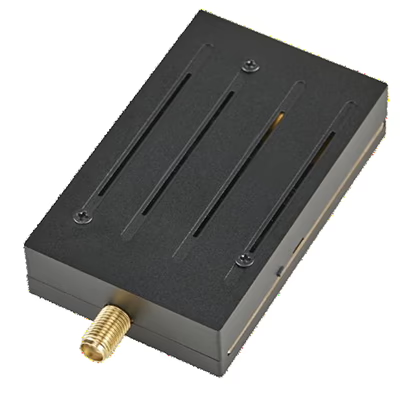
7Ricevitore VRX FPV da GHz
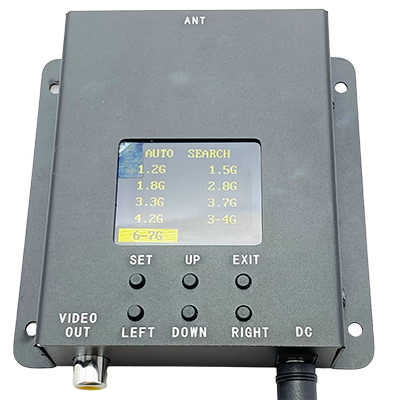
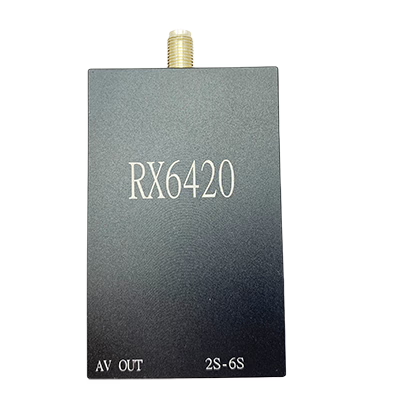
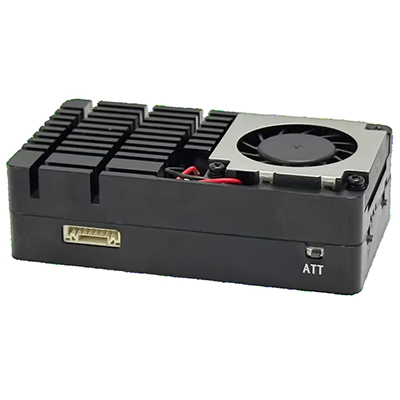
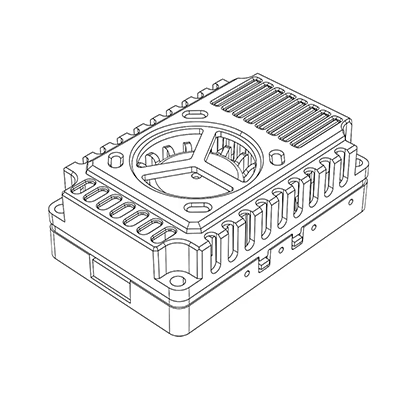
7Trasmettitore GHz FPV VTX
FAQ
1. What is the frequency range of the 6110MHz-7210MHz FPV VTX 5W Power Amplifier?
The amplifier operates in the 6110MHz–7210MHz range, covering the 6–7 GHz FPV frequency band, offerta 64 canali selezionabili.
2. How much output power does this FPV VTX amplifier provide?
It supports three adjustable power levels: 25mW, 1000mW, and up to 5000mW (5W) maximum output.
3. Can I adjust the transmission power of this 6-7 GHZ FPV VTX?
sì, the power amplifier allows switching between 25mW, 1000mW, and 5000mW via the control button.
4. What type of antenna connector does this FPV VTX power amplifier use?
It uses a standard Connettore SMA femmina, compatibile con la maggior parte delle antenne FPV.
5. Il 6-7 GHz FPV VTX amplifier support pit mode?
sì, by holding the power button, it enters pit mode for safe indoor or bench testing.
6. What is the input voltage range for the FPV VTX 3W amplifier?
Accetta DC 15V–36V, Supporto 2S–8S LiPo batteries, making it highly versatile.
7. How heavy is the 6110MHz-7210MHz FPV VTX 5W Power Amplifier?
Pesa solo 25.85 grammi, making it lightweight for drones and FPV aircraft.
8. What are the physical dimensions of this FPV video transmitter?
La dimensione è 53mm x 28,85 mm x 16 mm, compact for mounting on most FPV builds.
9. What cooling system does the 6-7 GHz FPV VTX power amplifier use?
Presenta un aluminum alloy heat sink and an active cooling fan for reliable heat dissipation.
10. Does this FPV VTX amplifier have overheating protection?
sì, it automatically reduces output power if the temperature exceeds 100°C, and restores when it cools below 95°C.
11. Which communication protocol is supported by the FPV VTX amplifier?
Supporta il IRC Tramp protocol for remote control and easy VTX configuration.
12. È questo 6-7 GHz FPV transmitter suitable for long-range FPV flights?
sì, con fino a 3Potenza in uscita W, it is ideal for long-distance FPV and drone video transmission.
13. How do I change frequency channels on this FPV VTX?
Premere il frequency button to cycle through channels; the red LED blinks to indicate the channel number.
14. How do I switch frequency bands on this FPV VTX 5W power amplifier?
Hold the frequency button per 5 secondi; the blue LED indicates the selected band.
15. How many frequency bands are supported in the 6110-7210MHz FPV VTX?
supporta 8 bande (UN, B, E, F, R, P, H, U) with multiple channel options.
16. How many total channels does the FPV VTX support?
Ci sono 64 punti di frequenza, ensuring flexibility and interference avoidance.
17. Is this FPV VTX amplifier compatible with standard FPV goggles and receivers?
sì, funziona con la maggior parte 6-7 GHz FPV receivers that support the same frequency range.
18. Can I use this FPV VTX with digital FPV systems?
It is primarily designed for analog FPV transmission, not digital systems like DJI O3.
19. What is the maximum power consumption of the FPV VTX amplifier?
At full 3W output, it consumes more power, so using a reliable 2S–8S battery is recommended.
20. Does the FPV VTX include an antenna in the package?
Generalmente, the amplifier includes only the module; compatibile 6-7 GHz SMA antennas must be purchased separately.
21. How do I know what power level is currently set?
Il green LED flashes: once for 25mW, twice for 1000mW, and three times for 5000mW.
22. What happens if I power the FPV VTX without an antenna?
Operating without an antenna may damage the amplifier; always connect an antenna before powering on.
23. Can the FPV VTX amplifier be mounted on racing drones?
sì, with its 20x20mm mounting holes, it is compatible with racing drone frames.
24. Is the FPV VTX amplifier lightweight enough for fixed-wing aircraft?
sì, suo 26g weight makes it perfect for airplanes, long-range wings, e UAV.
25. Can this VTX amplifier be controlled through flight controllers?
sì, Via IRC Tramp protocol, flight controllers like Betaflight can change VTX settings.
26. What is pit mode in FPV transmitters?
Pit mode reduces output power to near-zero for safe bench testing senza interferenze.
27. Can this 6-7 GHz VTX be used for FPV racing events?
sì, with multiple channels and bands, it can be used in multi-pilot FPV events.
28. Is there an LED indicator for each function on the VTX?
sì, red for frequency, blue for band, green for power.
29. What type of cable interface does the FPV amplifier use?
It uses a 6-perno 1.0 diametro della colonna for control and connection.
30. What is the recommended installation method for this FPV VTX?
Mount with adequate airflow, leaving space for cooling and heat dissipation.
31. Can I power this FPV amplifier directly from a drone battery?
sì, supporta 2S to 8S LiPo batteries, making it very convenient.
32. Does this FPV VTX amplifier work in high-temperature environments?
sì, but if it exceeds 100°C, il power automatically steps down to protect the device.
33. È il 6-7 GHz frequency legal in all countries?
No, always check your local radio regulations before using this frequency band.
34. Can this FPV transmitter be used for professional UAV video streaming?
sì, con 5W power output, è adatto per long-range UAV and industrial FPV applications.
35. How durable is the aluminum housing?
Il metal heat sink casing improves durability and provides efficient cooling.
36. Can the VTX be used with ground station receivers?
sì, as long as the receiver supports 6110–7210MHz frequencies.
37. Does this FPV VTX amplifier come pre-configured?
It ships with default settings, but you can adjust frequency, banda, e potere manualmente.
38. How easy is it to change settings on this FPV transmitter?
Very easy – just press the pulsanti and check the LED indicators for feedback.
39. Can I switch bands and channels while flying?
No, it is not recommended to change the frequency or channel during flight.
When the VTX switches to a different frequency, the video signal will be interrupted for about 1–2 seconds, causing the image to black out or lose signal. The receiver (VRX) cannot automatically follow this change, so the video link will be completely disconnected.
For safety reasons, please set and confirm the correct frequency and channel before takeoff. Changing the frequency is only suitable for ground testing or multi-pilot frequency coordination before flight.
40. What is the minimum safe operating voltage?
The amplifier should not be powered below 15V DC.
41. Does the FPV VTX amplifier support smart audio?
No, supporta IRC Tramp protocol instead of SmartAudio.
42. Can this FPV VTX be used in urban environments?
sì, suo high power output helps overcome interference in urban FPV flying.
43. Is the fan noisy during operation?
Il integrato ventilatore runs quietly while keeping the amplifier cool.
44. Can this module be used for FPV drones beyond line of sight (Appena)?
sì, con 3W Potenza, it is capable of trasmissione a lungo raggio.
45. What precautions should I take before using the FPV VTX amplifier?
Ensure correct wiring, attach the antenna, and provide proper cooling before powering on.
46. Is this FPV VTX waterproof or weatherproof?
No, avoid exposure to rain or moisture; mount it in a protected area.
47. How reliable is the signal stability at 7 GHz?
The amplifier provides forte, stable FPV video transmission even in high-frequency bands.
48. Can the FPV VTX be upgraded with firmware?
Attualmente, è un hardware-based device with no firmware upgrade requirement.
49. Does the amplifier interfere with GPS signals?
No, operating at 6–7 GHz, it does not interfere with standard GPS bands (1.5 GHz).
50. Why should I choose the 6110MHz-7210MHz 6-7 GHz FPV VTX 5W amplifier?
Because it offers alta potenza, trasmissione affidabile a lungo raggio, raffreddamento efficiente, multiple frequency options, e compatibilità con i moderni sistemi FPV.
51. Do you have the Video Transmitter THOR T67 FPV VTX and Receiver THOR R67 FPV Receiver?
No, do you agree with this model to replace? Same support 6-7GHz frequency.




iVcan.com –
I’ve been using the 6110MHz-7210MHz 6-7 GHz FPV VTX 3W Power Amplifier for my long-range FPV setup, and the performance is outstanding. The signal is extremely stable, anche in ambienti difficili, and the adjustable power levels give me great flexibility. La qualità costruttiva sembra solida, and the cooling system with the aluminum heat sink and fan works perfectly to prevent overheating. Setup was straightforward thanks to the clear LED indicators and simple button controls. Complessivamente, this amplifier delivers reliable, high-quality transmission and has greatly improved my flying experience. Highly recommended for serious FPV enthusiasts!