





Un Codificador de vídeo analógico a IP (also called a codificador de vídeo o media encoder) is a specialized hardware device that converts analog video signals from legacy cameras (P.EJ., CCTV, cámaras de seguridad analógicas) en IP digital (Protocolo de Internet) corrientes. This allows analog cameras to operate within modern IP-based surveillance systems, enabling video transmission over networks (Ethernet, wifi, o PoE) for remote viewing, almacenamiento, and integration with smart security platforms.
Cómo funciona
- Entrada analógica: Accepts video feeds via analog interfaces like coaxial (BNC), compuesto (RCA), or S-Video.
- Digitalización: Utiliza un Convertidor analógico a digital (CAD) to convert analog signals (P.EJ., NTSC/PAL) into raw digital data.
- Compresión: Encodes the digital video into bandwidth-efficient formats like H.264, H.265, o MJPEG to reduce file size and network load.
- IP Packaging: Encapsulates the compressed video into IP packets using network protocols such as RTSP (Protocolo de transmisión en tiempo real), ONVIF, o HTTP for transmission over LAN/WAN.
- Network Output: Transmits the digital stream to an NVR (Grabador de vídeo en red), VMS (Video Management System), or cloud platform via Ethernet/Wi-Fi.
Componentes clave
- CAD (Convertidor analógico a digital): Converts analog signals to digital with resolutions up to 1080p (for higher-end encoders).
- Video Compression Engine: Uses codecs (P.EJ., H.265) to minimize bandwidth while preserving quality.
- Interfaz de red: Supports PoE (Alimentación a través de Ethernet), GigabitEthernet, or Wi-Fi for connectivity.
- Cumplimiento de ONVIF/RTSP: Ensures compatibility with third-party IP surveillance software (P.EJ., Milestone, iris azul).
- firmware: Manages protocols, seguridad (P.EJ., SSL/TLS encryption), and device settings.
aplicaciones
- Legacy System Modernization: Integrate analog cameras into IP-based networks without replacing hardware.
- Hybrid Surveillance: Combine analog and IP cameras in a unified system.
- Monitoreo remoto: Stream video to smartphones, tabletas, or cloud platforms.
- IoT industrial: Digitize analog feeds from specialized cameras (P.EJ., sensores termicos, manufacturing line cameras).
Types of Video Encoders
- Single-Channel: Encodes one analog camera feed (P.EJ., Vcan1987).
- Multi-Channel: Handles 2 cameras in one unit (P.EJ., vcan1746). HDMI+CVBS or AHD+CVBS or SDI+CVBS.
- Inalámbrico: Transmits video over COFDM DVB-T technology 170~860Mhz (P.EJ., Vcan 1776). H265 H264 Lower latency.
- Rack-Mounted: For large-scale deployments (P.EJ., Pelco Sarix Enhanced Encoder).
Beneficios
- Ahorro de costos: Reuse existing analog cameras instead of buying new IP cameras.
- Flexibilidad: Add IP cameras gradually while maintaining legacy infrastructure.
- Escalabilidad: Easily expand surveillance coverage with minimal rewiring.
- Funciones avanzadas: Enable motion detection, analítica, and remote access for older cameras.
Consideraciones técnicas
- Resolución: Analog cameras typically max out at 0.4–2 MP (P.EJ., 720×480 for NTSC), but encoders can upscale to 1080p.
- Estado latente: Encoding/decoding adds minor delays (~100–500 ms).
- Ancho de banda: H.265 reduce el ancho de banda en aproximadamente un 50 % en comparación con H.264.
- Fuerza: PoE support simplifies installation by delivering power over Ethernet.
Limitaciones
- Quality Constraints: Output quality depends on the analog camera’s original resolution.
- Compatibility Issues: Older analog formats (P.EJ., non-standard PAL) may require firmware tweaks.
- Dependencia de la red: Requires stable IP infrastructure for reliable streaming.
When to Use It
- You have functional analog cameras but want IP features (P.EJ., acceso remoto, AI analytics).
- Budget constraints prevent a full IP camera overhaul.
- You need a hybrid system that blends old and new technology.
En breve, an Analog to IP video encoder acts as a bridge between outdated analog systems and modern IP networks, preserving investments in legacy cameras while unlocking digital surveillance capabilities.
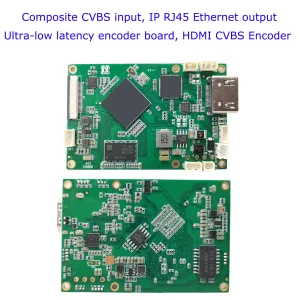
CVBS HDMI al codificador IP

Cámara IP con IA
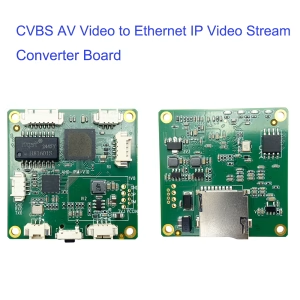
CVBS HDMI al codificador IP

Cámara IP con IA