






RF Combiner vs. RF Multiplexer: Understanding the Difference in Multi-Channel RF Systems
In multi-channel RF communication systems, engineers often need to combine several RF channels into a single antenna path. Two common solutions are the RF Combiner and the RF Multiplexer. Although both devices can merge multiple RF signals, their operating principles, insertion losses, and system requirements are significantly different.
Understanding these differences is essential when designing DMR, TETRA, P25, railway communication, public safety radio, και βιομηχανικά ασύρματα συστήματα.
Πίνακας περιεχομένων
What Is an RF Combiner?
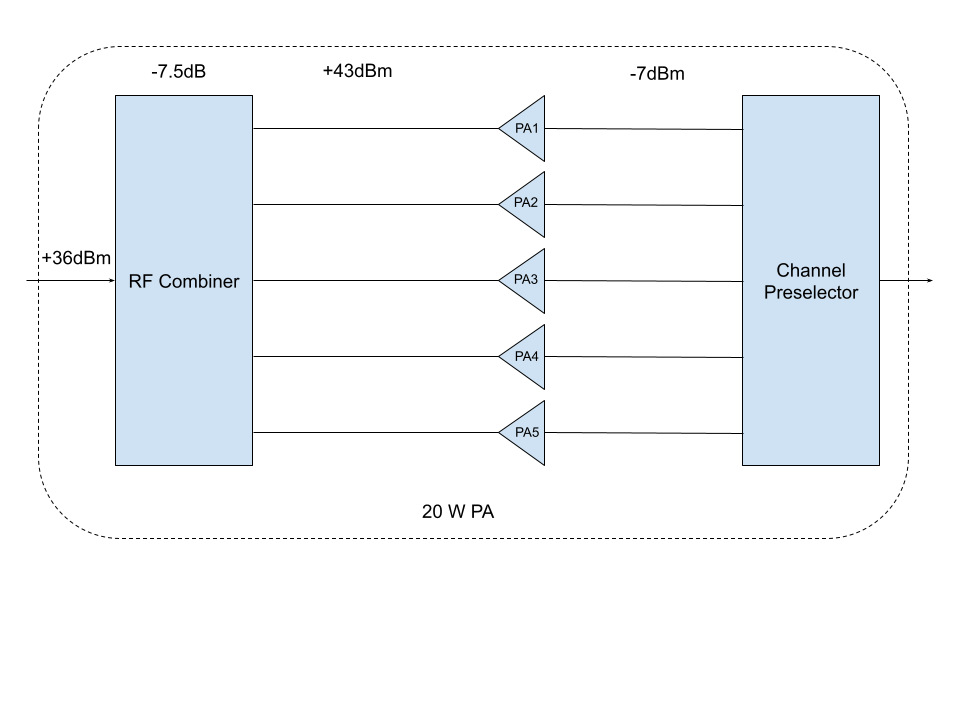
Ένας συνδυασμός RF έχει σχεδιαστεί για να συγχωνεύει την ισχύ εξόδου πολλαπλών πομπών ή ενισχυτών ισχύος σε μια κοινή θύρα εξόδου.
Σε τυπική αρχιτεκτονική:
- Πολλαπλά κανάλια RF ενισχύονται ανεξάρτητα.
- Τα ενισχυμένα σήματα συνδυάζονται μέσω ενός δικτύου συνδυασμού ισχύος.
- Το συνδυασμένο σήμα τροφοδοτείται σε ένα κοινό σύστημα κεραίας.
Πλεονεκτήματα
- Πιο απλή αρχιτεκτονική
- συμπαγής σχεδιασμός
- Κατάλληλο για ευρυζωνικές εφαρμογές
- Χαμηλότερο αρχικό κόστος υλικού
Περιορισμοί
Επειδή ο συνδυασμός ισχύος δεν είναι επιλεκτικός ως προς τη συχνότητα, σημαντικές συνδυαστικές απώλειες είναι αναπόφευκτες.
Για παράδειγμα, ένας συνδυαστής πέντε καναλιών μπορεί να προκαλέσει απώλεια εισαγωγής περίπου 7–8 dB. Για να αντισταθμιστεί αυτή η απώλεια, Κάθε κανάλι απαιτεί συχνά έναν ενισχυτή υψηλότερης ισχύος.
Σε πολλά συστήματα, ένα 20 Ενισχυτής ισχύος W ανά κανάλι μπορεί να είναι απαραίτητος για να επιτευχθεί η επιθυμητή ισχύς εξόδου κεραίας.
What Is an RF Multiplexer?
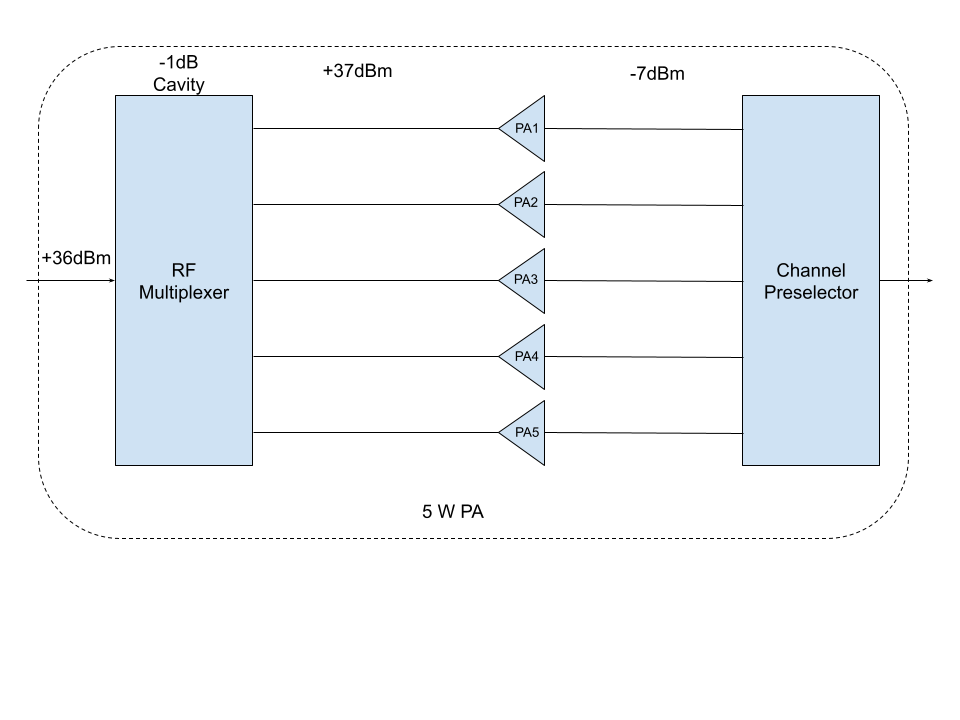
An RF Multiplexer combines multiple channels by using highly selective cavity filters.
Each channel operates at a different frequency and passes through its own tuned cavity. The cavity network provides excellent isolation between channels while allowing all channels to share a common antenna.
Πλεονεκτήματα
- Very low insertion loss
- Excellent channel isolation
- Improved spectral performance
- Reduced power amplifier requirements
A well-designed cavity multiplexer may introduce only about 1 dB of insertion loss.
Σαν άποτέλεσμα, a system can often achieve the same effective radiated power using only 5 W power amplifiers instead of 20 W amplifiers.
Περιορισμοί
- Larger physical size
- More complex tuning requirements
- Higher manufacturing cost
- Frequency-specific design
Performance Comparison
| παράμετρος | RF Combiner | Cavity RF Multiplexer |
|---|---|---|
| Operating Principle | Power Combining | Frequency-Selective Combining |
| Typical Insertion Loss | 7–8 dB | 0.5–2 dB |
| Channel Isolation | Μέτριος | Πολύ ψηλά |
| PA Power Requirement | Άνω | Πιο χαμηλα |
| φυσικό μέγεθος | Μικρότερος | Μεγαλύτερος |
| Κόστος | Πιο χαμηλα | Άνω |
| Αποδοτικότητα | Πιο χαμηλα | Άνω |
| Ευελιξία συχνότητας | Ευρυζωνικότητα | Frequency-Specific |
Παράδειγμα: 5-Channel RF System
Consider a five-channel communication system operating through a common antenna.
Διάλυμα 1: RF Combiner
- Five independent 20 Ενισχυτές ισχύος W
- RF power combiner
- Typical insertion loss: 7.5 dB
While this solution is compact, much of the amplifier power is lost in the combining process.
Διάλυμα 2: Cavity Multiplexer
- Five independent 5 Ενισχυτές ισχύος W
- High-Q cavity multiplexer
- Typical insertion loss: περίπου 1 dB
Despite the lower amplifier power, the reduced insertion loss allows the system to achieve similar antenna output performance.
This approach significantly improves overall RF efficiency.
Which Solution Should You Choose?
An RF Combiner is often preferred when:
- Broadband operation is required
- Space is limited
- Lower initial investment is important
A Cavity Multiplexer is often preferred when:
- Maximum RF efficiency is required
- Antenna sharing is critical
- Low insertion loss is a priority
- High channel isolation is required
Custom RF Combiner and Multiplexer Design
Every communication network has unique frequency plans, channel spacing requirements, επίπεδα ισχύος, and environmental constraints.
Γι 'αυτό το λόγο, many professional radio systems require custom-designed RF combiners, cavity multiplexers, channel filters, and power amplifier assemblies.
Our engineering team specializes in:
- Custom RF Combiner Design
- Cavity Multiplexer Design
- Channel Preselector Filters
- Multi-Channel RF Systems
- DMR, TETRA, P25 Solutions
- High-Power RF Assemblies
- Custom Frequency Band Development
Whether you need a compact combiner solution or a low-loss cavity multiplexer system, we can design and manufacture a solution tailored to your exact requirements.
Contact us to discuss your next RF project.
Κάνε μια ερώτηση
Το μήνυμά σας έχει σταλεί