






MỘT Bộ chuyển đổi tương tự sang IP cho máy ảnh is a device that transforms analog video signals from traditional cameras (VÍ DỤ., Camera quan sát, Máy ảnh an ninh tương tự) vào IP kỹ thuật số (Giao thức Internet) data streams. This enables analog cameras to integrate with modern IP-based surveillance systems, allowing video transmission over Ethernet or wireless networks for remote monitoring, lưu trữ, and analysis. Below is a detailed breakdown of its functionality and components:
1. Core Functionality
- Chuyển đổi tương tự sang kỹ thuật số (ADC): Converts analog video signals (VÍ DỤ., NTSC/PAL formats) into digital data. This involves sampling the analog signal at a specific resolution (VÍ DỤ., 8-bit to 24-bit) and encoding it into a digital format like H.264 or H.265.
- IP Encapsulation: Packages the digitized video into IP packets for transmission over networks using protocols such as RTSP (Giao thức phát trực tuyến thời gian thực) or ONVIF (Diễn đàn giao diện video mạng mở).
2. Các thành phần chính
- ADC Module: Utilizes high-resolution ADCs (VÍ DỤ., 24-chút) to ensure minimal quantization errors during signal conversion, critical for maintaining video quality.
- Encoder/Compression Engine: Compresses the digital video to reduce bandwidth usage. Ví dụ, Sigma-Delta ADCs or oversampling techniques may be employed to enhance signal accuracy before compression.
- Giao diện mạng: Supports Ethernet, Wifi, hoặc poe (Sức mạnh đối với Ethernet) for seamless integration into IP networks. Some devices include protocols like Modbus or RS-485 for industrial applications.
3. Các ứng dụng
- Surveillance System Upgrades: Allows legacy analog cameras to function in modern IP-based security systems without replacing existing hardware.
- Giám sát từ xa: Enables real-time video streaming to cloud platforms or centralized management software via IP networks.
- Industrial Imaging: Used in scenarios like digital X-ray systems or sensor networks where analog signals from imaging devices require digitization.
4. Cân nhắc kỹ thuật
- Resolution and Frame Rate: Higher bitwidth ADCs (VÍ DỤ., 16-bit or 24-bit) improve dynamic range, essential for low-light or high-contrast video.
- Độ trễ và băng thông: Techniques like oversampling and digital filtering (VÍ DỤ., Sigma-Delta modulation) reduce noise and aliasing, ensuring smooth video playback.
- Quản lý nguồn điện: Integrated ADCs in microcontrollers (MCUs) can operate in low-power modes, ideal for battery-powered or IoT-enabled devices.
5. Thiết bị mẫu
- Industrial ADCs: Products like the EV12AQ600 (quad-core ADC) hoặc là AS5850B (16-bit charge-to-digital converter) highlight high-speed, multi-channel capabilities suitable for video processing.
- Embedded Solutions: Microchip’s PIC/AVR MCUs with on-chip ADCs simplify integration for cost-effective camera systems.
Thách thức
- Tính toàn vẹn tín hiệu: Analog signals are prone to noise during transmission, necessitating robust shielding and error-correction algorithms.
- khả năng tương thích: Ensuring interoperability with diverse IP protocols and legacy camera formats requires adaptive firmware.
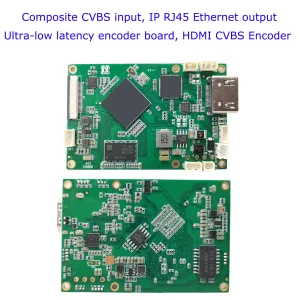
CVBS HDMI đến IP Encoder
$399.00

Giá gốc đã: $599.00.$390.00Giá hiện tại là: $390.00.
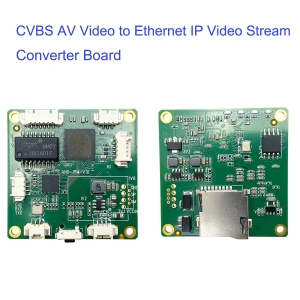
CVBS HDMI đến IP Encoder
Giá gốc đã: $199.00.$98.00Giá hiện tại là: $98.00.

Máy ảnh AI IP
Giá gốc đã: $199.00.$98.00Giá hiện tại là: $98.00.