





flexible whip antenna bendable aerial
Зміст
Огляд продукту
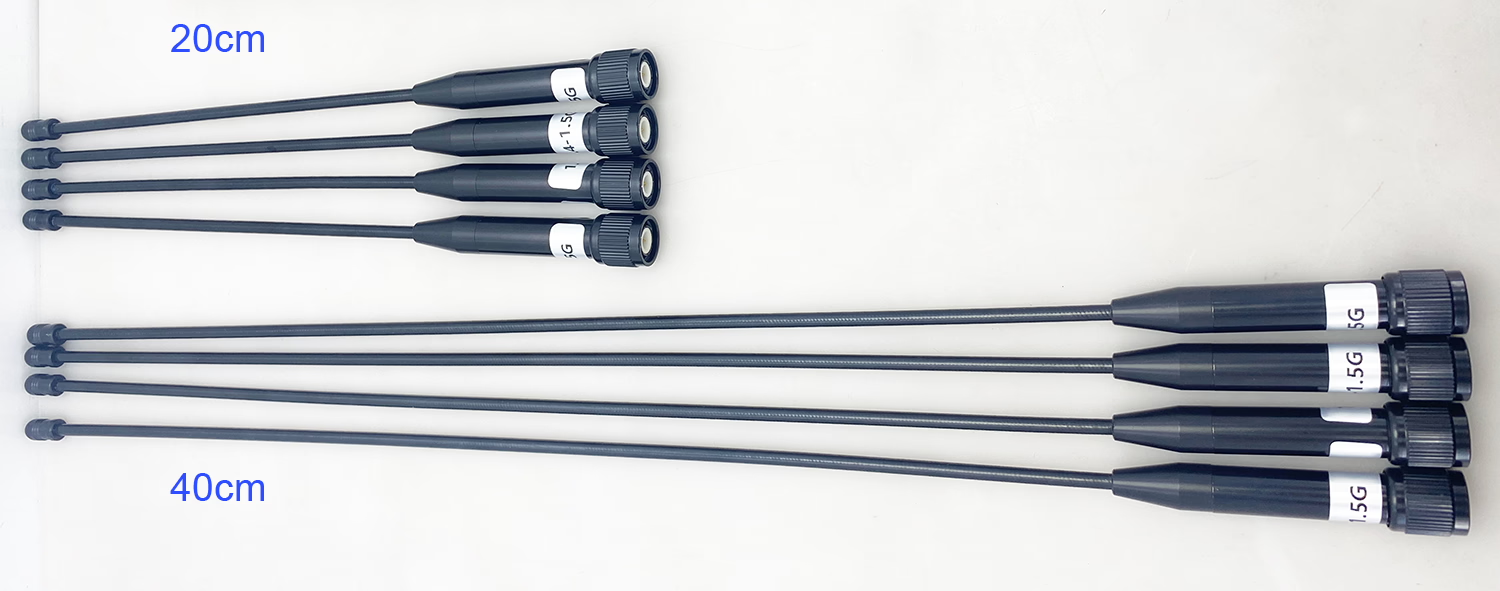
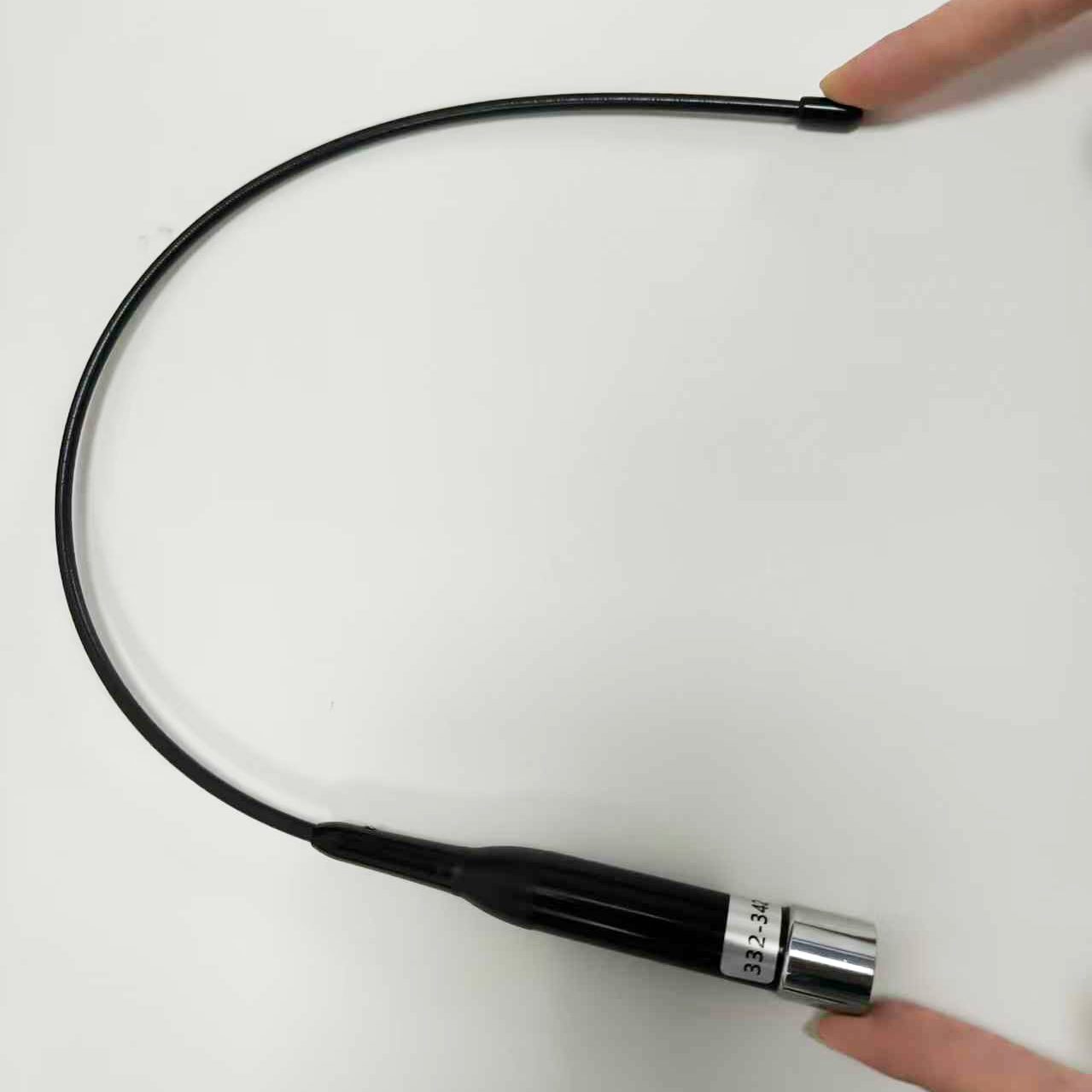
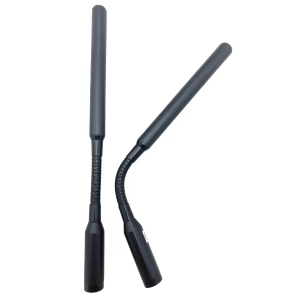
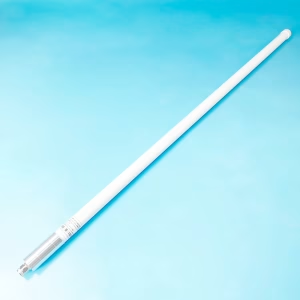
наш Гнучка штирова антена, що згинається is specially designed for robotic and mobile wireless applications where durability, гнучкість, and reliable communication are essential. Unlike rigid or high-gain narrow-beam antennas, this antenna provides a wide beamwidth, ensuring stable connectivity even when the robot moves close to the ground or operates in dynamic environments.
Key Features
- Flexible & Гнучий: Designed to withstand impacts and bending without damage, ideal for robots, дрони, and other mobile platforms.
- Wide Beamwidth (1/4 Wave Design): Maintains reliable communication links without the alignment sensitivity of high-gain antennas.
- Міцна конструкція: Reinforced materials ensure long-term reliability in harsh or dynamic conditions.
- TNC Connector: Easy integration with standard robotic and wireless radio systems.
- Optimized for Ground-Level Operations: Performs reliably even when the robot antenna is mounted just ~300mm above ground.
Основні характеристики продуктивності
- Stable link range in real-world environments, outperforming rigid gooseneck antennas which often suffer from narrow beamwidth and reduced coverage.
- Ideal for applications where the robot moves or changes orientation, ensuring communications are not lost.
- Compatible with elevated operator antennas (tripod or mast) for maximum range.
Applications
- Robotic platforms and autonomous vehicles
- Mobile wireless communications in challenging terrains
- Промислові інспекційні роботи
- Field testing, геодезія, і телеметрія
Why Choose This Antenna
- Надійний: Wide beamwidth avoids communication dropouts even at close-to-ground operation.
- Міцний: Flexible whip construction resists bending, hits, and vibrations.
- Easy to Integrate: TNC connector allows plug-and-play connection with standard radio systems.
Specifications
- Тип: Flexible Whip Antenna
- Frequency Range: 1400–1500 МГц
- Beamwidth: Wide (1/4 wave)
- Роз'єм: ТНК
- Mounting Height Recommendation: Robot ~300mm, Receiver elevated for optimal range
часто задаються
Q: What type of antenna is recommended for a robot operating at 1400–1500 MHz?
A: For robotic applications, a flexible whip antenna настійно рекомендується.
This type of antenna can bend or flex without damage, making it ideal for mobile platforms where vibration, movement, or accidental impacts may occur.
Q: What antenna lengths and performance options are available?
A:Two typical configurations are commonly used:
Option A: Short Flexible Antenna (~20 cm)
- посилення: 2.0 – 2.5 дБі
- Beamwidth: 60° – 70°
- Characteristics:
- Wider radiation pattern (more omnidirectional)
- Better tolerance to robot movement and orientation changes
- More stable link in dynamic environments
- Shorter communication range compared to higher-gain antennas
Option B: Long Flexible Antenna (~40 cm)
- посилення: 3.0 – 3.5 дБі
- Beamwidth: 40° – 50°
- Characteristics:
- Higher gain → longer communication distance
- Narrower beamwidth → more directional
- More sensitive to antenna orientation and placement
- Better suited for applications with relatively stable alignment
Q: How does antenna length relate to performance?
A: At 1400–1500 MHz, the wavelength is approximately 20–21 cm.
Longer antennas (electrically or physically) generally provide:
- Higher gain
- Narrower beamwidth
- More focused radiation pattern
Shorter antennas provide:
- Lower gain
- Wider beamwidth
- More uniform coverage
This creates a fundamental trade-off between coverage stability і communication range.
Q4: Which option is better for robotic applications?
A:For most mobile robots, в ~20 cm (2.0–2.5 dBi) antenna is recommended because:
- It maintains a more reliable connection during movement
- It is less sensitive to tilt, rotation, or orientation changes
- It provides more consistent coverage in real-world conditions
Q: When should a higher-gain antenna (~40 cm) be used?
A: A ~40 cm (3.0–3.5 dBi) antenna is preferred when:
- Longer communication distance is required
- The antenna can remain relatively vertical and stable
- The system can tolerate more directional radiation
Q: Summary of Trade-offs
A:
| Параметр | ~20 cm Antenna | ~40 cm Antenna |
|---|---|---|
| посилення | 2.0–2.5 dBi | 3.0–3.5 dBi |
| Beamwidth | 60°–70° | 40°–50° |
| Покриття | Wider | Narrower |
| Стабільність | Вища | Lower |
| Діапазон | Shorter | Longer |
For most robotic wireless links, prioritize link stability over maximum gain.
A moderate-gain flexible antenna (~20 cm, 2–2.5 dBi) typically delivers the best overall performance in dynamic environments.
Q: Why can’t rigid antennas be used on the robot?
A: Rigid antennas can deliver good range (напр., до 1600 meters in testing), but they are not suitable for robotic platforms because:
- They can break or snap if impacted
- They are not tolerant to collisions or vibration
- They reduce overall system durability in real-world environments
For mobile robots, mechanical flexibility is critical to ensure reliability.
Q2: What type of antenna should be used on the robot?
A: We recommend using flexible whip antennas on the robot side.
Переваги:
- Can bend or flex under impact without damage
- більше durable in dynamic environments
- Maintain stable performance even with movement
👉 Suggested configuration:
- використання two flexible whip antennas on the robot (for redundancy or diversity)
Q: What is the recommended antenna setup on the receiver side?
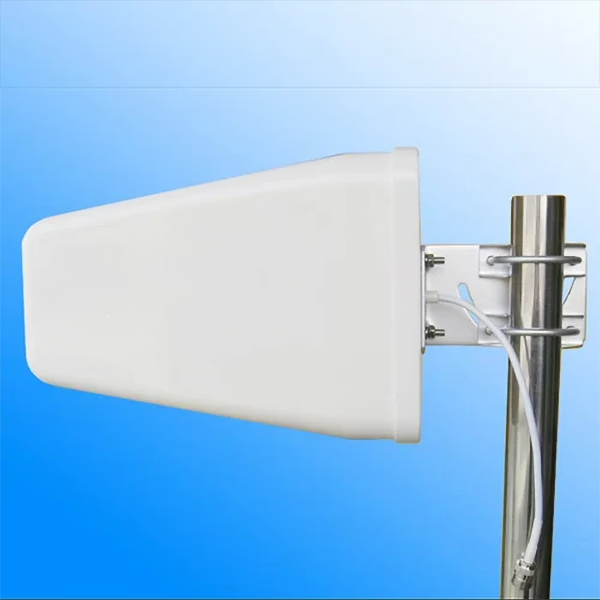
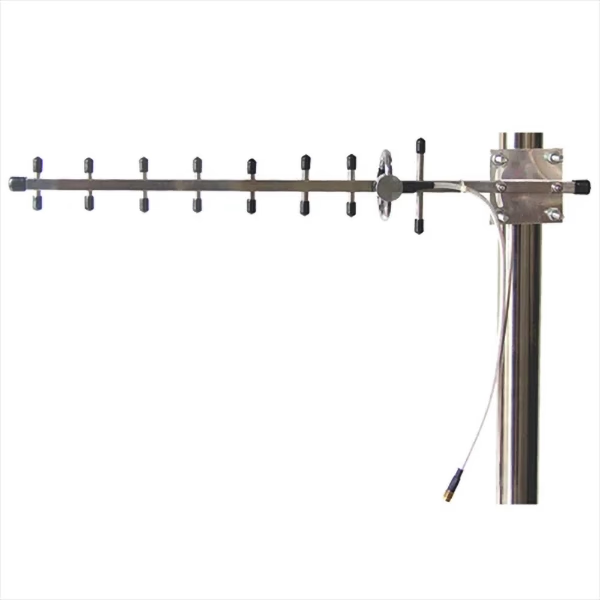
A: Для оптимальної продуктивності, we recommend a dual-antenna setup at the receiver:
- One directional antenna
- Provides higher gain and longer range
- One omnidirectional antenna
- Ensures coverage when alignment is not perfect
This combination improves both range and link stability.

Q: How can we further increase communication range?
A: One of the most effective ways is to increase antenna height on the receiver side.
Best practices:
- Install the receiver antenna as high as possible
- Use a telescopic mast якщо є
👉 In real deployments, some customers use extendable masts to raise the antenna up to 10 meters, significantly improving range and signal quality.
Q: How should the antennas be positioned on the unmanned vehicle for best performance?
A: Для оптимальної продуктивності, it is recommended that the two antennas on the unmanned vehicle be arranged in a V-shape:
- Angle: Each antenna bent approximately 45° from the vehicle centerline
- Configuration: Forms a “gooseneck” or V-shaped layout
Benefits of this arrangement:
- Improved diversity: Reduces the likelihood of signal dropouts caused by robot movement or orientation changes.
- Enhanced coverage: Ensures at least one antenna maintains a strong link with the receiver at any position.
- Reduced interference: Spatial separation minimizes mutual coupling between antennas.
- Wider effective radiation pattern: Balances gain and beamwidth, providing more reliable connectivity.
Додаткові рекомендації:
- використання flexible whip antennas to prevent damage from impacts or bending.
- Maintain sufficient height above the robot chassis (напр., ~300 mm) for ground clearance.
- Avoid placing antennas near large metallic objects to prevent signal shadowing.
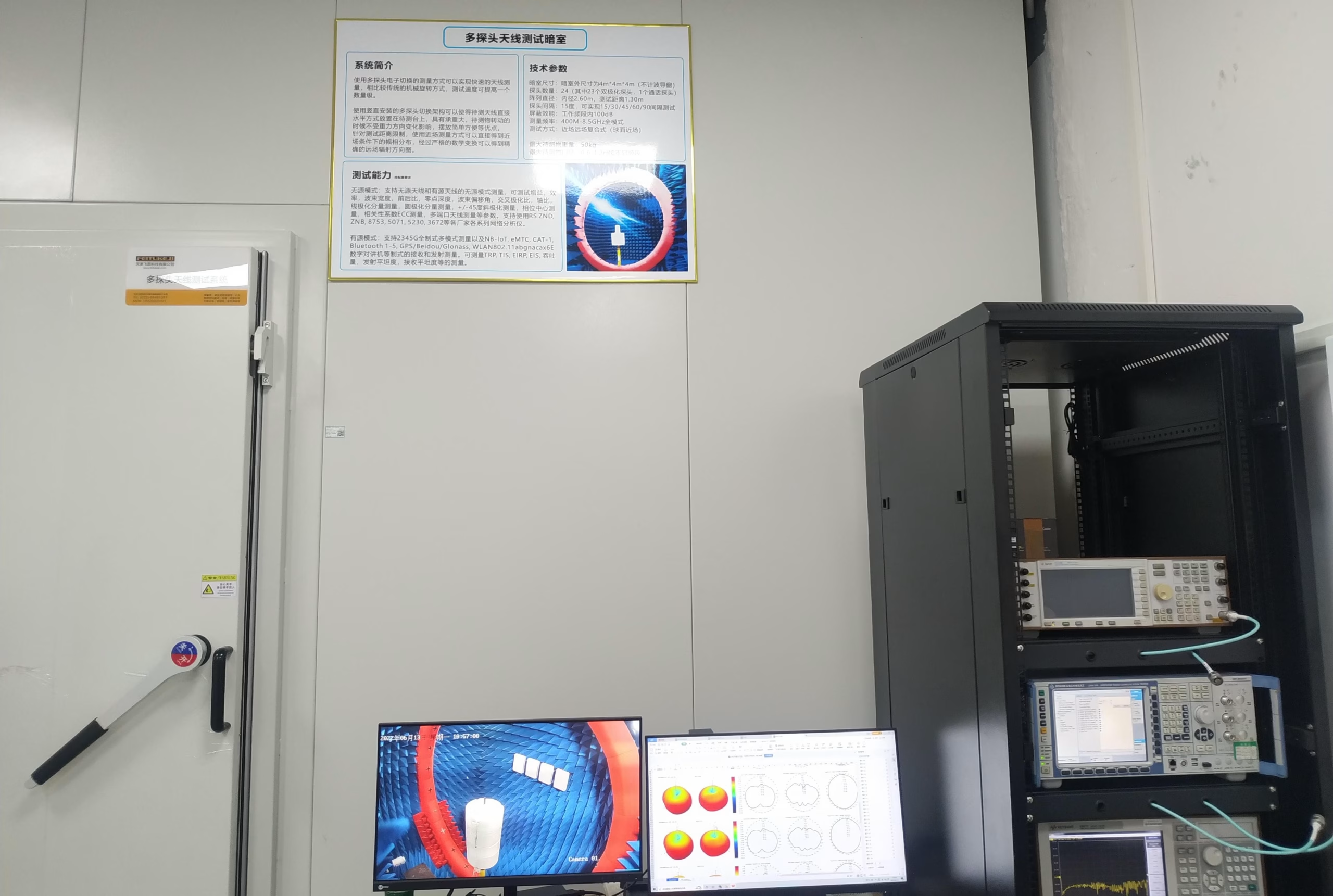
Multi-Probe RF Antenna Test System
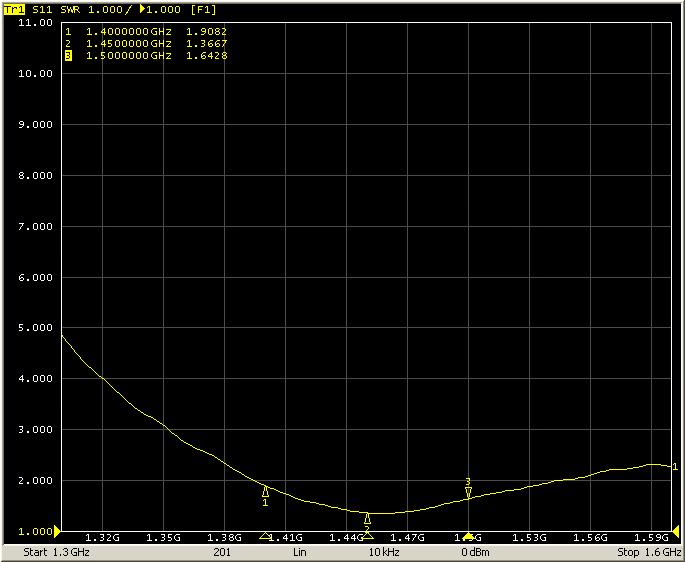
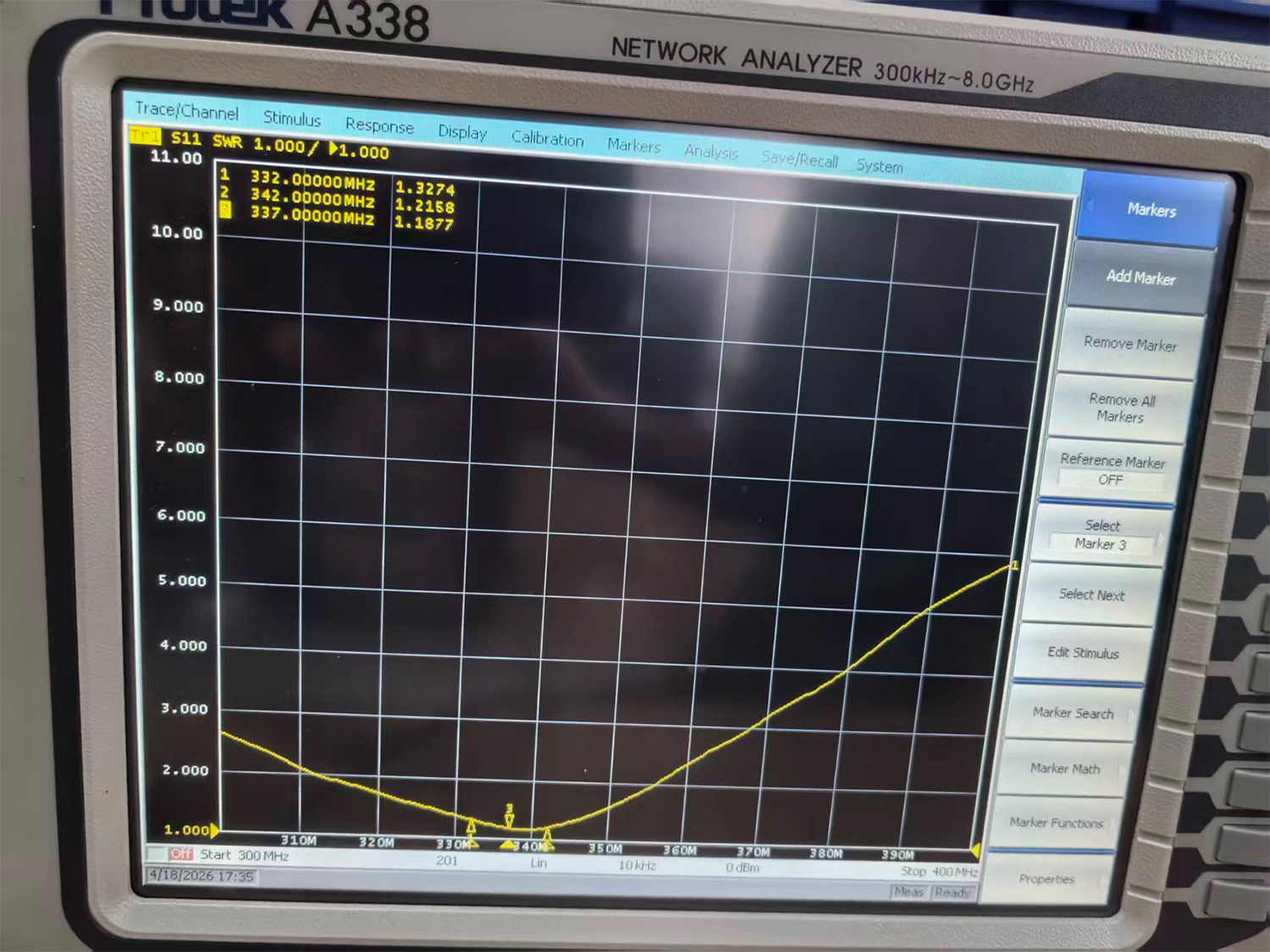
КСВ
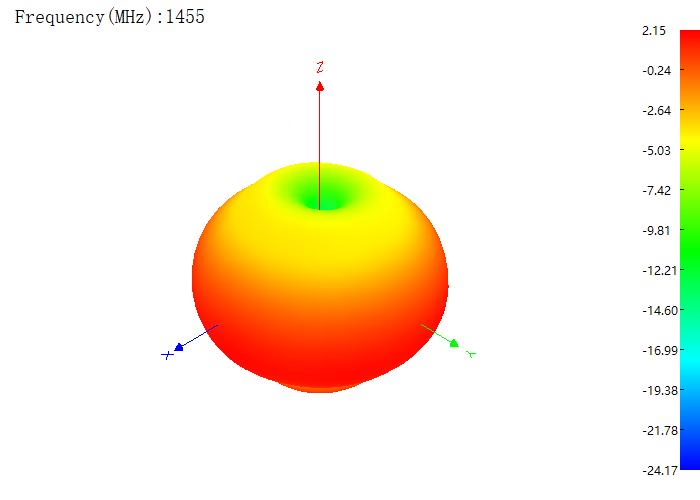
Посилення антени, Ефективність, and Radiation Pattern for a 20 cm Long Antenna
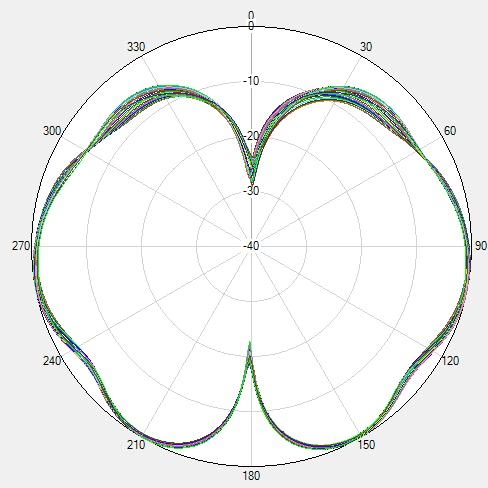
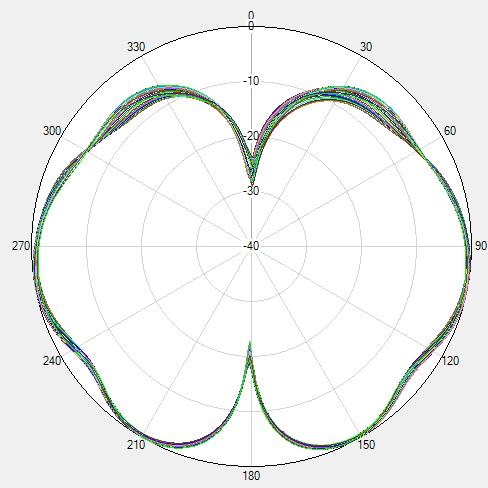
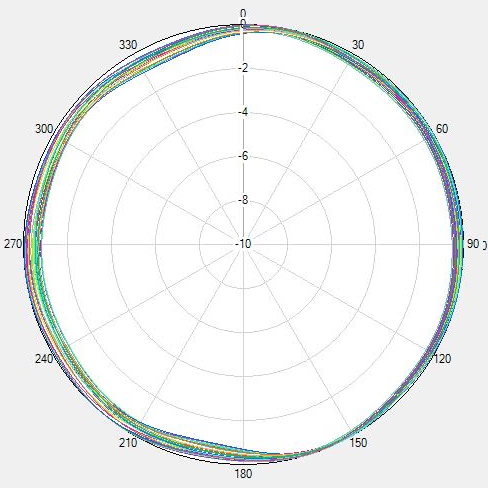
|
частота(МГц) |
1400 | 1410 | 1420 | 1430 | 1440 | 1450 | 1460 | 1470 | 1480 | 1490 | 1500 |
|
посилення(дБі) |
2.36 | 2.22 | 2.33 | 2.23 | 2.22 | 2.12 | 2.04 | 2.06 | 1.99 | 2.06 | 1.91 |
|
Ефективність(%) |
69.02 |
68.08 |
67.15 |
65.46 |
65.59 |
64.58 |
64.45 |
65.21 |
65.72 |
65.46 |
66.36 |
Посилення антени, Ефективність, and Radiation Pattern for a 40 cm Long Antenna

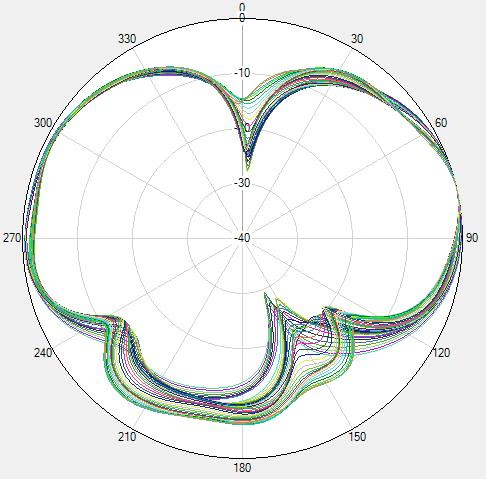

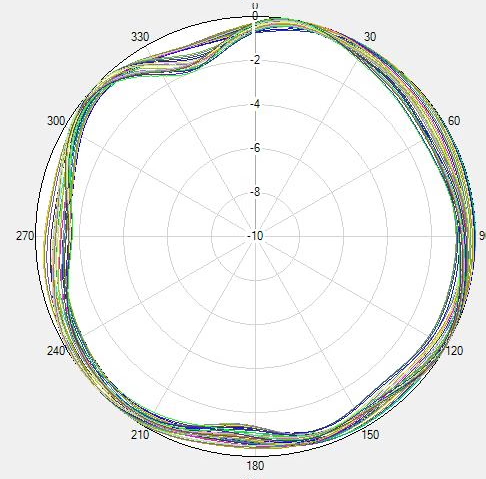
| частота(МГц) | 1400 | 1410 | 1420 | 1430 | 1440 | 1450 | 1460 | 1470 | 1480 | 1490 | 1500 |
| посилення(дБі) | 2.66 | 2.83 | 2.91 | 2.75 | 2.78 | 2.72 | 2.72 | 2.66 | 2.44 | 2.16 | 2.06 |
| Ефективність(%) | 67.28 | 67.68 | 67.28 | 64.83 | 65.59 | 62.24 | 62.24 | 61.76 | 60.35 | 58.19 | 58.31 |





Відгуки
There are no reviews yet.