


Зміст
введення
Modern operations—whether on the battlefield, in the air with unmanned aerial vehicles (БПЛА), or in disaster-stricken environments—depend on seamless, resilient communication. Unlike in the past, where radios were largely limited to transmitting voice or simple data, today’s missions require radios capable of carrying даних, голос, and video simultaneously.
At the center of this transformation are low-SWaP mesh radios. SWaP stands for розмір, вага, and Power, three critical design factors that dictate whether equipment can be effectively deployed in environments where every gram, cubic centimeter, and watt matters. Low-SWaP radios are engineered to minimize these constraints while still delivering high performance.
When combined with mesh networking, which allows each node to act as both a transmitter and relay in a self-healing, decentralized network, these radios become powerful enablers of real-time communication in dynamic and contested environments.
This article explores how low-SWaP mesh radios підтримка даних, голос, and video transmission, and why this multi-modal capability is transforming military operations, UAV missions, robotics deployments, and tactical communications worldwide.
What Are Low-SWaP Mesh Radios?
A mesh radio is a wireless transceiver designed for mesh networking—a system in which each device can directly communicate with others while also forwarding traffic to extend coverage. Unlike traditional hub-and-spoke networks, mesh networks are resilient, redundant, and adaptive.
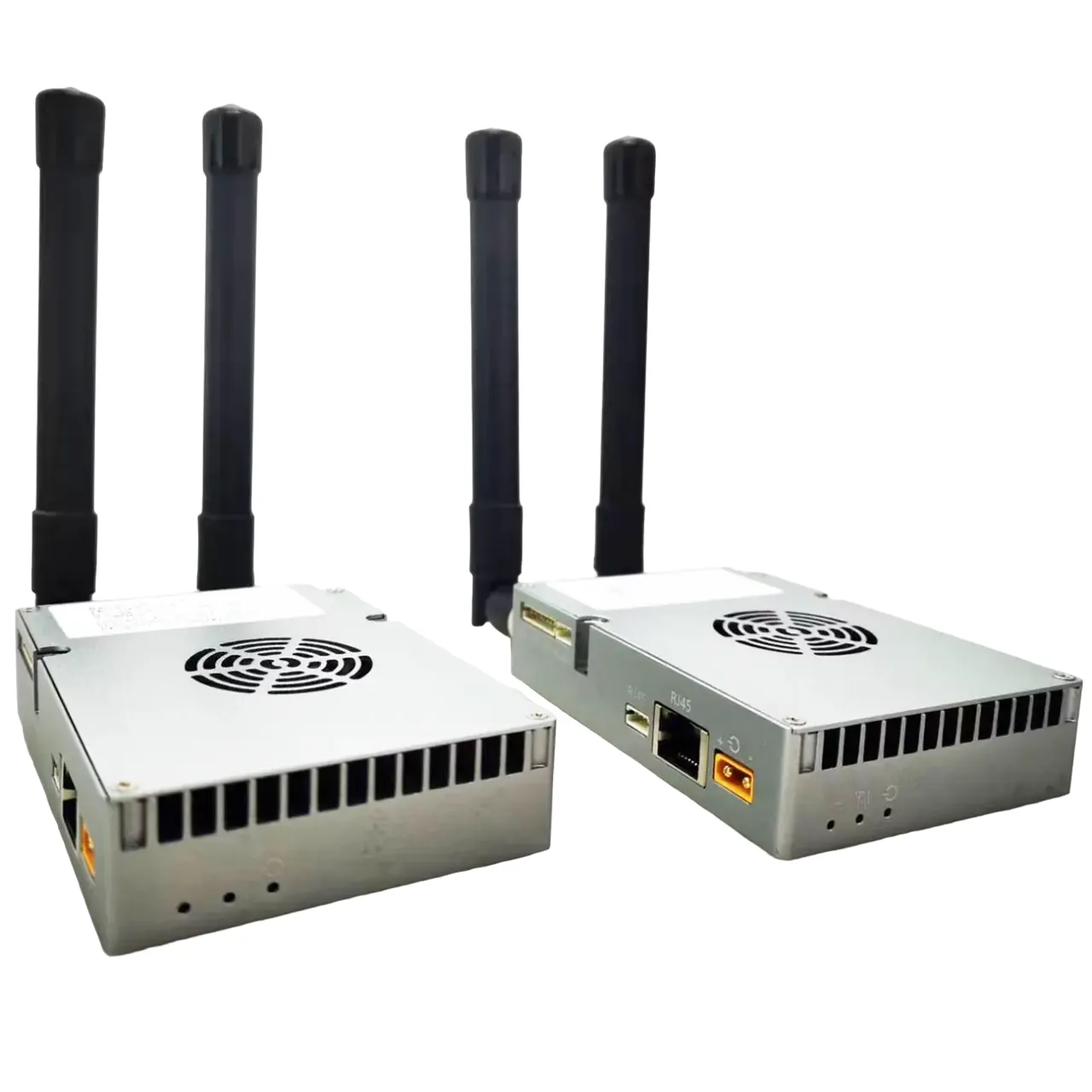
Low-SWaP mesh radios combine this with an ultra-compact, легкий, and energy-efficient design. They are optimized for platforms like UAVs, наземні роботи, soldier-carried systems, or small autonomous vehicles where every milliwatt of power and every gram of weight counts.
But what truly sets them apart is their ability to handle multi-modal traffic:
- Дані: sensor feeds, GPS telemetry, command-and-control instructions
- Голос: encrypted, low-latency communications for soldiers or emergency teams
- відео: в реальному часі, compressed HD streams for intelligence, спостереження, розвідка (ISR), or robotic vision
This makes low-SWaP mesh radios not just communication devices, but the backbone of networked situational awareness systems.
Why Data, Голос, and Video Matter Together
Traditionally, radios were often specialized—some designed for voice, others for telemetry, and high-bandwidth links reserved for video. Low-SWaP mesh radios merge all three into a single, integrated platform.
- Дані: Provides control, моніторинг, and mission-critical telemetry. For UAVs, this includes GPS coordinates, altitude, рівень заряду батареї, and navigation commands. For robots, it might be LIDAR sensor data or movement status.
- Голос: Still the fastest way for humans to coordinate. In combat or rescue operations, secure voice links allow soldiers or first responders to communicate instantly without relying solely on digital data.
- відео: Arguably the most bandwidth-intensive but also the most situationally valuable. Real-time video feeds from UAVs, body-worn cameras, or robots provide commanders with situational awareness and allow remote operators to make informed decisions.
Having all three streams on one resilient mesh network ensures that no single layer of communication fails. If video bandwidth drops, voice and data can continue seamlessly, ensuring mission continuity.
Technical Foundations of Multi-Modal Transmission
To support simultaneous даних, голос, і відео, low-SWaP mesh radios leverage a combination of advanced technologies:
- COFDM (Кодовано мультиплексування з ортогональним частотним поділом):
Provides resilience in multipath and high-interference environments, ideal for urban combat zones or dense forests. - Dynamic Modulation Schemes (QPSK, QAM16, QAM64):
Allows radios to adjust throughput depending on signal conditions—high bandwidth when possible, lower but reliable links when degraded. - Стиснення відео (H.264/H.265):
Enables HD or Full HD video streaming at bitrates as low as 1–6 Mbps, minimizing latency to under 100ms for real-time operations. - Voice-over-IP (VoIP) Протоколи:
Integrated into mesh radios to carry encrypted tactical voice channels with latency under 150ms. - шифрування (AES-128/256):
Secures all streams—data, голос, and video—against interception. - Frequency Agility:
Radios can operate across L-, S-, and C-bands, shifting as needed to avoid jamming or interference.
The result is a single radio that can do the job of three, without burdening the platform with extra hardware.
Advantages of Low-SWaP Mesh Radios
- розмір, вага, and Power Efficiency:
By combining data, голос, and video into one compact unit, these radios reduce the need for multiple devices. Soldiers carry lighter loads, UAVs gain more flight time, and robots maximize sensor payloads. - Extended Mission Duration:
Low power consumption directly translates into longer battery life—critical for UAVs or dismounted soldiers. - Resilience Through Mesh Networking:
Even if one radio drops out, others automatically reroute communications. Дані, голос, and video keep flowing through alternate paths. - Scalable Networks:
Dozens or even hundreds of radios can interconnect, creating wide-area networks without reliance on fixed infrastructure. - сумісність:
Modern low-SWaP mesh radios often support IP-based traffic, allowing seamless integration with existing networks, command systems, and cloud-based analytics.
Military Applications
The battlefield has evolved from simple push-to-talk radios to integrated digital communication ecosystems. Low-SWaP mesh radios play a central role:
- Дані: Telemetry from drones, vehicle positions, soldier vitals, and weapon system status can all be transmitted in real time.
- Голос: Squad members maintain encrypted communication in contested environments, even when separated by terrain.
- відео: Body-worn cameras, UAV ISR feeds, and vehicle-mounted sensors transmit live video back to command posts.
Practical examples include:
- Dismounted Soldiers: Each carries a lightweight mesh radio linking them to fellow soldiers, drones overhead, and armored vehicles nearby.
- Tactical Vehicles: Serve as mobile relay nodes, extending range and bandwidth for the entire network.
- Battlefield Command: Gains a unified view combining telemetry (даних), situational awareness (відео), and coordination (голос).
This tri-layer communication capability ensures that even under electronic warfare and jamming threats, forces maintain connectivity.
UAV Applications
Unmanned Aerial Vehicles demand radios that are легкий, power-efficient, and high-performance—a perfect match for low-SWaP mesh radios.
- Передача даних: UAVs continuously send GPS data, flight status, and sensor outputs.
- Voice Relay: Some UAVs act as flying communication relays, extending voice networks for ground forces.
- Потокове відео: UAVs capture HD or even 4K ISR video, streaming it live to operators or command centers.
A real-world example: A UAV swarm equipped with mesh radios can survey a disaster zone. Each UAV relays video footage, дані датчика, and operator commands across the mesh, ensuring coverage far beyond line-of-sight. Тим часом, ground troops can communicate through the same network, with the UAVs acting as aerial relays.
Robotics Applications
In robotics—particularly for defense, промислові, or search-and-rescue missions—communication is vital.
- Дані: Robots transmit navigation status, sensor inputs, and environmental readings.
- Голос: Operators can coordinate directly with team members or issue spoken commands through the same mesh network.
- відео: Robots often provide live video feeds from cameras, thermal imagers, or LIDAR systems, giving operators eyes inside dangerous environments.
Наприклад, in a collapsed building scenario, a team of robots equipped with low-SWaP mesh radios can map the structure (даних), send real-time visuals (відео), and maintain voice comms with rescue workers outside.
Tactical and Emergency Communications
First responders and law enforcement teams often face environments where cellular or satellite networks are unavailable or compromised. Low-SWaP mesh radios fill this gap.
- Дані: Medical telemetry from casualties, GPS positions of teams, and sensor alerts.
- Голос: Encrypted communication between rescue squads or tactical units.
- відео: Body cameras, UAV overhead imagery, or vehicle-mounted feeds streamed directly to mobile command centers.
In a natural disaster, a handful of radios deployed on drones, транспортних засобів, and handheld units can quickly establish a full data-voice-video communication grid without relying on damaged infrastructure.
Challenges and Future Outlook
While low-SWaP mesh radios are powerful, challenges remain:
- Bandwidth Allocation: Video transmission consumes significant bandwidth; radios must intelligently manage resources.
- Latency Control: Balancing real-time voice and video streams requires advanced QoS (Quality of Service) algorithms.
- SWaP vs. Capability Trade-offs: As radios shrink, maintaining high throughput and long range is a constant engineering challenge.
- Cybersecurity: Multi-modal communication channels require robust encryption and authentication to prevent interception.
Looking forward, advances in software-defined radios, 5G integration, and AI-driven routing will push low-SWaP mesh radios to new heights. We can expect radios that automatically allocate bandwidth between data, голос, і відео, ensuring optimal performance for mission priorities.
Висновок
In today’s high-stakes environments, communication is no longer about a single mode. Soldiers, БПЛА, роботів, and first responders need data for telemetry, voice for coordination, and video for situational awareness—all integrated into one seamless system.
Low-SWaP mesh radios deliver exactly this. By minimizing size, вага, and power while maximizing resilience and bandwidth, they provide the backbone for modern, multi-modal communication networks.
Whether it’s a UAV streaming ISR video, a robot sending sensor data from a hazardous zone, or a soldier maintaining secure voice contact in a contested battlefield, low-SWaP mesh radios ensure даних, голос, and video flow without interruption.
As warfare, реагування на стихійні лиха, and robotics continue to evolve, these radios will remain at the forefront of networked resilience, operational efficiency, and real-time situational awareness.
задавати питання
Дякуємо за вашу відповідь. ✨