



Increasing Transmit Power vs. Using High-Gain Antennas in UAV Wireless Video Transmission: Що краще?
Надійний UAV wireless video transmission is essential for modern drone applications, from aerial photography and mapping to public security, військова розвідка, та промислової інспекції. A stable drone video link ensures that operators can monitor flight missions in real-time, react to environmental changes, and guarantee mission success.
A common question in UAV communication system design is:
“Should we increase the transmitter’s output power, or should we upgrade to high-gain antennas to achieve longer range and more stable video transmission?»
Both methods improve signal strength, but their technical impact, limitations, and effectiveness differ. У цій статті, we’ll explore the pros and cons of each approach, compare them side by side, and recommend the best strategy for long-range FPV and professional UAV systems.
Зміст
Why Signal Quality Is Critical in Drone Video Links
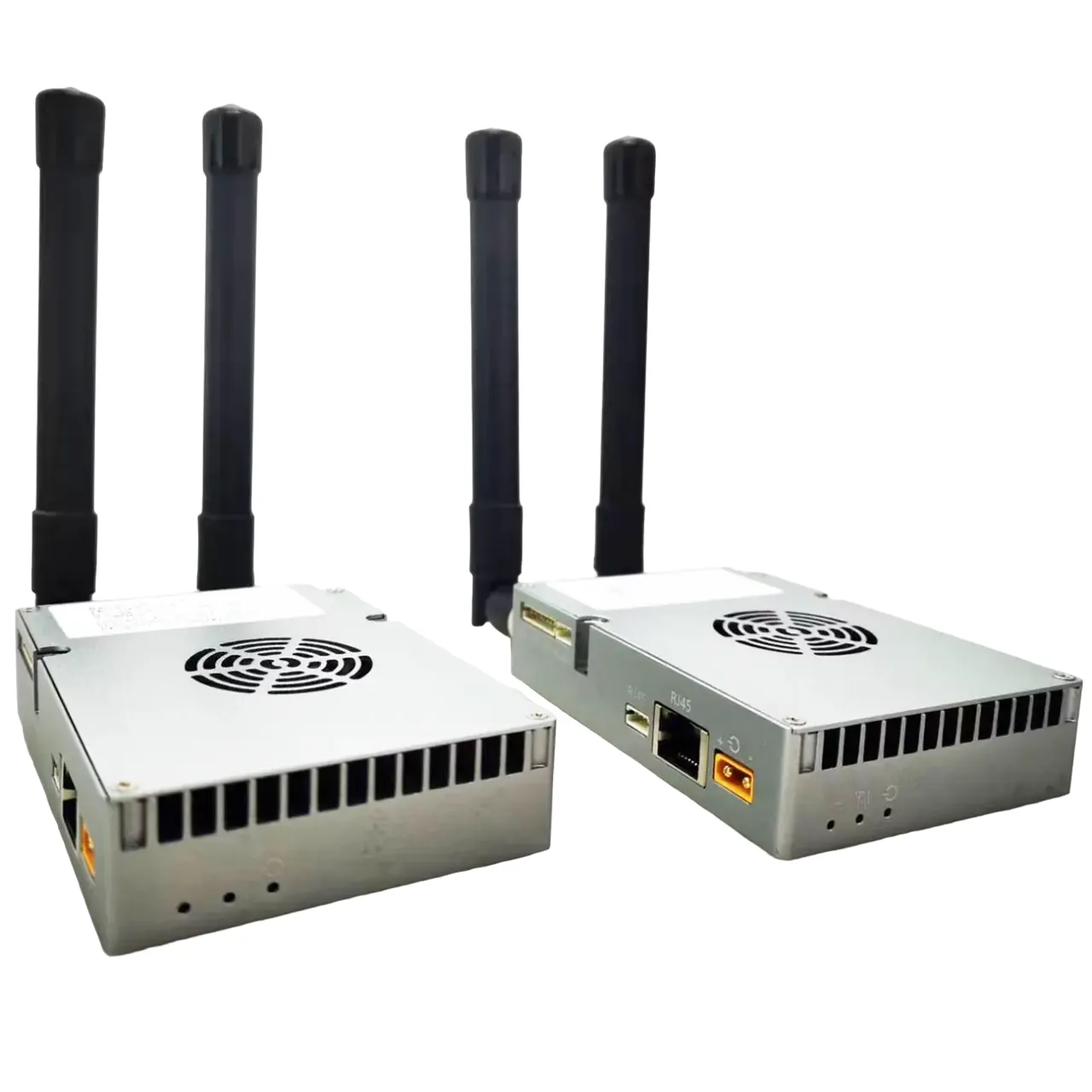
Every безпілотний відеопередавач і приймач pair relies on a well-balanced link budget, which depends on:
- Потужність передачі (Потужність передачі): The energy used to broadcast the UAV’s signal.
- Посилення антени: How efficiently the antenna directs and receives RF energy.
- Path Loss & Навколишнє середовище: Відстань, перешкоди, and interference.
- Чутливість приймача: How well the receiver decodes weak signals.
Improving transmit power or antenna gain directly impacts FPV signal range і стабільність, but each comes with trade-offs.
Варіант 1: Increasing Transmitter Power
Boosting transmitter power is a straightforward way to improve range in a COFDM wireless link or FPV system.
Переваги
- Higher Signal-to-Noise Ratio (SNR): Stronger signals improve decoding reliability, even with interference.
- Omnidirectional Effectiveness: Works in all directions when paired with an omnidirectional antenna.
- Obstacle Penetration: Higher power helps signals pass through buildings, листя, or terrain.
- Resistant to RF Noise: A stronger signal overcomes background interference.
Недоліки
- Battery Drain: Higher power shortens drone flight time.
- Heat Generation: Stronger modules require cooling to maintain stability.
- Regulatory Limits: Most regions cap UAV transmitters at 1–2W in ISM bands.
- Interference Risk: High power can disrupt nearby RF systems.
Резюме: Increasing power works, but is often limited by regulations, heat, and power consumption.
Варіант 2: Switching to High-Gain Antennas
High-gain antennas focus RF energy more efficiently, improving both transmission and reception in a UAV communication system.
Переваги
- No Extra Power Use: Extends range without draining the drone’s battery.
- Improved Link Budget: Concentrated signals enhance long-distance stability.
- Regulatory Friendly: Often compliant since EIRP (Effective Isotropic Radiated Power) is optimized.
- Dual Benefits: Works on both UAV and ground station ends.
Недоліки
- Directional Requirements: Narrow beam antennas (Ягі, patch, параболічний) need precise aiming.
- Вага та розмір: Large antennas are impractical on drones but excellent for ground stations.
- Beamwidth Narrowing: Out-of-angle flight paths may suffer signal loss.
Резюме: High-gain antennas are more efficient than boosting power, especially for ground stations in long-range FPV setups.
Comparison Table: Transmit Power vs. Посилення антени
| Factor | Increasing Transmit Power | Switching to High-Gain Antennas |
|---|---|---|
| Range Improvement | Помірний, limited by law | Сильний, especially with directional antennas |
| Battery Impact | High drain on UAV | No additional drain |
| Heat Load | Increases significantly | Жодного |
| Відповідність нормативним вимогам | Often restricted beyond 1–2W | Usually compliant |
| Ease of Use | просто, but less efficient | Requires alignment and installation |
| Best for UAV (повітряно-десантний) | Moderate power only | Lightweight omnidirectional only |
| Best for Ground Station | Useful, but less efficient | Excellent—ideal for long-range FPV |
| Interference Handling | Stronger signal fights noise | Focused reception reduces noise |
| Вартість | Higher cost for modules | Antennas are affordable upgrades |
Practical UAV Setup Recommendations
- Long-Range FPV & Surveillance Missions
- Use moderate transmit power (1W–2W).
- Deploy high-gain directional antennas at the ground station.
- приклад: A COFDM ground receiver with a panel or Yagi antenna.
- Urban Environments with Interference
- Slightly higher transmitter power helps overcome RF noise.
- Medium-gain omnidirectional antennas improve mobility.
- Compliance-Sensitive Applications
- Focus on antenna optimization rather than transmit power increases.
- Ensure UAV communication systems stay within legal limits.
- Professional Hybrid Solution
- Moderate UAV transmit power + ground station high-gain antennas = best balance.
- Ensures long-range stability without draining UAV batteries.
Висновок
When optimizing a drone video link for maximum performance, both methods have merit:
- Increasing transmit power boosts penetration and interference resistance but consumes more energy and risks exceeding legal limits.
- Switching to high-gain antennas is more efficient, стабільний, and cost-effective, particularly when applied at the ground station.
Final Recommendation: For most UAV wireless video transmission systems, maintain moderate transmit power on the drone and upgrade the ground station with high-gain antennas. This ensures long-range FPV performance, стабільність сигналу, and compliance with regulations.
By carefully balancing потужність передачі, посилення антени, and system design, UAV operators can achieve reliable long-distance video transmission while keeping drones efficient and mission-ready.
задавати питання
Дякуємо за вашу відповідь. ✨