





Eksiksiz Bir Satın Alma Kılavuzu & Product Classification Reference
Thermal imaging cameras are widely used in security, endüstriyel muayene, yangın algılama, and temperature monitoring. ancak, with so many specifications available—resolution, mercek, arayüzler, and more—choosing the right thermal camera can be confusing.
This article explains the key classification standards and available options to help users quickly understand and select the right thermal imaging camera for their needs.

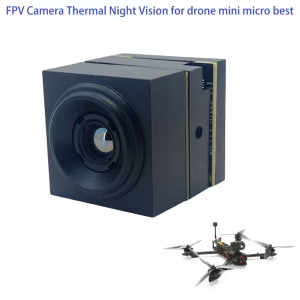
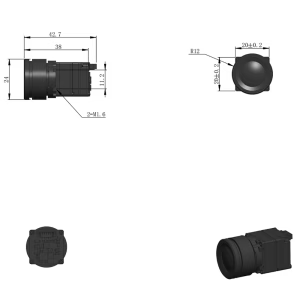
FPV kamera
Fpv quadcopter drone kızılötesi gece görüş kamerası için analog termal görüntüleme kamerası
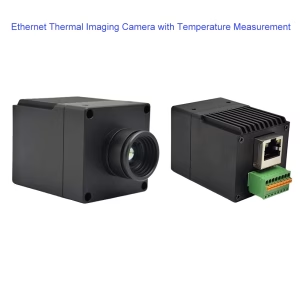



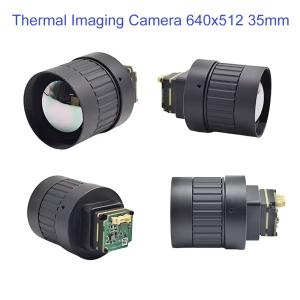


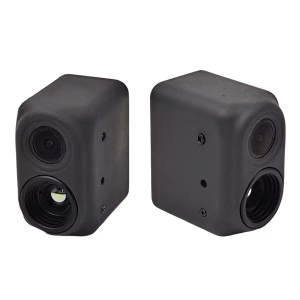
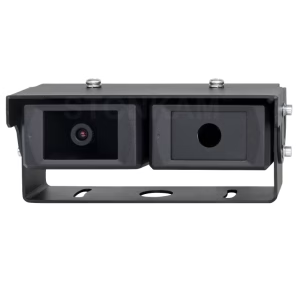
AI IP Kamera
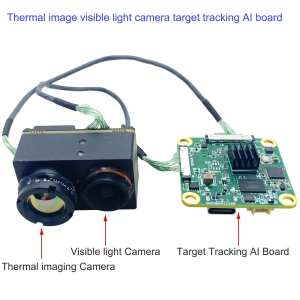
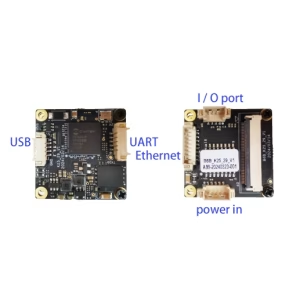
Görünür ışıklı termal görüntüleme kamerası çift ışıklı kamera çekirdek modülü ethernet IP çıkışı

İçindekiler
1. Dedektör Çözünürlüğü: The Foundation of Image Quality
Detector resolution defines how much detail a thermal camera can capture. Higher resolution means clearer images and longer detection distances, but also higher cost and data bandwidth.
Common resolution options include:
- 80 × 60
- 160 × 120
- 256 × 192
- 320 × 240
- 384 × 288
- 640 × 512
- 1280 × 1024
Selection tip:
For short-range indoor use, mid-level resolutions are usually sufficient. Long-range surveillance or precise inspection benefits from higher resolutions.
2. Piksel Aralığı: Boyut, Hassasiyet, and Cost
Pixel pitch refers to the distance between adjacent pixels on the detector and affects camera size, lens size, and thermal sensitivity.
Typical pixel pitch options:
- 17 μm
- 14 μm
- 12 μm
- 10 μm
- 8 μm
Smaller pixel pitch allows more compact camera designs, while larger pixel pitch often provides better sensitivity at lower cost.
3. Termal Hassasiyet (NETD)
NETD (Noise Equivalent Temperature Difference) measures how well a camera can distinguish small temperature differences. The lower the NETD value, the better the thermal sensitivity.
Common classifications:
- ≤50 mK – Entry level
- ≤40 mK – Standard professional
- ≤35 mK – Advanced
- ≤30 mK – High-end
4. Spektral Aralık
Most thermal imaging cameras operate in the long-wave infrared (LWIR) menzil.
- 8–14 μm (LWIR) – Standard for uncooled thermal cameras
This range is ideal for ambient temperature detection and most industrial and security applications.
5. Lens and Optical Options
Lens Odak Uzaklığı
The lens determines the field of view and observation distance.
Wide-angle lenses (kısa menzilli):
- 2.8 mm
- 3.2 mm
- 4 mm
Standard lenses:
- 6 mm
- 8 mm
- 13 mm
Telephoto lenses (uzun menzilli):
- 19 mm
- 25 mm
- 35 mm
- 50 mm and above
Objektif Tipi
- Sabit odak
- Manual focus
- Motorized focus
- Optik yakınlaştırma
6. Video Çıkış Arayüzleri
Thermal cameras support a variety of video output interfaces depending on system requirements.
Analog output:
- CVBS (PAL / NTSC)
Digital output:
- USB (UVC)
- IP / ethernet
- HDMI
- LVDS
- MIPI CSI-2
- SDI
7. Communication and Control Interfaces
These interfaces are used for camera configuration, firmware control, and temperature data transmission.
Common options include:
- UART
- RS232
- RS485
- OLABİLMEK
- ethernet (RJ45)
- Wifi
- Bluetooth
8. Temperature Measurement Capabilities
Not all thermal cameras support temperature measurement. Depending on the application, different levels are available.
Measurement types:
- Imaging only (no temperature data)
- Spot temperature measurement
- Area or region measurement
- Full-frame temperature measurement
Typical temperature ranges:
- -20 için 150 °C (human and environment monitoring)
- -20 için 550 °C (endüstriyel uygulamalar)
- kadar 1000 °C or higher (special applications)
Measurement accuracy:
- ±2 °C or ±2% (standart)
- ±1 °C or ±1% (high precision)
9. Image Processing and Display Functions
Modern thermal cameras offer a wide range of image enhancement features.
- Otomatik Kazanç Kontrolü (AGC)
- Manual brightness and contrast adjustment
- Gürültü azaltma
- Image sharpening
- Multiple color palettes (White Hot, Black Hot, Iron, Gökkuşağı, vesaire.)
10. Smart and AI-Based Features
Advanced thermal cameras may include intelligent analytics.
- Hareket algılama
- Human or vehicle detection
- Fire and hotspot detection
- Temperature alarms
- AI-based classification and tracking
11. Mechanical Design and Form Factor
Thermal cameras are available in various physical forms.
Common product forms:
- Thermal module (OEM integration)
- Board-level camera
- Integrated camera
- Bullet camera
- Dome camera
- PTZ thermal camera
- Handheld device
12. Environmental and Power Considerations
Environmental Ratings
- Operating temperature:
- -20 °C ila +60 °C (standart)
- -40 °C ila +70 °C (endüstriyel)
- Protection levels:
- Kapalı (no rating)
- IP54
- IP66 / IP67
- Explosion-proof (ATEX / IECEx)
Güç Kaynağı Seçenekleri
- 5 V DC
- 12 V DC
- 24 V DC
- Ethernet üzerinden Güç (Yetki Belgesi)
- Battery-powered
13. Application-Based Classification
Thermal cameras are often grouped by application:
- FPV Drone
- UAV Unmanned Aerial Vehicle
- EOD Robot
- Güvenlik ve gözetim
- Endüstriyel muayene
- Fire detection and prevention
- Temperature screening
- Machine vision and automation
- Research and scientific use
Son Düşünceler: How to Select the Right Thermal Camera
A simple selection process can help narrow down the options:
- Define the application and observation distance
- Choose the appropriate resolution and lens
- Decide whether temperature measurement is required
- Select output interfaces and housing
- Consider environmental conditions and smart features
By understanding these classification standards and options, users can confidently select a thermal imaging camera that matches their technical and operational needs.






FPV kamera
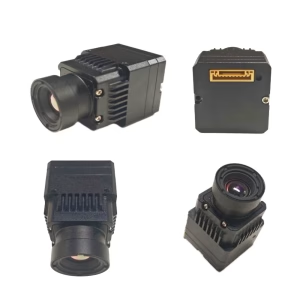
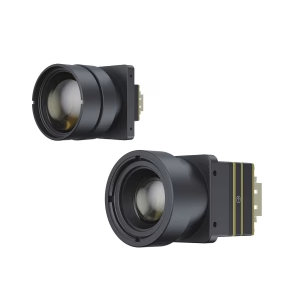
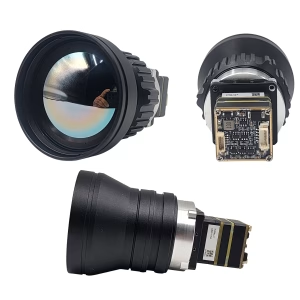
FPV Termal Görüntüleme Kamerası cvbs 50mm lens 384×288 çözünürlüklü kompozit video AV çıkışı
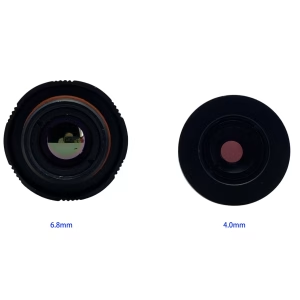
FPV kamera
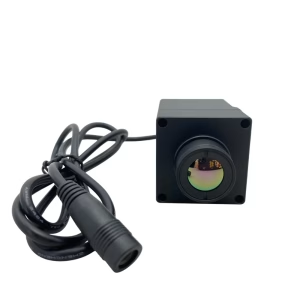
Fpv quadcopter drone kızılötesi gece görüş kamerası için analog termal görüntüleme kamerası

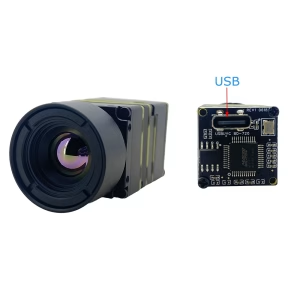
AI IP Kamera
Görünür ışıklı termal görüntüleme kamerası çift ışıklı kamera çekirdek modülü ethernet IP çıkışı
Bir soru sor
Yanıtınız için teşekkür ederiz. ✨