




विषयसूची
COFDM ट्रांसीवर क्या है?
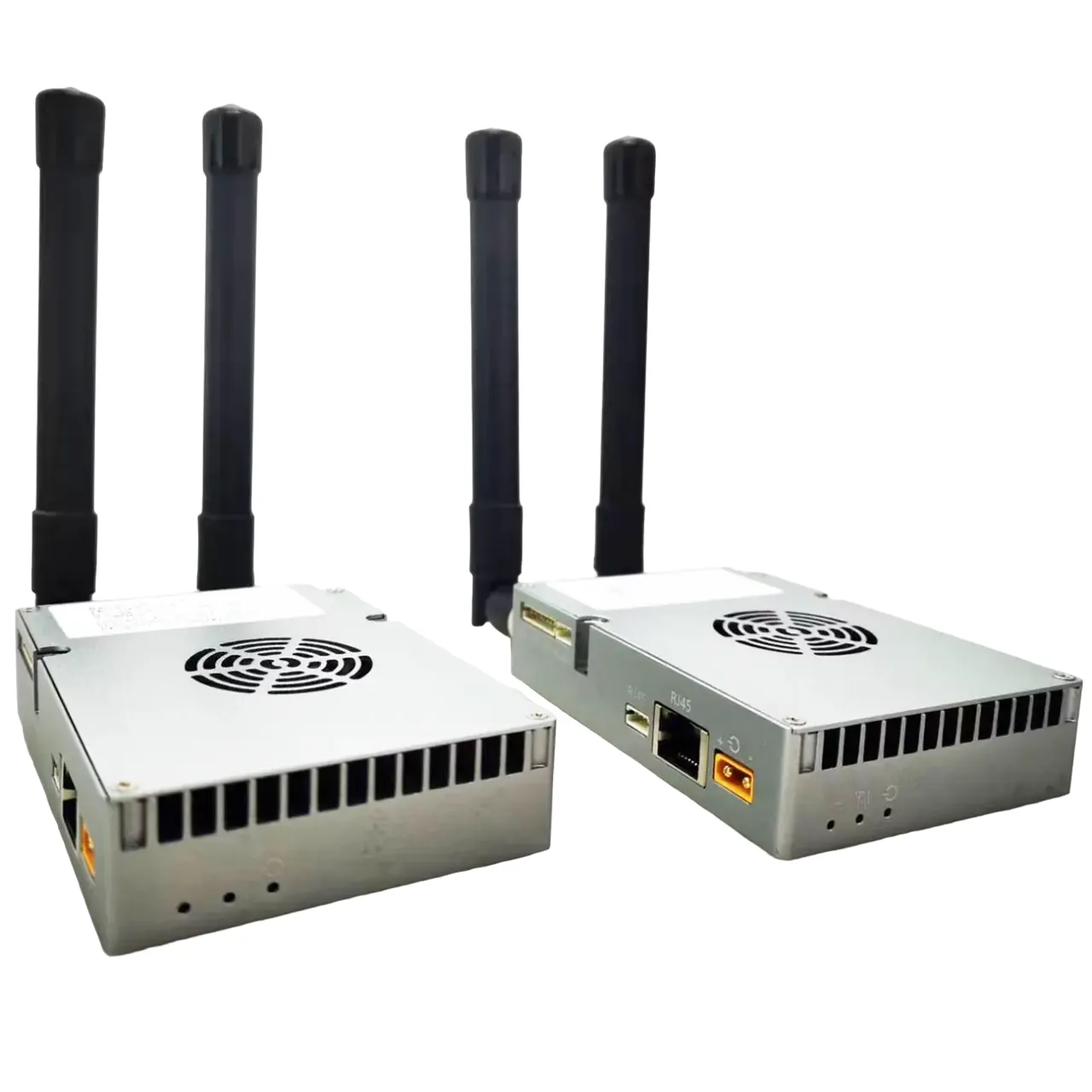
COFDM Transceiver उन उपकरणों की एक जोड़ी है जो डेटा और वीडियो प्राप्त कर सकते हैं और भेज सकते हैं. COFDM ट्रांसमीटर और रिसीवर एक है एक तरफ़ा रास्ता संपर्क, यह केवल यूनिडायरेक्शनल ट्रांसमिशन का समर्थन करता है.
COFDM ट्रांसीवर में COFDM ट्रांसमीटर और रिसीवर के दो सेट होते हैं, जो विपरीत दिशाओं में संचारित होता है ताकि एक उपकरण प्राप्त कर सके और डेटा भेज सके, वीडियो, और एक अन्य युग्मित डिवाइस के लिए ऑडियो. तो cofdm ट्रांससिव एक है दो-तरफ़ा संचरण लिंक.
दोनों COFDM ट्रांसीवर में ईथरनेट IP RJ45 कनेक्टर हैं, यह एक अदृश्य नेट केबल की तरह है. यह एक आईपी कैमरा कनेक्ट करने का समर्थन करता है और दो दूर के कंप्यूटरों को जोड़ने का भी समर्थन करता है, यह Windows OS CMD पर पिंग कमांड चलाने का समर्थन करता है, जो ट्रांसमिशन समय पर प्रतिक्रिया देगा.
COFDM ट्रांसीवर कैसे चुनें?
COFDM ट्रांसीवर का चयन करते समय, आपको कई कारकों पर विचार करने की आवश्यकता हो सकती है:
आवृत्ति
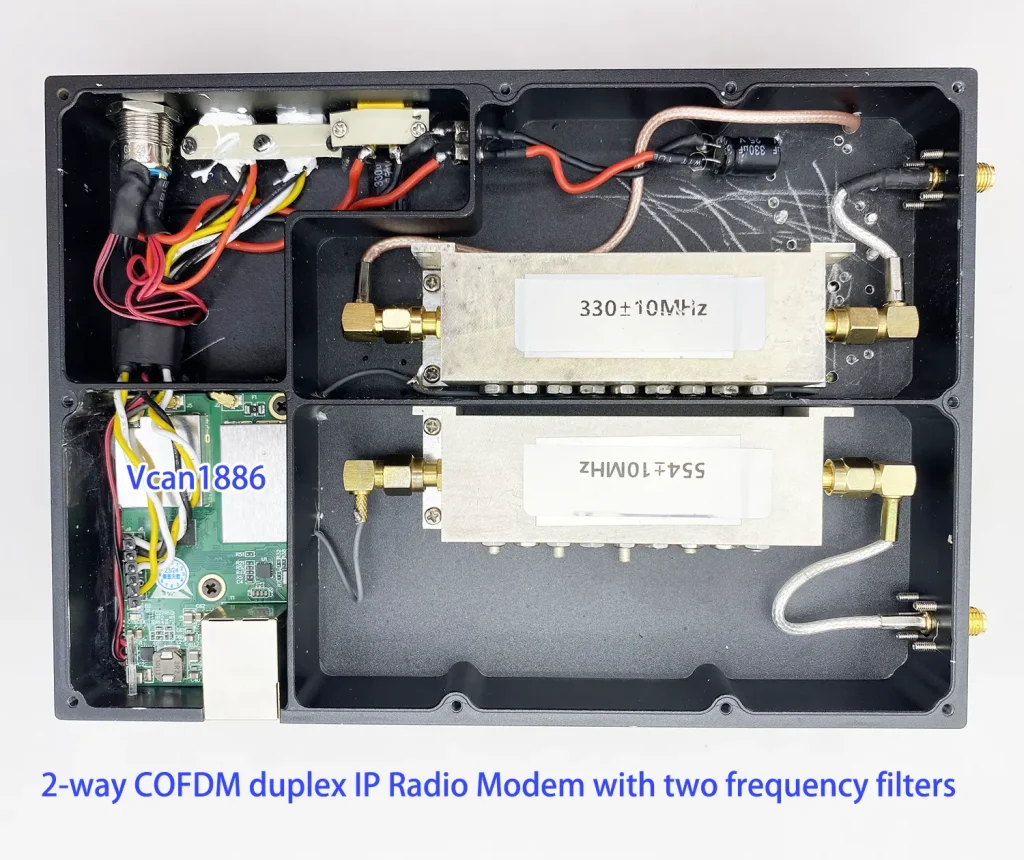
COFDM ट्रांसमीटर और रिसीवर एक दिशा में संचारित होते हैं, तो केवल एक आवृत्ति पर विचार करने की आवश्यकता है. COFDM ट्रांससीवर द्विदिश प्रसारण हैं, इसलिए दो आवृत्तियों पर विचार करने की आवश्यकता है. हस्तक्षेप से बचने के लिए दो आवृत्ति रेंज को जितना संभव हो उतना अलग किया जाना चाहिए. अव्यवस्था को खत्म करने और हस्तक्षेप से बचने के लिए, वेव पास फ़िल्टर जोड़ने पर विचार करना भी आवश्यक है.
विशिष्ट आवृत्ति रेंज से हो सकता है 170 सेवा मेरे 860 मेगाहर्ट्ज. उदाहरण के लिए, अपलिंक फ़्रीक्वेंसी के लिए 300MHz और डाउनलिंक फ़्रीक्वेंसी के लिए 600MHz का चयन करें.
विशिष्ट पसंद को स्थानीय आवृत्ति अधिभोग स्थिति पर भी विचार करना चाहिए. यदि स्थानीय क्षेत्र में DVB-T या DVB-T2 डिजिटल टीवी है, यह उन आवृत्तियों से बचने के लिए भी आवश्यक है जिन्हें जितना संभव हो उतना डिजिटल टीवी द्वारा चुना गया है.
ट्रांसमिशन के लिए आवृत्ति का चयन करने के बाद, ट्रांसमिशन और रिसेप्शन को पूरा करने के लिए रिसीवर की आवृत्ति को भी उसी सीमा में रखा जाना चाहिए.
बैंडविड्थ
डिजिटल टीवी के विपरीत, जो है 6, 7, और 8MHz बैंडविड्थ, COFDM ट्रांसीवर के बैंडविड्थ को अनुकूलित किया जा सकता है, जैसे कि 2MHz और 4MHz.
ताकत बढ़ाने वाला
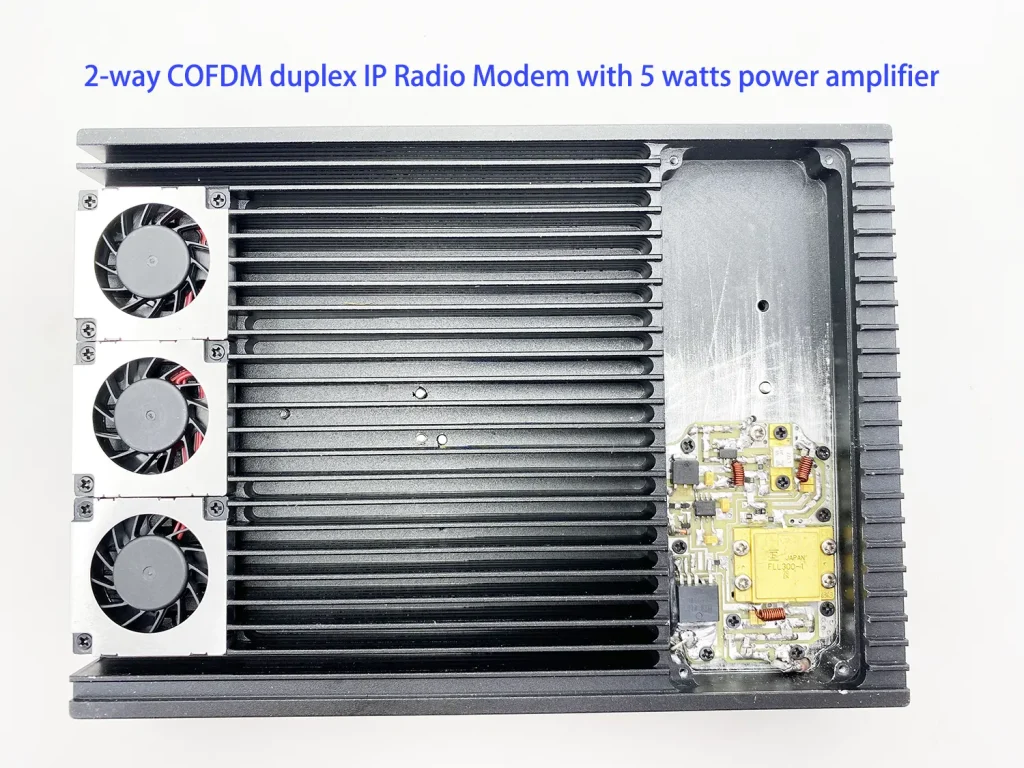
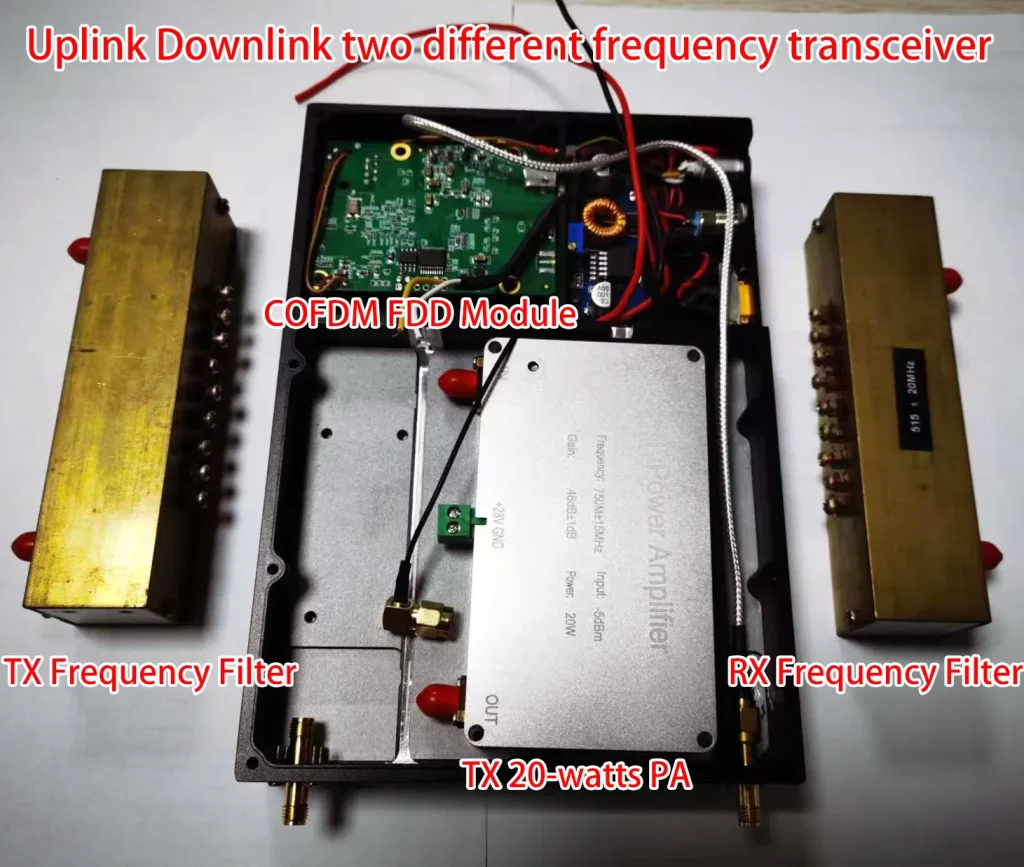
यहां उल्लिखित पावर एम्पलीफायर एक ऐसा उपकरण है जो ट्रांसमीटर से COFDM सिग्नल आउटपुट की शक्ति को बढ़ा सकता है, जो सिग्नल की गुणवत्ता और कवरेज में सुधार कर सकता है.
COFDM ट्रांसमीटर के पावर एम्पलीफायर को सिग्नल रैखिकता और दक्षता बनाए रखने की आवश्यकता है. आम तौर पर, आपको उस दूरी के आधार पर उपयुक्त पावर एम्पलीफायर चुनें जो आपको संचारित करने की आवश्यकता है. निम्नलिखित आपके संदर्भ के लिए ट्रांसमिशन दूरी और पावर एम्पलीफायर के बीच पत्राचार की एक तालिका है.
| ताकत बढ़ाने वाला | लॉस | NLOS |
| 500मेगावाट | >10किमी | <300मीटर |
| 1डब्ल्यू | >30किमी | <500मीटर |
| 5डब्ल्यू | >60किमी | <1500मीटर |
| 20डब्ल्यू | >120किमी | <3000मीटर |
| 50डब्ल्यू | >200किमी | <5000मीटर |
| 100डब्ल्यू | >250किमी | <10किमी |
संवेदनशीलता
संवेदनशीलता कमजोर संकेतों को प्रसारित करने के लिए एक वायरलेस वीडियो ट्रांसमीटर की क्षमता को संदर्भित करती है और उन्हें रिसीवर द्वारा प्राप्त किया गया है.
संवेदनशीलता को आमतौर पर डेसिबल में मापा जाता है (डीबी) या decibel milliwatts (dBm) और न्यूनतम सिग्नल पावर स्तर का प्रतिनिधित्व करता है जो एक ट्रांसमीटर का पता लगा सकता है और प्रक्रिया कर सकता है.
संवेदनशीलता जितनी अधिक है, वायरलेस वीडियो ट्रांसमिशन का प्रदर्शन और रेंज बेहतर है.
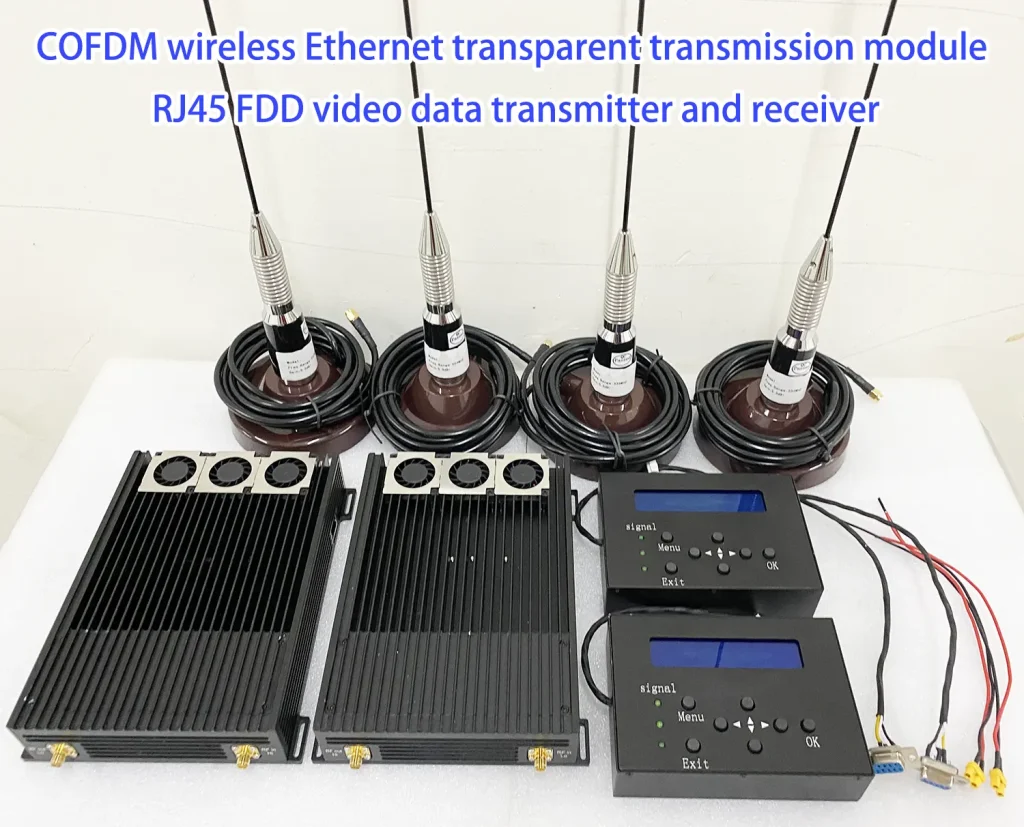
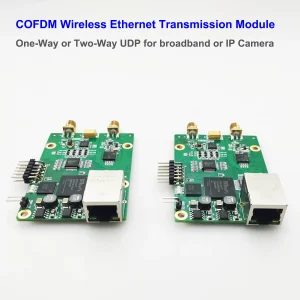
COFDM ट्रांसीवर के उत्पाद

COFDM में आमतौर पर 170MHz से 860MHz से दो COFDM ऑपरेटिंग आवृत्तियां होती हैं. आपसी हस्तक्षेप से बचने के लिए चयनित आवृत्तियों को यथासंभव दूर होना चाहिए.
वास्तविक उपयोग में, पीए पावर एम्पलीफायर को जोड़ना आवश्यक है, फ़िल्टर, और एंटीना काम करने की आवृत्ति से मेल खाता है.
COFDM ट्रांसीवर का पैकेज
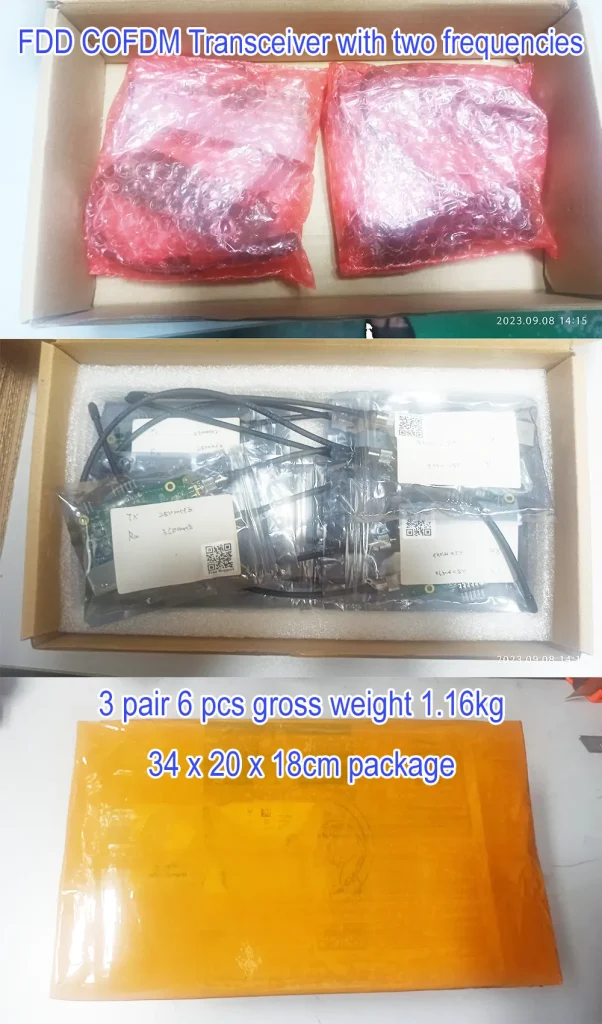
सीओएफडीएम ट्रांसीवर, जिसे बिडायरेक्शनल कॉफडम ईथरनेट रेडियो भी कहा जाता है, द्विदिश वायरलेस ईथरनेट पुल.
क्या आप मेरे लिए आवृत्ति 340MHz और 554MHz COFDM ट्रांसीवर को अनुकूलित कर सकते हैं?
हाँ.
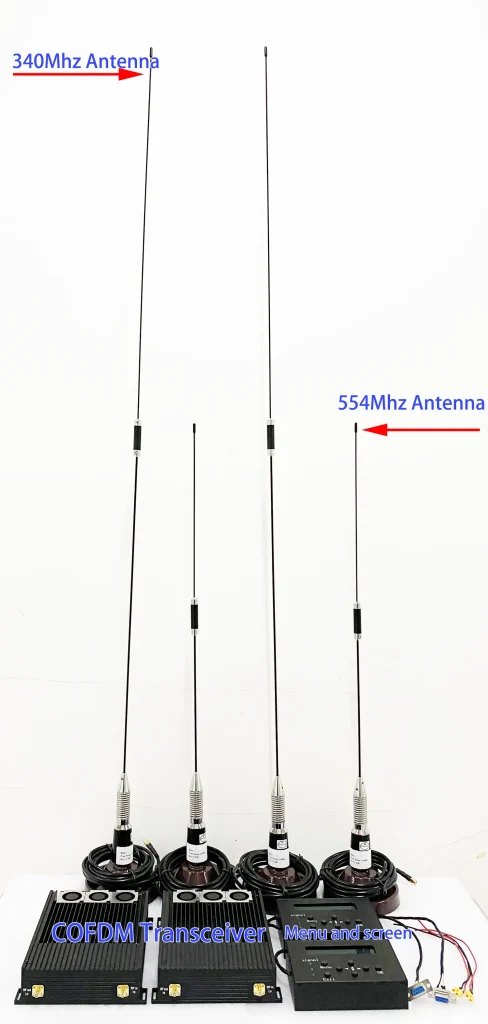
प्रति ट्रांससीवर के दो फिल्टर का उपयोग क्यों किया जाता है? RX के लिए एक फिल्टर और TX के लिए एक पीए पर्याप्त हैं?
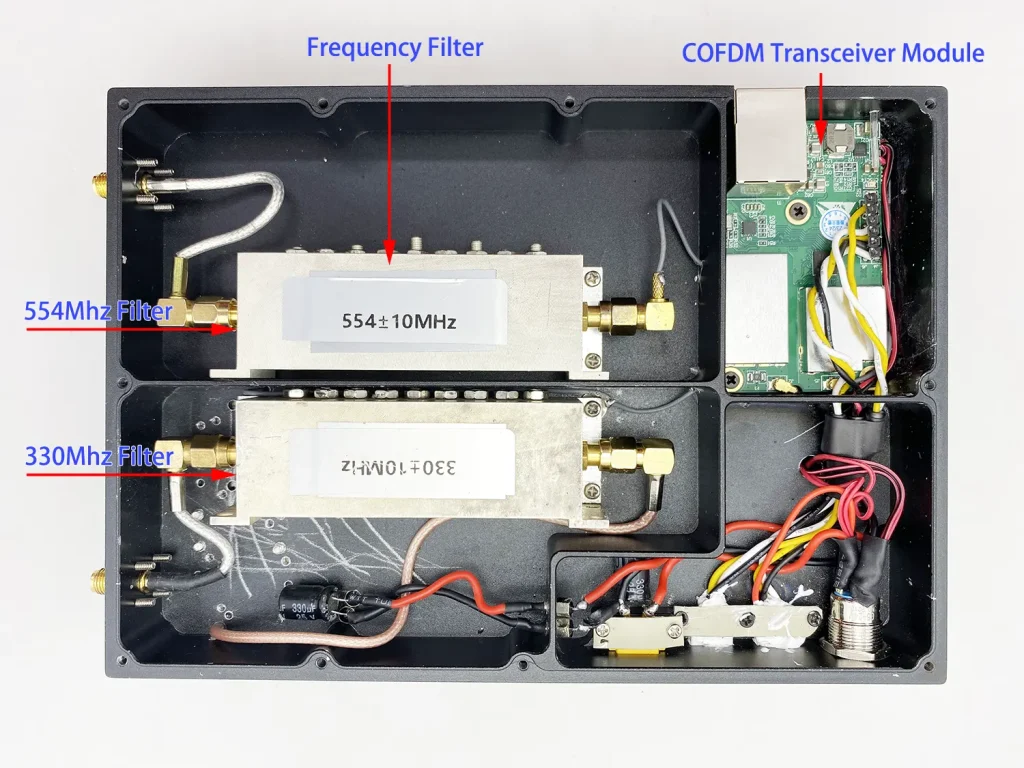
- अन्य उपकरणों द्वारा हस्तक्षेप करने या हस्तक्षेप करने से बचने के लिए फिल्टर जोड़े जाते हैं.
कृपया फ़िल्टर को जोड़ने के बिना पहले ट्रांसीवर का परीक्षण करें. - ट्रांसमीटर एक फ़िल्टर जोड़ता है क्योंकि इसमें एक पावर एम्पलीफायर होता है, यह विमान पर अन्य उपकरणों के साथ हस्तक्षेप करने से बचने के लिए एक मजबूत संकेत का उत्सर्जन करेगा.
- रिसीवर ऐड फ़िल्टर रिसीवर को केवल वांछित सिग्नल प्राप्त करने और अव्यवस्था से बचने की अनुमति देता है, और उस संकेत संवेदनशीलता में सुधार हुआ है.
- ट्रांसमिशन दूरी दूर नहीं होने पर आपको फ़िल्टर को कनेक्ट करने की आवश्यकता है या परीक्षण में सिग्नल की ताकत बहुत खराब है.
- यदि ट्रांसमीटर एक फिल्टर नहीं जोड़ता है, यह उड़ान नियंत्रण या पावर बैटरी में हस्तक्षेप कर सकता है. कुछ ग्राहकों ने पहले इस घटना का सामना किया है, और फिल्टर ने समस्या को हल कर दिया है.
- अब आप नमूना लेते हैं और जब आप इसका परीक्षण करते हैं तो इसे एक साथ खरीदने का सुझाव देते हैं और फ़िल्टर की आवश्यकता होती है, और इसे देने में अधिक समय और माल ढुलाई होगी.
क्या आप मेरे लिए आवृत्ति 175MHz और 320MHz COFDM ट्रांसीवर को अनुकूलित कर सकते हैं?

प्रश्न: I want to control and transmit data from my microcomputer to the module, but failure. Please help me.
i connected transmission module by data serial port to my system and trying to send {00000101}{00000000} , but see only this in output: 0xA 0x80 0xA 0x80 0x6A 0x0 0x0. I’m trying to communicate with the module using its protocol and parse the resulting commands, but the output doesn’t match the protocol’s specification. I’d like to send commands to my microcomputer via the UART port. My microcomputer connects to the transmission module’s data and control serial ports, and a third port connects to the menu board’s control port. Is the error coming from a module? When the module connects to the menu board, it communicates at a baud rate of 19200, with no parity. Is there a particular UART port that I should use and do I need to configure the flow control? I also attempted to transmit menu board data from my microcomputer to the module, but communication failed. Do these modules always use this protocol to communicate, or can they also exchange other types of data? Could I get a more detailed protocol manual, कृप्या?
उत्तर: I recommend you first test the function on two computers, connecting them via two modules. If successful, connect it to your microcomputer. Although we have a computer for testing functionality, we lack access to your microcomputer to investigate the issue.
संचार नियंत्रण सीरियल पोर्ट पैरामीटर
- 8 डेटा बिट्स
- 1 बंद बिट
- यहां तक कि समता भी
- बॉड दर: 19200
- Data port is RS232
Mini_COFDM ईथरनेट मॉड्यूल संचार नियंत्रण प्रोटोकॉल Vcan1886
Or please check the below operation video.
प्रशन: How to calculate SNR and RSSI on your radio link? I want to get more parameters for my application.
उत्तर: You can see our parameter board tool, which is connected to the control serial port on the drone’s wireless link. It can read the current data of the wireless link module (such as whether the signal is locked, सीनियर, आरएसएसआई, सिग्नल की शक्ति, आदि।), and can also modify the current parameters (आवृत्ति, बैंडविड्थ, encryption password, आदि।)
Please download our firmware compressed file and let your engineers refer to it to implement the above functions.
Please check above file, we made it for our menu and screen tool, you can try to do that at same methods.
प्रश्न: A 12V power supply was used for this setup; could the power supply be the problem? Should we perhaps go with 20V?
Modulation bandwidth: 4 MHz wideband.
• FEC: 5/6
• Modulation type: QPSK
• Guard interval: 1/4
• Traffic parameters:
• Protocol: UDP broadcast
• Packet size: 1024 बाइट
• Transmission rate: 100 packets per second
No need 20V, 12V is ok for the cofdm transceiver board testing.
प्रश्न: What mean of db and dbm at the below picture of cofdm transceiver menu and screen.
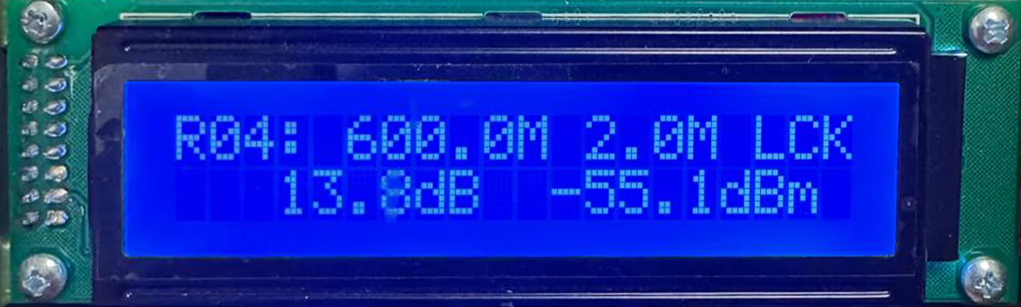
-13.8dBm is SNR and -55.1dBm is signal strength.
- सिग्नल क्षमता:
- Represents the raw power of a received signal, typically measured in dBm (decibel-milliwatts).
- उदाहरण:
- Satellite TV: Strength ≥60% is needed for basic function.
- Cellular networks: आरएसआरपी > -90 dBm is strong; < -110 dBm is weak.
- Governed by: Transmitter power, एंटीना संरेखण, cable quality, and distance.
- सीनियर (शोर अनुपात करने के लिए संकेत):
- पैमाने signal clarity by comparing signal power to background noise, में डीबी.
- Formula: सीनियर (डीबी) = Signal Strength (dBm) – शोर स्तर (dBm).
- उदाहरण:
- वाई - फाई: SNR ≥25 dB supports HD streaming; <10 dB causes disconnections.
- Lidar: SNR directly impacts detection range in bright environments.
प्रश्न: Could you share your configurations for the 50 किमी और 100 km distances? I am referring to frequency, फिल्टर, ताकत बढ़ाने वाला, and antennas.
The average output power of 100km is greater than 20W, and the peak-to-shoulder ratio is greater than 30dB (QPSK). The firmware setup is same, but the hardware need different power amplifier and frequency filter.
It depends on the usage environment you need. If it is a line-of-sight mobile state, the frequency requirement does not matter. If it is a non-line-of-sight state, the lower the frequency, बेहतर. The gain of the antenna depends on its length, which in turn depends on the frequency. The lower the frequency, the longer the antenna. For antennas of the same length, the higher the frequency, the higher the gain. The lower the frequency, the lower the gain.
50km can use 5-watts power amplifier, 100km can use 10-watts power amplifier.
Taking 700MHz as an example, the antenna gain is 3.5dBi, the antenna length is less than 30cm, the output power is 42dBm, and the transmission distance is up to 115km.
प्रश्न पूछें
आपका संदेश भेज दिया गया है