


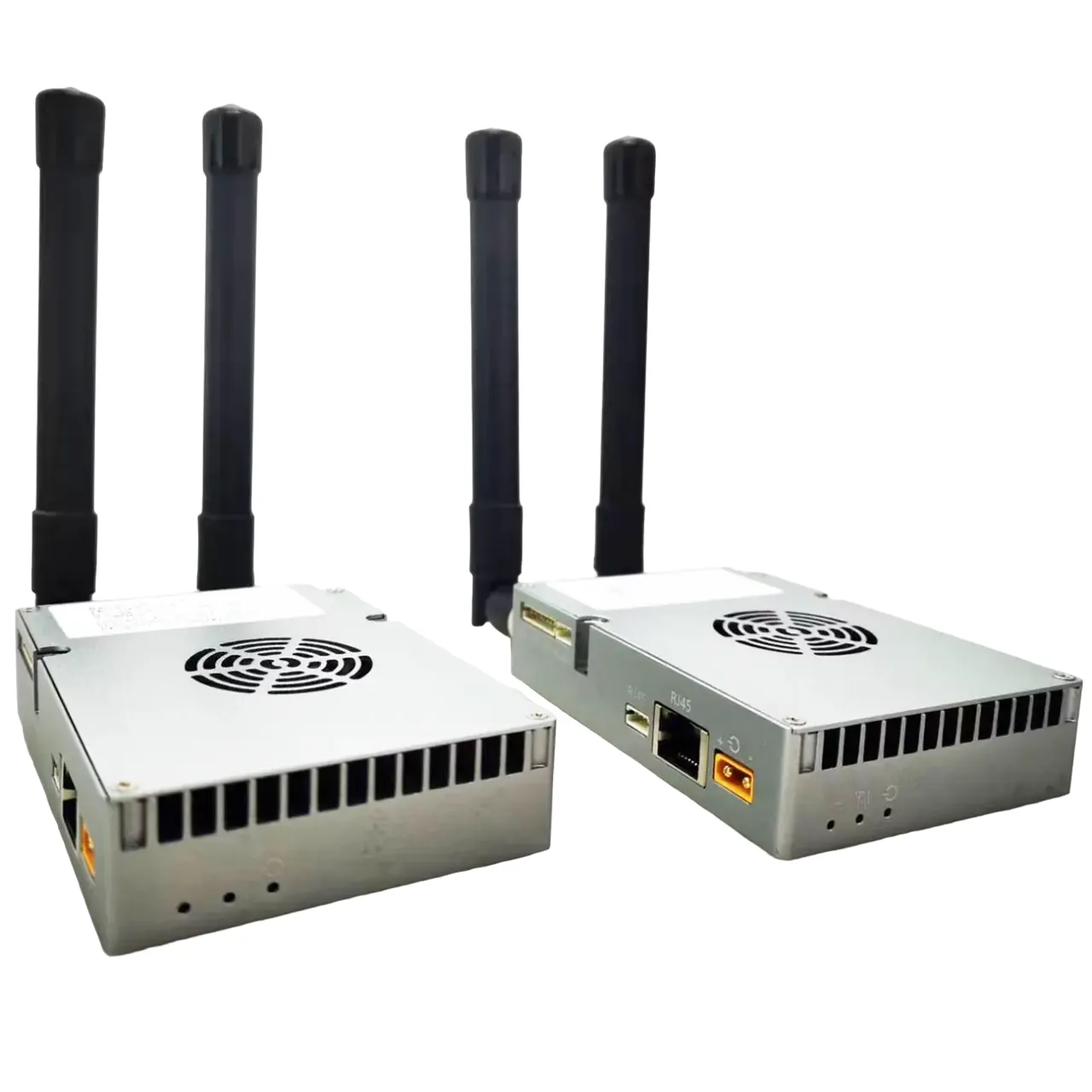


Drone Video Data Transmitter and Receiver FAQ: Long-Range UAV Video Transmission Guide
As UAV technology continues to evolve, maaasahan drone video data transmitter and receiver systems have become essential for long-range drone operations, Pagsubaybay, Pagma -map, inspeksyon, and military-grade UAV applications.
One of the most common questions from drone integrators and UAV manufacturers is how to choose the right Wireless na sistema ng paghahatid ng video para sa matatag, mababang-latency, long-distance communication.
In this FAQ guide, we answer the most frequently asked questions about the TX900 long-range drone video transmiter at receiver solusyon.

What Is a Drone Video Data Transmitter and Receiver?
A drone video data transmitter and receiver system is a wireless communication solution that transmits:
- HD Video
- Data ng telemetry
- Flight control data
- IP network signals
between the UAV air unit and the ground control station.
These systems are widely used in:
- Long-range na operasyon ng UAV
- FPV Drones
- Surveillance drones
- VTOL UAVs
- Military drones
- Industrial inspection drones
- Mapping and surveying UAVs
The TX900 is designed specifically for professional UAV applications requiring:
- Distansya ng mahabang transmisyon
- Low latency video transmission
- Kakayahang anti-interference
- Stable Ethernet/IP communication
- High reliability in complex environments
Talahanayan ng nilalaman
1. Does the Drone Video Transmitter Support Automatic Frequency Hopping?
Oo. The TX900 drone video data transmitter and receiver system supports automatic frequency adjustment and intelligent frequency hopping.
This feature allows the system to:
- Automatically avoid congested RF channels
- Reduce interference from nearby wireless devices
- Improve transmission stability
- Maintain reliable video and telemetry communication
For UAV applications operating in complex RF environments, automatic frequency hopping is critical for maintaining stable long-range communication.
Key Benefits
- Better anti-interference performance
- Improved signal reliability
- Enhanced UAV operational safety
- Stable HD video transmission
2. What Frequency Bands Does the TX900 Support?
The TX900 supports multiple professional UAV communication frequency bands, kabilang ang:
- 800MHz
- 1.4GHz
- 2.4GHz
Gayunman, each device can operate on one frequency band at a time.
Halimbawa:
- 800MHz version
- 1.4GHz version
- 2.4GHz version
The system cannot simultaneously support all three bands in one module.
Dual-Band Drone Data Link Options
For customers requiring simultaneous dual-band operation, we also provide other UAV data link solutions supporting:
- 600MHz + 1.4GHz dual-band transmission
Ito ay lalong kapaki -pakinabang para sa:
- Redundant communication systems
- Anti-jamming UAV projects
- Long-range military drone applications
3. Does the Receiver Support Manual RF Power Selection?
The TX900 uses an automatic RF power control mechanism.
Instead of manually switching between:
- 0.5W
- 2W
- 5W
- 10W
the system intelligently adjusts output power according to:
- Distansya ng transmission
- Kalidad ng signal
- Panghihimasok sa kapaligiran
- Link conditions
Advantages of Automatic Power Adjustment
- Lower power consumption
- Reduced heat generation
- Better communication efficiency
- More stable drone video transmission
This intelligent RF management improves overall UAV communication reliability.
4. What Is the Long-Range Transmission Distance?
Transmission range depends on:
- Pag-configure ng antena
- Flight altitude
- RF environment
- Lupain
- Weather conditions
LOS (Linya ng Paningin) Distansya ng transmisyon
Under ideal open LOS conditions:
| Power Version | Maximum Distance |
|---|---|
| 5W Drone Video Transmitter | Hanggang sa 80 km |
| 10W Drone Video Transmitter | Hanggang sa 150 km |
These results are achieved in open environments with proper antenna setup and minimal RF interference.
NLOS / NVLOS Transmission Distance
Sa di linya ng paningin (NLOS/NVLOS) mga kapaligiran, transmission performance depends heavily on:
- Mga gusali
- Mountains
- Trees
- Urban interference
- Terrain obstacles
Because operating conditions vary significantly, it is impossible to provide one fixed NLOS distance specification.
Gayunman, lower-frequency UAV transmission systems such as:
- 800MHz
- 1.4GHz
typically provide better obstacle penetration than higher-frequency systems.
5. Does the TX900 Use COFDM Technology?
Hindi. The TX900 does not use traditional COFDM technology.
Sa halip, it uses advanced:
TDD-OFDM Technology
TDD-OFDM (Time Division Duplex – Orthogonal Frequency Division Multiplexing) provides several advantages for professional drone communication systems:
Benefits of TDD-OFDM for UAVs
- Mas mababang latency
- Higher bandwidth efficiency
- Malakas na kakayahan ng anti-panghihimasok
- Better spectrum utilization
- Stable long-range IP transmission
- Simultaneous video and data transmission
This makes the TX900 suitable for:
- UAV video streaming
- Drone telemetry transmission
- Ground station communication
- Autonomous drone systems
6. Does the TX900 Support HDMI Video Output?
The TX900 is primarily designed for Ethernet/IP-based drone video transmission.
Default Video Interfaces
Air Unit (Drone side)
Sumusuporta:
- Ethernet/IP video input
- Mga camera sa network
- EO/IR gimbals
- IP payload devices
Yunit ng Lupa (Tagatanggap ng tagatanggap)
Supports Ethernet output for:
- Laptop
- Mga istasyon ng kontrol sa lupa
- Mission Planner
- Qgroundcontrol (QGC)
HDMI Support
HDMI output can be supported through external decoding solutions depending on the project configuration and integration requirements.
7. What Is the Weight of the Drone Video Transmitter?
Lightweight UAV payload design is critical for maximizing drone endurance and flight efficiency.
TX900 Weight Specifications
| Modelo | Timbang |
|---|---|
| 5W Drone Video Transmitter | Tinatayang. 240g |
| 10W Drone Video Transmitter | Tinatayang. 550g |
The compact and lightweight design makes the TX900 suitable for:
- VTOL drones
- Fixed-wing UAVs
- Multirotor drones
- Tactical UAV platforms
8. What Is the Price of the Drone Video Data Transmitter and Receiver?
Pricing depends on several configuration factors, kabilang ang:
- Dalas band
- RF power level
- Encryption requirements
- Mga pagpipilian sa antena
- Uri ng konektor
- Dami
- Custom integration requirements
Kaya nga, pricing is quoted individually based on project specifications.
If you share your UAV project requirements, we can recommend the most suitable drone video data transmitter and receiver configuration and provide a detailed quotation.
Why Choose TX900 for UAV Video Transmission?
The TX900 long-range drone video data transmitter and receiver solution is designed for professional UAV applications requiring:
- Long-range wireless video transmission
- Stable drone telemetry communication
- Low latency HD video
- High anti-interference capability
- IP/Ethernet networking
- Reliable UAV data links
It is widely used in:
- Military UAV systems
- Industrial drone applications
- Border surveillance drones
- Mapping UAVs
- Emergency response drones
- Long-range FPV platforms
Pangwakas na Salita
Pagpili ng tama drone video data transmitter and receiver is critical for ensuring reliable UAV communication and long-range HD video transmission.
With advanced TDD-OFDM technology, intelligent frequency management, long transmission range, and professional IP networking capability, the TX900 provides a powerful solution for demanding UAV operations.
If you would like additional technical specifications, integration support, or pricing information, feel free to contact us for a customized recommendation.
Magtanong ng isang katanungan
Ipinadala ang iyong mensahe