





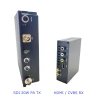
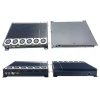
2X20W PA IP Mesh Drone Video Data Transmisor y receptor de 260 km de 260 km
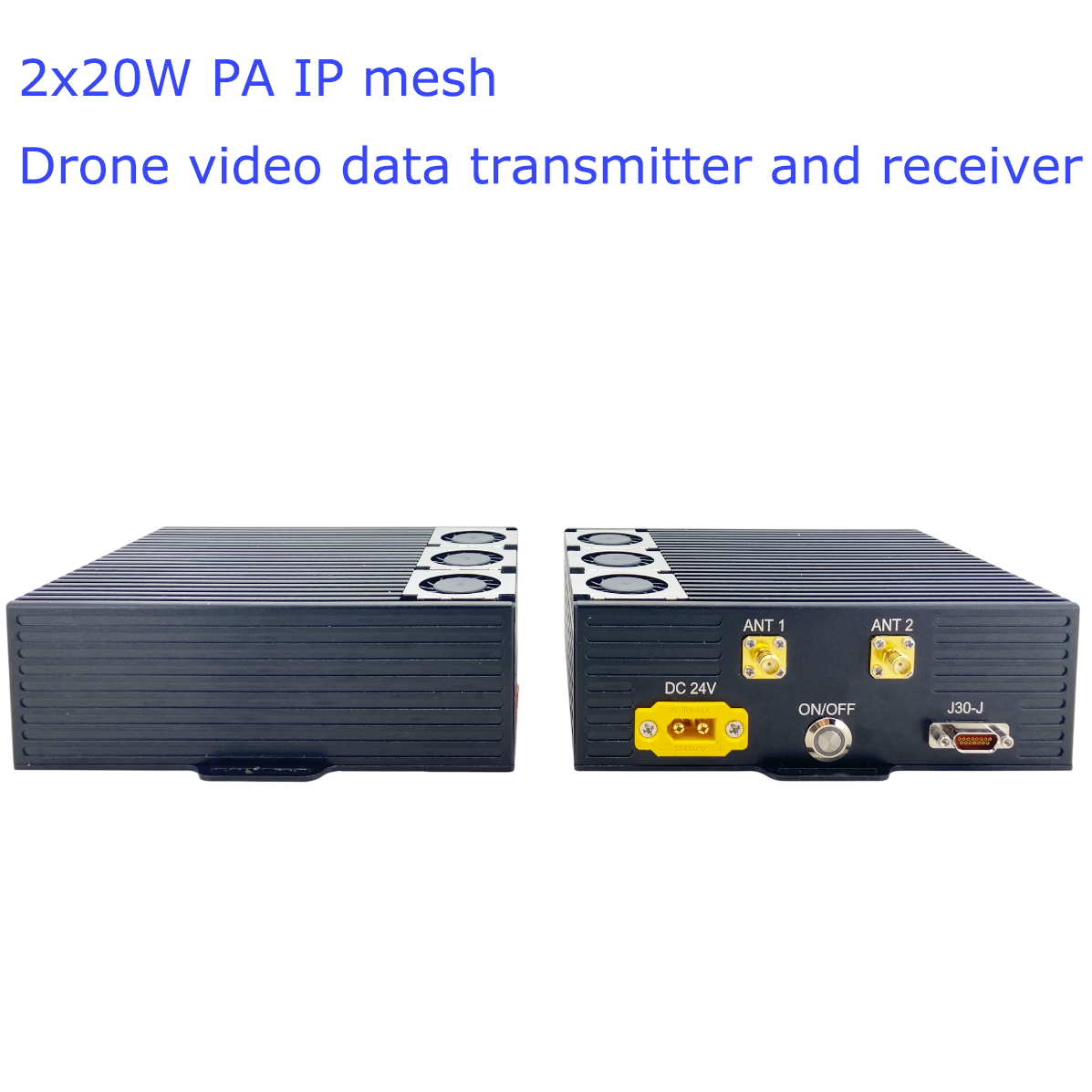
Tabla de contenido
Especificación
Radio Frequency Power: 2x20W
Frecuencia de trabajo: 1.3-1.5GHz (1300Mhz-1500Mhz)
Corriente de trabajo: 6.7A@DC 24-28V
Channel Bandwidth: 5/10/20/27 megahercio
WaveForm: Mobile MIMO
MIMO technology: codificación espacio-temporal, diversidad espacial, TxRx beamforming, spatial utilization
Modo de modulación: TD-COFDM, BPSK/QPSK/16QAM/256QAM adaptive
Recepción de sensibilidad: -93@20MHz
Retraso de transmisión: <150Sra
Número de nodos: <32
Maximum number of hops: 8
Tarifa de datos: 1~30Mbps(20megahercio)
Single-hop communication distance: Line-of-sight distance 50~260km (transmission distance varies greatly depending on the usage method)
Communication mode: distributed centerless point-to-point/point-to-many/many-to-many/multi-hop relay, star/line/mesh/hybrid
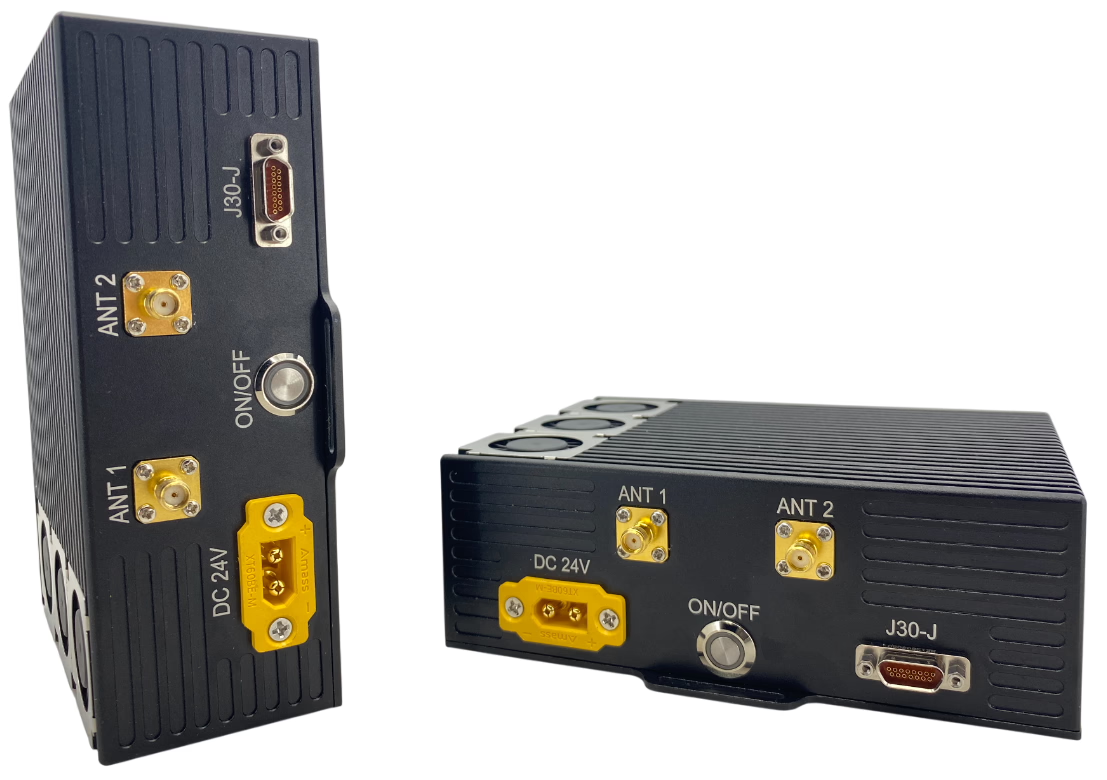
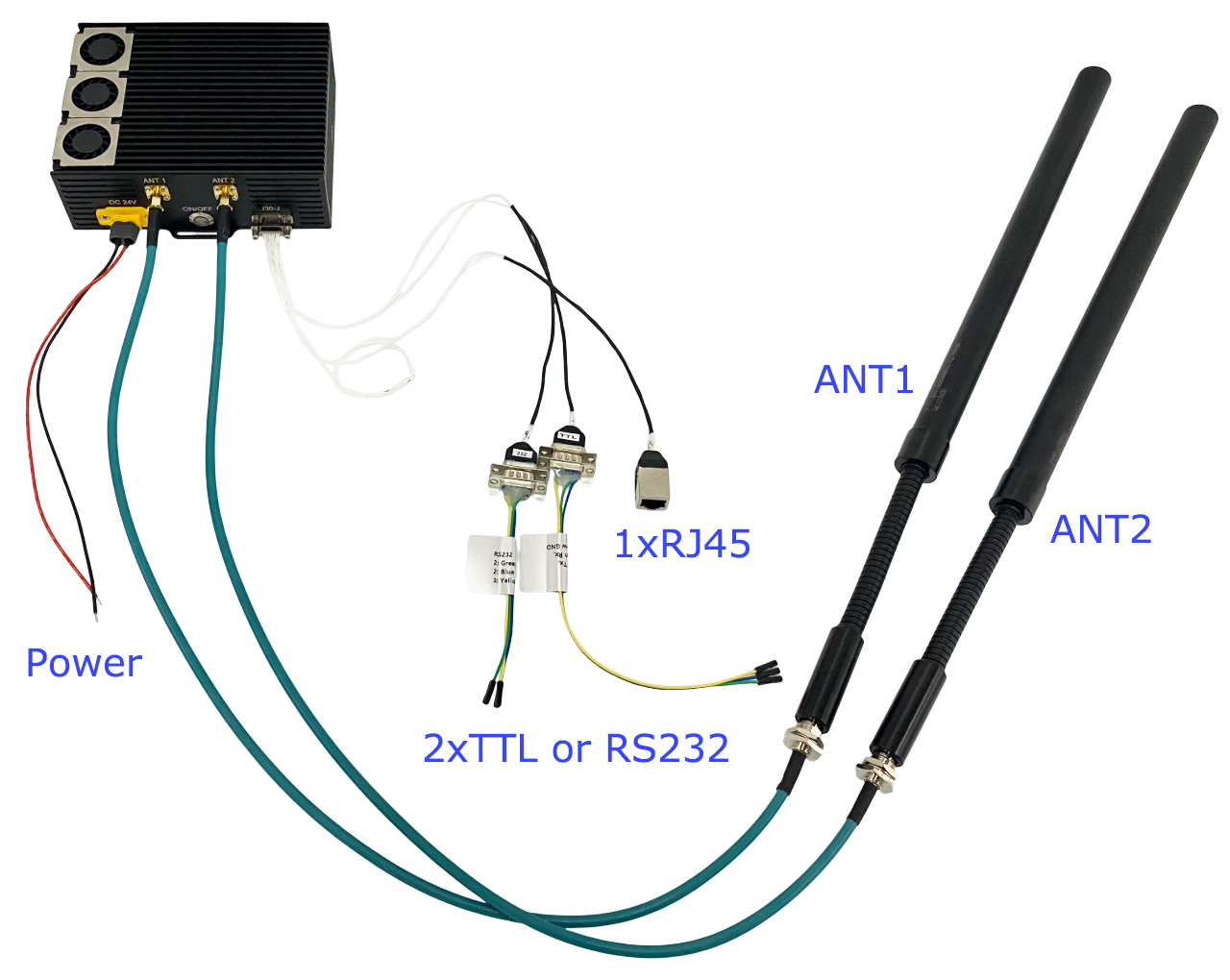
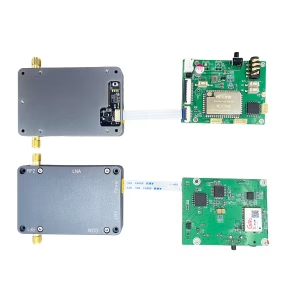
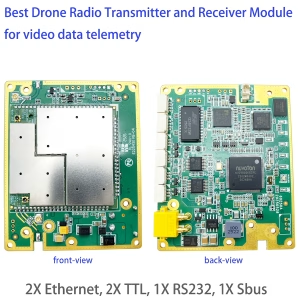
Interfaz física: 1x 100M Ethernet port
Measurement and control link data interface: 1x TTL/1x RS232
interfaz de radiofrecuencia: Escuela Secundaria
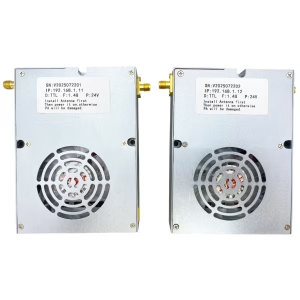
Dimensiones: 150×117×31mm
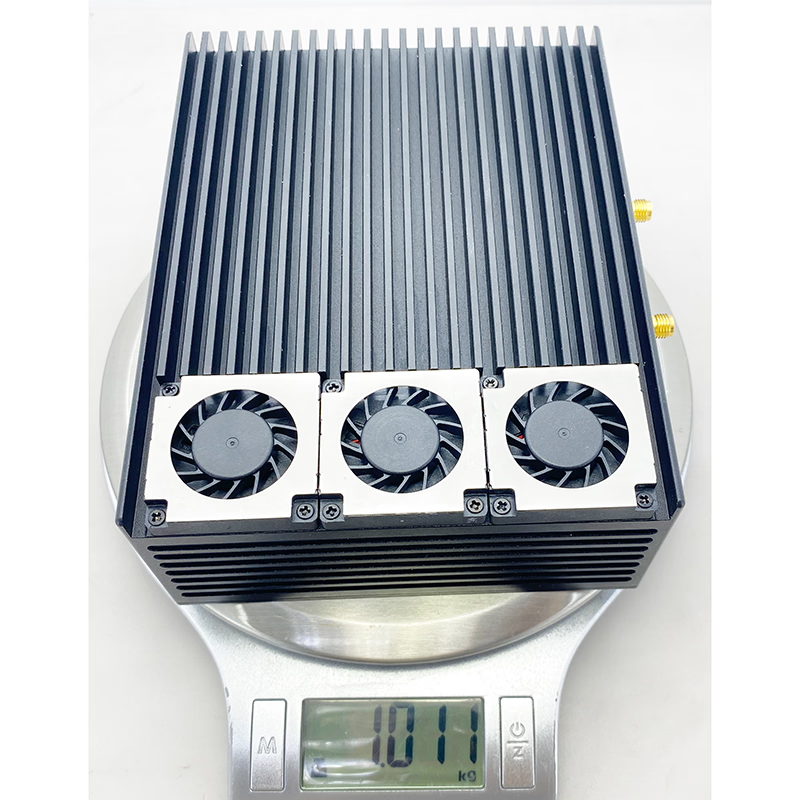
Equipment weight: 1011g
Shell structure: aleación de aluminio
Software interface: Chino, Inglés, Russian optional, Russian default at startup
Accesorio
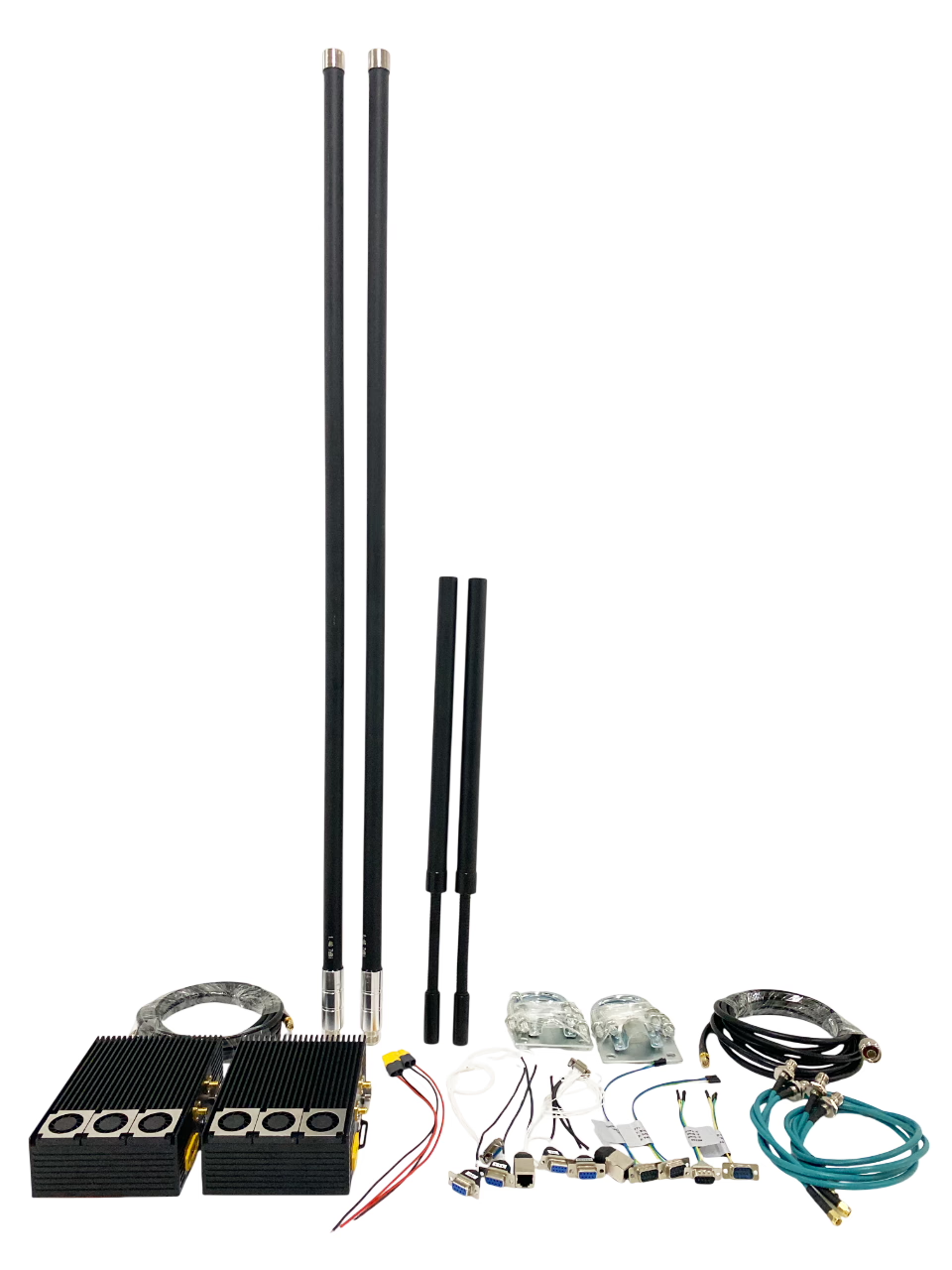
Peso y tamaño
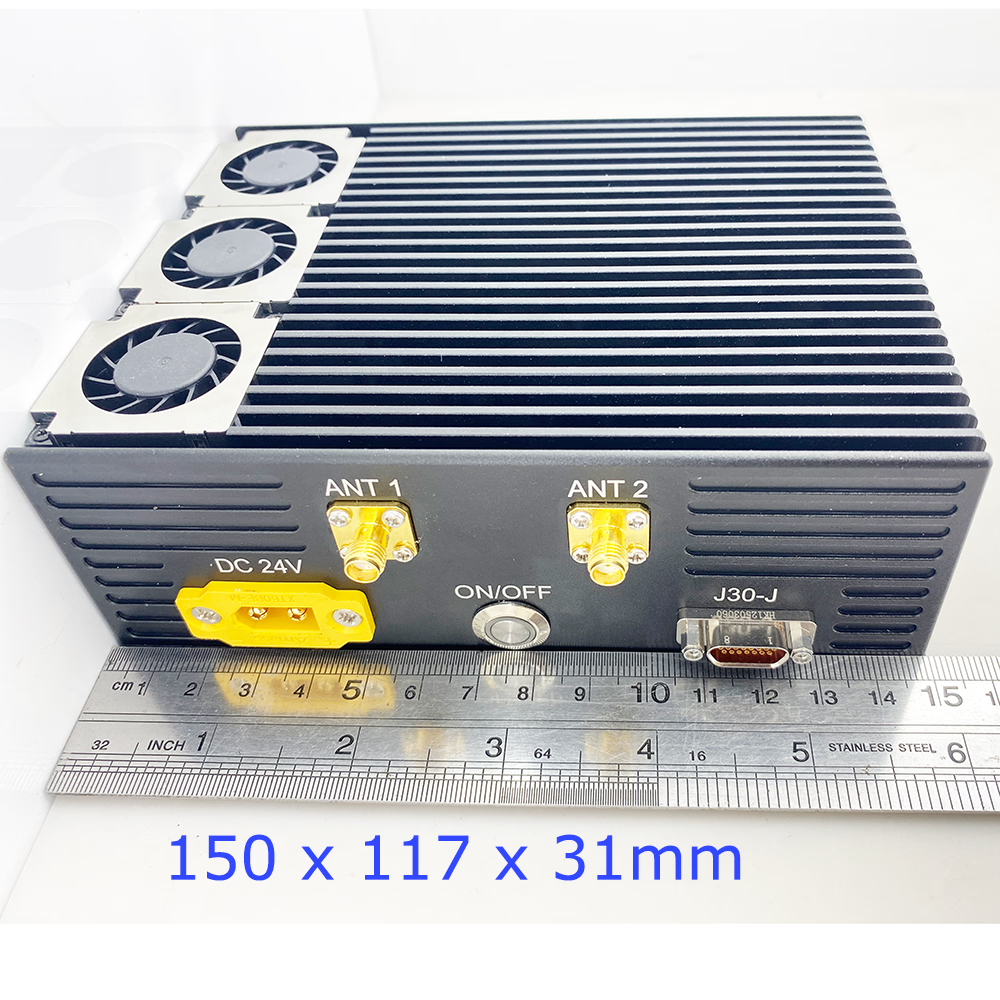
Conexión
Opciones personalizables
-
Frequency Band & Configuración del canal
-
Operable frequency range (P.EJ., 1.4–1,5 GHz, 2.4 GHz, 5.8 GHz, etc.)
-
Number of channels and channel spacing
-
Regional regulatory compliance (FCC, CE, SRRC, etc.)
-
-
Potencia de transmisión & Rango
-
Adjustable RF output power (P.EJ., 100 mW, 2 W, 5 W, 10 W, 20 W or higher)
-
Maximum transmission distance (P.EJ., 5 km, 10 km, 50 km, 100 km, 150 km, 200 km, 250 km, 300 km)
-
Mesh networking capabilities for multi-drone relay
-
-
Formato de vídeo & Resolution
-
Supported video inputs: HDMI, IDE, CVBS, IP camera stream
-
Output formats: HDMI, IDE, CVBS, IP/RTSP/UDP stream
-
Resolution & velocidad de fotogramas (P.EJ., 1080p60, 720p30, 640×480)
-
-
Red & Streaming Options
-
IP mesh topology (Estrella, Punto a punto, Multi-hop)
-
Protocolos: RTSP, UDP, tcp, ONVIF compatibility
-
QoS and latency optimization
-
-
Opciones de antena
-
Tipo: omnidireccional, direccional, blade, whip
-
Ganar: P.EJ., 3 dBi – 15 dBi
-
Tipo de conector: Escuela Secundaria, tipo N, RP-SMA
-
Swappable antennas for different mission scenarios
-
-
Fuente de alimentación & Consumo
-
Input voltage range (P.EJ., 7–24 V DC)
-
Power consumption optimization
-
Onboard battery compatibility
-
-
Alojamiento & Protección ambiental
-
Factor de forma & peso
-
Material & ruggedization (IP67, vibration-proof)
-
Rango de temperatura & environmental tolerance
-
-
Control & Operation Features
-
Remote on/off or video enable/disable
-
OSD (Visualización en pantalla) personalización
-
Firmware upgrade options
-
-
Integración & Compatibilidad
-
Compatible with drones, estaciones terrestres, or third-party software
-
Integration with mission planning software (P.EJ., QGC, Planificador de misiones)
-
Support for additional sensors or telemetry data
-
-
Optional Accessories & Add-ons
-
Soportes de montaje, vibration dampers
-
External antennas or repeater units
-
GPS modules or telemetry add-ons
-
How This Product is Used in UAV Wireless Communication
-
Transmisión de vídeo en tiempo real
The module is mounted on the UAV to transmit HD video streams from onboard cameras (EO/IR, térmico, or gimbal cameras) back to the ground control station. Gracias a su IP Mesh networking, video remains stable even when drones fly beyond line-of-sight or in complex terrain. -
Telemetria & Control Data Link
In addition to video, the module also transmits flight telemetry, GPS positioning, and sensor data a la estación terrestre. Al mismo tiempo, comandos de control (enlace ascendente) such as mission updates or navigation adjustments are delivered back to the UAV. This creates a full-duplex bidirectional link. -
Multi-UAV Swarm Operations
In drone swarm missions, each UAV equipped with the module becomes a node in the mesh network. They share information and can relay each other’s data, creating a autoformación, self-healing communication web. This ensures connectivity even if one drone moves out of direct range. -
Beyond Line-of-Sight (BLOS) Comunicación
By using relay or multi-hop networking, UAVs can extend communication range far beyond the direct drone-to-ground link. Por ejemplo, one UAV closer to the ground station can relay the video/data of another UAV flying further away, maintaining reliable coverage. -
High-Mobility Support
The system is optimized for drones traveling at speeds up to 300 kilómetros por hora, making it suitable for both fixed-wing UAVs (long-range reconnaissance) y multirotor drones (vigilancia, inspección, respuesta de emergencia). -
Secure Mission-Critical Applications
Con Cifrado AES128, the module ensures that sensitive video and data streams are protected. This makes it ideal for defensa, aplicación de la ley, disaster recovery, patrulla fronteriza, e inspecciones industriales, where secure, interference-resistant communication is essential. -
Scalable Ground Networks
On the ground, multiple receivers, mobile command vehicles, or handheld terminals can all join the same IP Mesh network. Esto permite real-time video sharing among multiple operators without the need for central infrastructure.
En resumen: This IP Mesh UAV wireless video data transceiver module enables drones to transmit video, telemetria, y señales de control simultaneously in a confiable, seguro, and scalable mesh network. It is especially useful for misiones UAV de largo alcance, swarm operations, and any scenario requiring stable communication in dynamic environments.
What is FHSS?
FHSS (Espectro ensanchado por salto de frecuencia) is a wireless communication technique in which the transmitter rapidly switches (or “hops”) between multiple frequency channels in a pseudo-random sequence. Both transmitter and receiver follow the same hopping pattern, so the communication link remains synchronized.
-
Anti-Interference: Because the signal does not stay on a single frequency, it becomes much harder for interference or jamming to block communication.
-
Seguridad: The hopping sequence is typically encrypted, making it very difficult for unauthorized parties to intercept or disrupt the signal.
-
Fiabilidad: Even if one frequency is blocked or noisy, the system quickly hops to a cleaner channel, ensuring stable communication.
How This Product Uses FHSS
This UAV wireless video data transceiver module integrates FHSS technology to improve performance in complex and hostile environments:
-
Automatic Frequency Hopping
The module can hop across up to 110 MHz of spectrum within or between its supported frequency bands (566–678 MHz and 1420–1530 MHz). This ensures the link avoids congested or noisy channels. -
Anti-Jamming Capability
In drone missions where intentional jamming or high interference exists (P.EJ., urban areas or military scenarios), FHSS makes it much harder to disrupt the video/data transmission, keeping UAVs connected. -
Seguridad mejorada
FHSS combined with Cifrado AES128 adds a double layer of protection — even if an adversary tries to intercept, they must predict both the hopping sequence and decrypt the data. -
Stable UAV-to-Ground Links
For UAVs moving at high speed (arriba a 300 kilómetros por hora) or flying over long distances (arriba a 22 km without PA), FHSS helps maintain a robust connection despite changing signal conditions. -
Seamless Mesh Integration
In a multi-node IP Mesh network, FHSS ensures that every UAV and ground node can dynamically maintain stable links without being locked to a single vulnerable frequency.
En breve: FHSS in this product ensures the drone’s wireless video and data link is seguro, resistente a interferencias, y confiable, even in environments with heavy RF congestion or active jamming.
Preguntas más frecuentes
-
Q: What is the maximum transmission range of this 2x20W PA IP mesh drone video data transmitter and receiver?
UN: los long-range drone video data transmitter apoya un línea de visión distance of 50-260km, depending on antennas, ambiente, altura, electromagnetic Interference and configuration.
-
Q: How much RF power does this long-range drone link output?
UN: It features a high-power 2x20W PA (Power Amplifier, Other power amplifiers can also be customized according to your project requirements), providing robust signal penetration for de largo alcance aplicaciones.
-
Q: What frequency band does this IP mesh drone system support?
UN: los frecuencia de trabajo range is 1.3-1.5GHz (1300MHz-1500MHz), offering good non-line-of-sight performance. También se pueden personalizar otras frecuencias según los requisitos de su proyecto..
-
Q: What voltage does the 2x20W MIMO transmitter require?
UN: It operates on DC 24-28V with a typical corriente de trabajo de 7UN.
-
Q: What channel bandwidth options are available?
UN: Supports flexible ancho de banda del canal: 5megahercio, 10megahercio, 20megahercio, allowing optimization for range vs. tasa de datos.
-
Q: What type of waveform does this mesh video link use?
UN: It utilizes a Mobile MIMO waveform for robust performance in dynamic environments.
-
Q: What MIMO technologies are implemented?
UN: Avanzado MIMO technology includes codificación espacio-temporal, diversidad espacial, TxRx beamforming, and enhanced spatial utilization for reliability and range.
-
Q: What modulation schemes does this video data transmitter support?
UN: Caracteristicas TD-COFDM with modulación adaptativa (BPSK/QPSK/16QAM/256QAM), automatically adjusting for best link quality.
-
Q: How sensitive is the receiver?
UN: los receiving sensitivity is excellent, down to -93dBm @ 20MHz ancho de banda.
-
Q: What is the latency of this drone video link?
UN: los retraso de transmisión es muy bajo, <150Sra, suitable for real-time drone control and FPV.
-
Q: How many nodes can this IP mesh network support?
UN: The network supports up to <32 nodos in a mesh topology.
-
Q: What is the maximum number of hops allowed?
UN: Data can be relayed through a maximum of 8 lúpulo dentro del mesh network.
-
Q: What is the maximum data rate achievable?
UN: los tasa de datos reaches up to 30Mbps when using the 20MHz channel bandwidth.
-
Q: What communication modes are possible?
UN: It supports versatile communication modes: distributed centerless point-to-point, point-to-many, many-to-many, relé de múltiples saltos, forming estrella, línea, malla, o hybrid topologies.
-
Q: What physical network interface does it have?
UN: It includes 1x 100M Ethernet port para datos de propiedad intelectual connectivity.
-
Q: What interfaces are available for telemetry and control links?
UN: Provides dedicated interfaces: 1x TTL y 1x RS232 para telemetry and control link data.
-
Q: What type of RF connector is used?
UN: los interfaz de radiofrecuencia is a standard Escuela Secundaria conector.
-
Q: What are the dimensions of the unit?
UN: Compacto dimensions: 150×117×31mm.
-
Q: How much does the transmitter/receiver weigh?
UN: los peso del equipo es 1011g.
-
Q: What is the housing made of?
UN: It features a durable aluminum alloy shell structure for heat dissipation and protection.
-
Q: What languages does the software interface support?
UN: los software interface ofertas Chino, Inglés, and Russian opciones, with Russian default at startup.
-
Q: Is this system suitable for beyond-line-of-sight (BLOS) drone operations?
UN: Sí, es de largo alcance capacidad (arriba a 260km LOS), MIMO technology (diversidad espacial, beamforming), y redes de malla (relé de múltiples saltos) hacerlo ideal para BLOS operations.
-
Q: How does TxRx beamforming improve performance?
UN: TxRx beamforming focuses the RF signal directionally, significantly increasing link range, tasa de datos, and resistance to interferencia para el MIMO video link.
-
Q: Can this system relay video through multiple drones?
UN: Absolutamente. Es malla IP capability supports relé de múltiples saltos (arriba a 8 lúpulo) via intermediate nodes/drones, extending coverage.
-
Q: Does the adaptive modulation affect range?
UN: Sí. Under weak signal conditions, él adapts to more robust modulations like BPSK/QPSK, extending effective rango at lower data rates. Strong signals use 256QAM for high speed.
-
Q: What is the typical application for this high-power link?
UN: Ideal para long-range drone inspección (tuberías, líneas eléctricas), cartografía, vigilancia, buscar & rescate, y IP video transmission where fiabilidad es critico.
-
Q: How does spatial diversity help in a drone link?
UN: Spatial diversity uses multiple antennas to combat signal fading caused by reflections or obstructions, providing a more reliable MIMO link for moving drones.
-
Q: Is this a point-to-point or mesh system?
UN: Es compatible con ambos! It can operate as a simple punto a punto link or form a flexible, autosanación IP mesh network with many-to-many comunicación.
-
Q: What kind of antennas are recommended for maximum range?
UN: Antenas direccionales de alta ganancia (P.EJ., parabólico, Yagi) en 1.3-1.5GHz are recommended for achieving the maximum 260km línea de visión rango.
-
Q: Can it transmit HD video?
UN: Sí, el tasa de datos de up to 30Mbps (with 20MHz ancho de banda) is sufficient for compressed HD or even multiple HD video streams over the Ethernet IP puerto.
-
Q: How does the distributed centerless network work?
UN: En distributed centerless modo, all nodes are equal peers. Si un nodo falla, el mesh network automatically re-routes data, enhancing fiabilidad without a single point of failure.
-
Q: What is the benefit of the aluminum alloy housing?
UN: los aluminum alloy shell structure provides excellent heat dissipation for the 2x20W PA, electromagnetic shielding (EMI), and robust physical protection.
-
Q: Is this system compatible with standard drone autopilots?
UN: Sí, typically via the TTL o RS232 measurement and control link interfaces for telemetry/command, y Ethernet para IP video datos.
-
Q: How weather-resistant is the unit?
UN: Mientras que el aleación de aluminio housing is robust, specific IP rating isn’t stated. Environmental sealing depends on the installation/application. Check manufacturer specs for sealing details.
-
Q: Does the low latency (<150Sra) support real-time drone control?
UN: Sí, <150ms transmission delay is low enough for responsive real-time manual control (FPV) and stable autonomous flight operations over the enlace de largo alcance.
-
Q: Can it operate in areas with RF interference?
UN: MIMO technology (beamforming, diversidad espacial), modulación adaptativa, and the ability to select clean channels within 1.3-1.5GHz help mitigate interferencia. -
Q: What is TD-COFDM?
UN: TD-COFDM (Time-Domain Coded Orthogonal Frequency Division Multiplexing) is a robust modulation scheme combining error correction coding and multi-carrier transmission, ideal for mobile and de largo alcance wireless video links.
-
Q: How many video streams can it handle simultaneously?
UN: Limited by the max data rate (30mbps) y Ethernet (100M) puerto. It can handle multiple compressed HD streams depending on their individual bitrates and network load within the malla IP.
-
Q: Is the 100M Ethernet port sufficient for video?
UN: For typical compressed drone video streams (H.264/H.265), 100Ethernet is generally adequate, especially given the wireless tasa de datos max is 30mbps. It’s the wireless link, not Ethernet, that is usually the bottleneck for de largo alcance.
-
Q: Can I connect it directly to a laptop or ground station?
UN: Sí, a través del Ethernet port for IP video/data y el RS232/TTL ports for serial telemetry/control to your estación terrestre software.
-
Q: What is the advantage of the 1.3-1.5GHz frequency?
UN: 1.3-1.5GHz offers a good balance: better penetration through foliage/buildings than higher bands, less congestion than 2.4GHz/5.8GHz, and longer wavelengths for de largo alcance propagation compared to higher bands.
-
Q: How does spatial utilization improve the link?
UN: Avanzado spatial utilization techniques within the MIMO system maximize spectral efficiency, allowing higher data rates or more users within the same frequency band.
-
Q: Is special software needed to configure the mesh network?
UN: Sí, the device’s software interface (Chinese/English/Russian) is used to configure network topology (mesh/star/line), frecuencias, ancho de banda, seguridad, y MIMO parámetros.
-
Q: Can it be used for non-drone applications?
UN: Absolutamente. Suitable for any de largo alcance, móvil, or fixed IP video/data link requiring energía alta (2x20W), MIMO, malla, y baja latencia, like vehicles, barcos, remote cameras.
-
Q: How does space-time coding enhance reliability?
UN: Codificación espacio-temporal spreads information across multiple antennas and over time, providing redundancy. This significantly improves link reliability and error resistance in challenging fading environments for the MIMO system.
-
Q: ¿Cuál es el consumo de energía típico??
UN: En 28V, el corriente de trabajo es 6.7UN, equating to approximately 188 vatios power consumption for the 2x20W PA unidad. Plan power systems accordingly.
-
Q: Does it require licensing for the 1.3-1.5GHz band?
UN: Licensing requirements vary significantly by country. Operating a 2x20W transmitter in 1.3-1.5GHz almost always requires specific licenses. Consult local radio regulations (P.EJ., FCC, Ofcom, local authorities).
-
Q: Is it suitable for high-speed drone flights?
UN: Sí. los Mobile MIMO waveform and technologies like beamforming y diversidad espacial are designed to maintain stable links with fast-moving platforms like drones.
-
Q: Can it transmit both video and telemetry data?
UN: Sí. IP video/data flows over the Ethernet puerto. Critical telemetry/control data typically uses the dedicated low-latency TTL/RS232 measurement and control link.
-
Q: Where can I get technical support or purchase this system?
UN: Please contact the manufacturer or authorized distributors directly for purchasing, detallado technical specifications, apoyo, y licensing guidance for this 2x20W PA IP Mesh Long-Range Drone Video Data Transmitter/Receiver.
- Q: ¿Cuál es el propósito principal de este dispositivo??
A1: It is used to realize IP Mesh network communication over a long distance (arriba a 300 kilómetros), and is suitable for multi-purpose wireless transmission such as video, datos, and voice. - Q: ¿Es este un sistema completo de igual a igual??
UN: Sí, it includes a transmitter and a receiver, and can be expanded into a multi-point to multi-point Mesh network. - Q: ¿Qué es el PA 2x20W??
UN: It means that each channel is equipped with a 20W power amplifier, for a total of two channels (usually MIMO), which improves signal penetration and distance. - Q: Is the system a two-way communication or one-way?
UN: Supports full-duplex two-way IP data communication. - Q: Is it possible to transmit video and data at the same time?
UN: Sí, IP multiplexing is supported, including video streams, voice calls and control data. - Q: What is the longest communication distance?
UN: The maximum theoretical distance is 300 km (depending on LOS conditions, antenna gain and altitude). - Q: What is the supported transfer rate?
UN: Depending on bandwidth and link quality, up to 30–80 Mbps (per link). - Q: Does it support Mesh self-organizing network function?
UN: Sí, it supports multi-node automatic discovery, routing and relay functions. - Q: How does it perform in occluded environments?
UN: Performance degrades in non-line-of-sight conditions, so it is recommended to use a repeater station or high-gain antenna. - Q: ¿El dispositivo es compatible con MIMO??
UN: Sí, usually 2×2 MIMO, which improves interference resistance and bandwidth efficiency. - Q: To achieve longer transmission distance and stronger anti-interference performance, can this transceiver support 2×80W power amplifiers?
UN: Currently, it cannot support 2×80W. The maximum supported configuration is 2×40W, and the most commonly used option is 2×20W.





iVcan.com –
I am extremely impressed with the 2x20W PA IP mesh drone video data transmitter and receiver. Its robust 2x20W power output provides exceptional long-range coverage, easily reaching up to 260km under optimal conditions. The IP mesh technology ensures seamless multi-hop video transmission, and the low latency of under 150ms keeps real-time control smooth. La instalación fue sencilla, and the software interface in English made configuration intuitive. The aluminum alloy casing feels durable and professional, while the flexible MIMO features and adaptive modulation deliver stable, high-quality video even in challenging environments. En general, this system significantly enhances drone operations with reliable, long-distance data and video transmission.