






Nadajnik-przekaźnik-odbiornik danych wideo drona UAV 2T2R 2WPA 60km
Spis treści
Cecha
- Częstotliwość dostosowana. Wartość domyślna to 1.4 GHz. 1350-1470Mhz.
- System ten obsługuje transmisję obrazu z kamery IP, a także kontrola i misje. Ale żeby zwiększyć zasięg, zawiera wzmacniacz, który przesyła również wideo ze swojej kamery.
- Każdy węzeł nadawczo-odbiorczy ma dwa porty SBus. Więc, naziemny odbiornik umożliwia sterowanie samolotem wzmacniakowym i samolotem nadawczym – dwoma dronami za pomocą pilota.
- Przesyłaj wideo z kamery IP do RTSP i steruj. Wersja punkt-punkt jest 16.8 Mbps. Wersja punkt-wielopunkt jest 26.4 Mbps.
Wprowadzenie
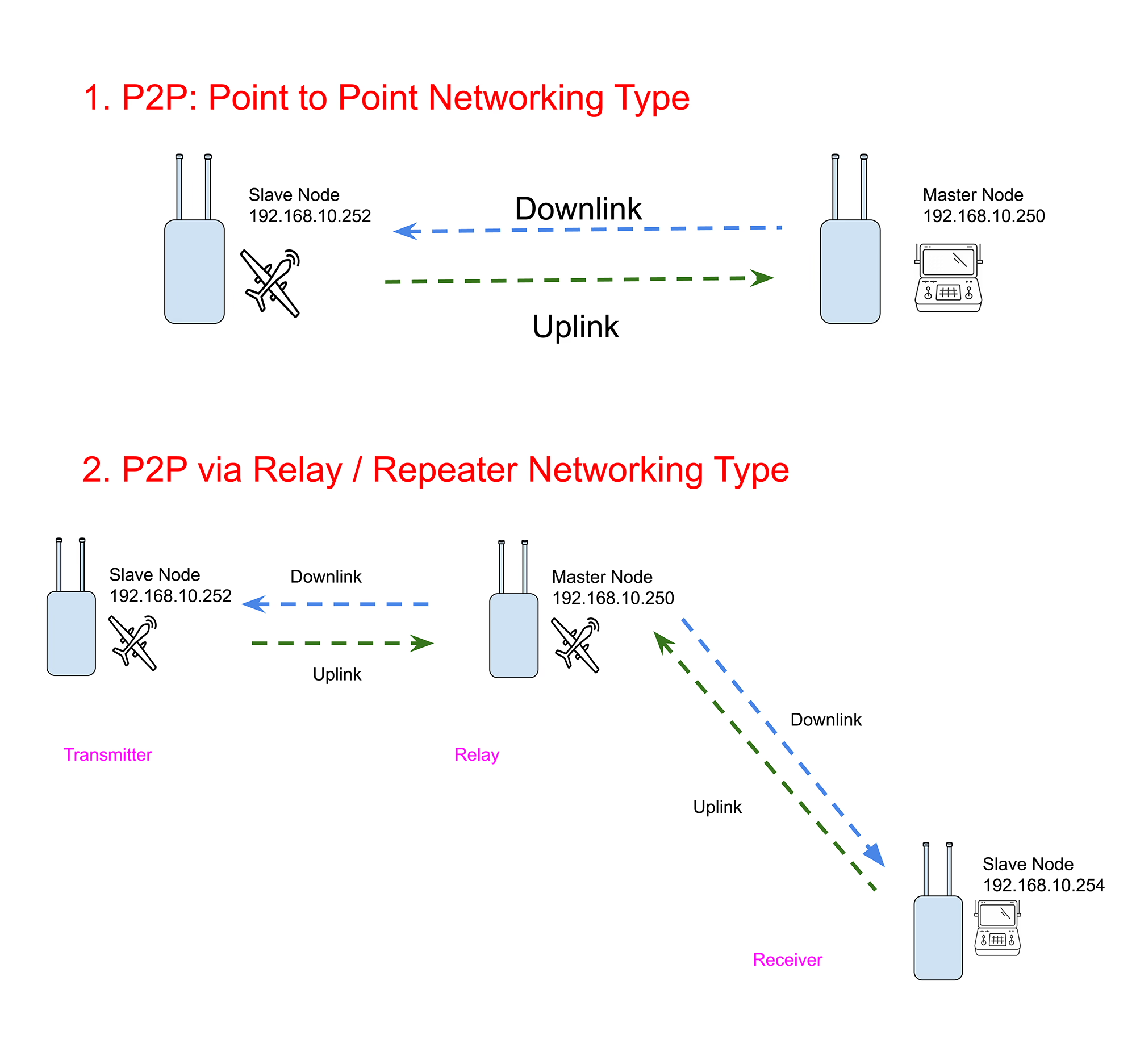
Istnieje system sieci gwiazdowej bez siatki do transmisji wideo na duże odległości. Pierwszy węzeł nadawczo-odbiorczy znajduje się w samolocie misyjnym, a drugi węzeł nadawczo-odbiorczy jest zainstalowany na samolocie przemiennikowym, a trzeci węzeł nadawczo-odbiorczy jest zainstalowany na stacji naziemnej. Odległość od samolotu misyjnego do stacji naziemnej wynosi ok 20 – 60 km; maksymalny zasięg może wzrosnąć do 60 + 60 = 120 km bez zakłóceń sygnału. System obsługuje kamerę IP znajdującą się na pokładzie samolotu, i transmisję RTSP. Stacja naziemna łączy się z komputerem PC i wysyła obraz wideo na żywo w postaci strumienia RTSP z pokładu samolotu.
Z drugim transiwerem jako wzmacniaczem w celu zwiększenia zasięgu. pod warunkiem, że inny samolot podleci bliżej. Z grubsza mówiąc, stacja naziemna -> Samolot 1 (Musisz także zobaczyć wideo z tego) -> Samolot 2. Możesz używać powietrznych dronów sztafetowych do pokonywania przeszkód, takich jak góry, lub ukryj prawdziwą lokalizację stacji naziemnej, aby chronić bezpieczeństwo pilotów.
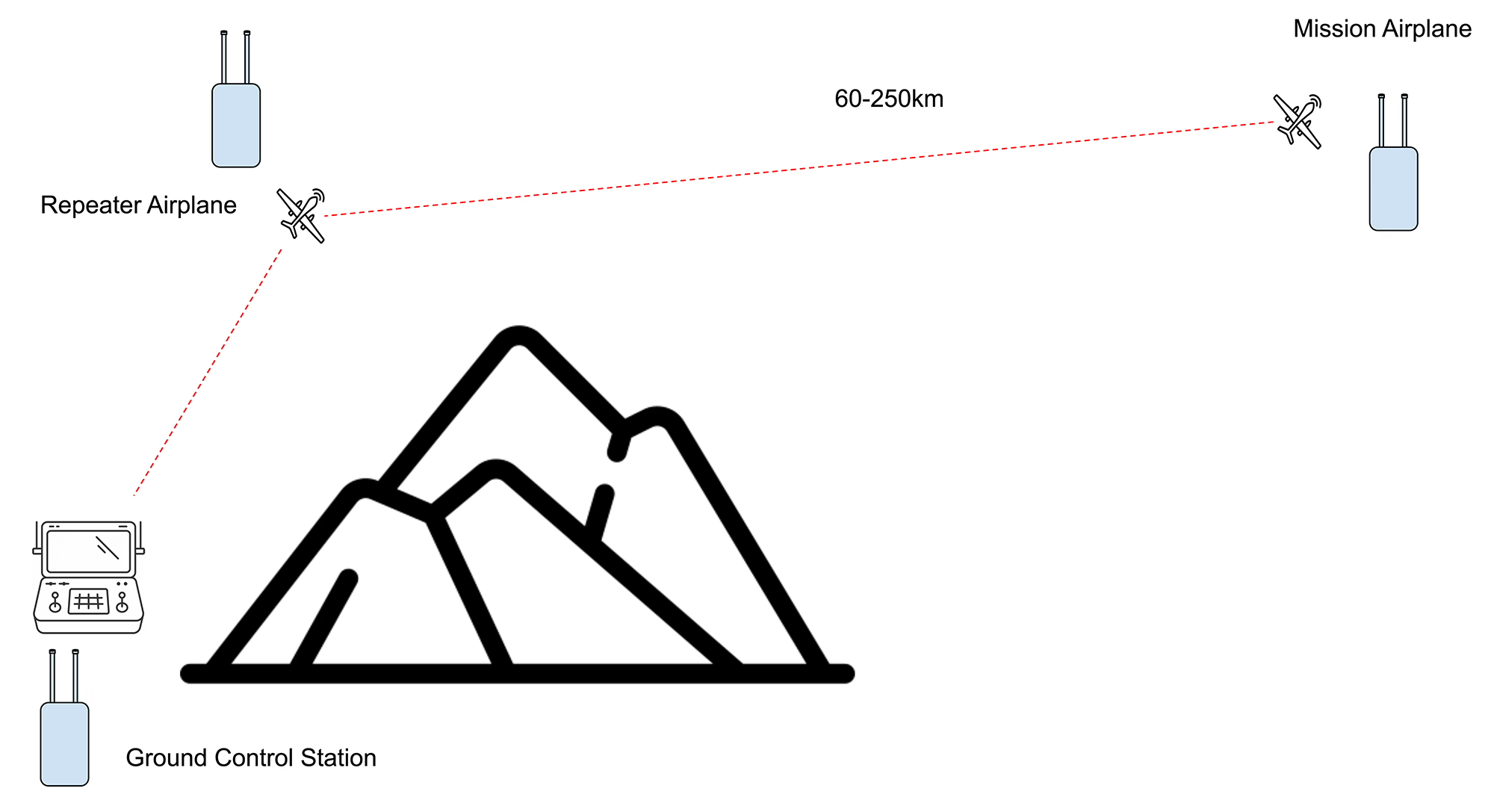
Ten system łączności radiowej składa się z trzech węzłów: stację naziemną, retransmiter, i węzeł końcowy, który jest samolotem misyjnym. Jednostka naziemna powinna znajdować się w odległości 40-60 km od retransmitera, co z kolei powinno znajdować się 50-60 km od węzła końcowego (dron misyjny). Minimalna przepustowość danych na tych dystansach wynosi 10-16 MB na sekundę, a zakres częstotliwości roboczej wynosi 1350-1470 MHz.
Konfigurowalne elementy:
-
Zakres częstotliwości
-
Regulowana częstotliwość robocza (np., 1.2–1,5 GHz, 2.4 GHz, 5.8 GHz)
-
Zgodność z przepisami regionalnymi (FCC, EC, itp.)
-
-
Moc transmisji
-
Dostosowanie mocy wyjściowej (np., 100 mW–20 W) aby rozszerzyć zasięg
-
Włączenie wzmacniacza mocy do komunikacji na duże odległości
-
-
Format wideo & Rozkład
-
Wsparcie dla SD, HD, Full HD, lub wideo 4K
-
Kompatybilność z HDMI, SDI, lub analogowe wejście/wyjście wideo CVBS
-
-
Sieć & Protokół
-
Przesyłanie strumieniowe IP (RTSP, UDP, H.264/H.265)
-
Sieć mesh vs. konfiguracja przekaźnika punkt-punkt
-
Obsługa odbioru różnorodności dla lepszej stabilności sygnału
-
-
Funkcje przekaźnika/wzmacniacza
-
Multi-hop relay capability
-
Adjustable number of relay nodes
-
Automatic failover or signal redundancy options
-
-
Opcje anteny
-
Directional vs. anteny omnidirectional
-
Custom gain (dBi) and physical form factor
-
Polarization type and connector customization
-
-
Funkcje odbiornika
-
Number of diversity channels
-
HDMI, SDI, CVBS, or Ethernet outputs
-
Integration with NVR or computer for live monitoring
-
-
Zasilacz & Konsumpcja
-
Zakres napięcia (np., 7–28 V)
-
Low-power versions for extended drone flight
-
Battery vs. external DC/AC options
-
-
Kontrola & Berło
-
Remote on/off control
-
OSD (Wyświetlacz na ekranie) overlays for telemetry data
-
Web or app-based configuration interface
-
-
Środowiskowy & Mechaniczny
-
Waterproof or dustproof casing (IP65/IP67)
-
Lightweight or compact design for UAV payload constraints
-
Mounting options for drones, pojazdy, or fixed stations
-
-
Szyfrowanie & Bezpieczeństwo
-
Video/audio encryption options
-
Password-protected streaming
-
Secure network protocols for sensitive operations
-
-
Cechy szczególne
-
Low-latency mode for real-time control
-
Adjustable compression settings
-
Dual-mode transmitter/receiver operation (opcjonalny)
-
FAQ
1. Jaki jest zakres częstotliwości nadajnika wideo drona 1,4 GHz?
Zakres częstotliwości wynosi 1350-1470 MHz, zoptymalizowany pod kątem transmisji wideo i danych z dronów dalekiego zasięgu. Możemy również dostosować dla Ciebie specjalną częstotliwość, na przykład, 2.1~ 2,3 GHz (2100~ 2300 MHz), 1.7~ 1,9 GHz (1700~ 1900 MHz), 5.7GHz (5700MHz), podwójna częstotliwość (600MHZ w dół + 1400MHz Uplink) itp.
2. Jaka jest maksymalna odległość transmisji?
Maksymalny zasięg 2WPA wzmacniacza mocy 2WPA w optymalnych warunkach wynosi do 60 km. Obsługuje również 5-8WPA 80-100KM, 10WPA 150 km, 20WPA 200 km i 40WPA 300 km.
3. Czy ten nadajnik dronowy nadaje się do transmisji wideo i danych??
tak, obsługuje zarówno strumieniowe przesyłanie wideo w czasie rzeczywistym, jak i dane telemetryczne.
4. Co oznacza 2T2R w tym produkcie?
2T2R oznacza 2 Nadajniki i 2 Odbiorniki zwiększające wydajność MIMO i stabilność łącza.
5. Jaka jest moc wyjściowa RF nadajnika?
Posiada wzmacniacz mocy o mocy 2W (ROCZNIE) dla silniejszego sygnału na długich dystansach. 2WPA 33dBm, 5WPA 37dBm, 8WPA 39dBm, 10WPA 40dBm, 20WPA 43dBm i 40WPA 46dBm,
6. Czy można tego używać jako stacji przekaźnikowej dronów??
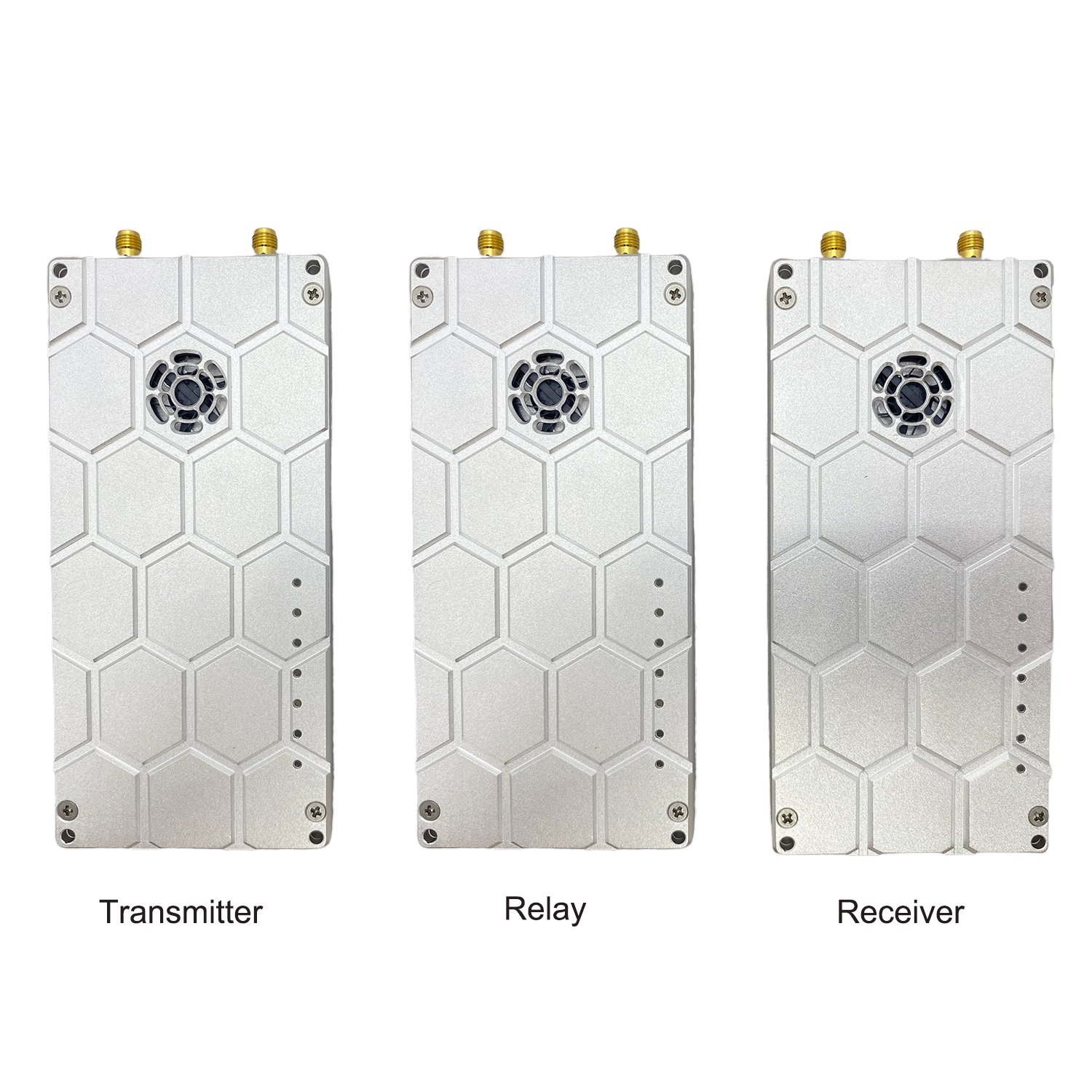
tak, urządzenie może pełnić funkcję przekaźnika dronowego w celu rozszerzenia zasięgu komunikacji. Proszę zamówić 3 jednostki: jeden jako nadajnik, jeden jako odbiornik, i druga jako stacja przekaźnikowa.
7. Czy obsługuje brak linii wzroku (NLOS) transmisja?
Najlepiej radzi sobie w linii wzroku, ale może obsłużyć ograniczone scenariusze NLOS ze zmniejszonym zasięgiem. Dlatego zalecamy wybranie jeszcze jednego urządzenia jako wzmacniacza.
8. Czy ten nadajnik wideo obsługuje szyfrowanie??
tak, Szyfrowanie AES jest dostępne dla bezpiecznej transmisji wideo i danych.
9. Jaka rozdzielczość wideo jest obsługiwana?
Obsługuje transmisję wideo HD do 1080p przy niskim opóźnieniu.
10. Jakie jest typowe opóźnienie systemu?
Opóźnienie od końca do końca wynosi zwykle poniżej 100 ms, idealny do FPV i kontroli w czasie rzeczywistym.
11. Jaki rodzaj anteny jest zalecany?
High-gain directional or omnidirectional antennas are recommended for optimal performance. At the ground control station, we recommend using this omnidirectional and directional antenna.
12. Is this system compatible with all drones?
It is compatible with most UAVs with available power supply and video/data output interfaces. Special fixed-wing UAV for long-range and long term flying.
13. Can the system work in mesh mode?
Nie, this model is primarily point-to-point or point-to-multi-point (including relay), not mesh networking. Proszę sprawdzić mesh types.
14. What is the input video format?
It typically supports 1080p 1920×1080 HDMI or SDI input depending on the configuration.
15. Czy system jest odporny na pogodę?
In order to reduce its weight, we added a perforated cooling fan, which is not waterproof. If you need to use it for USV surface ships, we can customize a special waterproof, moisture-proof and dust-proof shell.
16. Can it transmit through obstacles like trees?
Some signal loss will occur, but the high-power amplifier helps in partially obstructed environments. If there are obstacles such as trees, try to increase the transmitter’s power amplifier or use a repeater to overcome the signal blockage caused by the obstacles.
17. Does the receiver support diversity reception?
tak, it features dual antenna diversity to enhance signal reliability. It support 2T2R, means two RF on every units has two transmitting and two receiving function.
18. What power supply is required for the transmitter?
Usually 12V-24V DC is needed, compatible with drone onboard power.
19. Can this transmitter be used for fixed-wing drones?
tak, it is suitable for both multirotor and fixed-wing UAVs.
20. Is it compatible with COFDM modulation?
tak, the system uses OFDM modulation for robust, transmisja odporna na zakłócenia.
21. How heavy is the transmitter unit?
The transmitter is lightweight, typically under 227 grams for drone compatibility.
22. Can the transmitter-receiver system be customized?
tak, customization for frequency, wzmacniacz mocy, pasmo, and interfaces is available on request.
23. What is the bandwidth of the transmission channel?
It typically supports 10-20MHz bandwidth configurations.
24. Can it carry multiple video streams?
It can transmit a single video stream with data telemetry combined. Depending on the redundancy of the transmission rate, more IP cameras can also be added.
25. Is there a relay mode to extend range beyond 60km?
tak, by setting up a relay drone or ground station, the range can be extended 60+60km. If using 40WPA, relay can extend 300+300km in theory.
26. Does the system support bi-directional data communication?
tak, it supports full-duplex communication for control and telemetry.
27. What is the modulation type?
It uses COFDM with QPSK, 16QAM, or 64QAM for modulation.
28. Is there an app or software for monitoring?
Optional software tools are available for signal monitoring and diagnostics. We always use normal RTSP, Easyplay or VLC player.
29. What temperatures can the system operate in?
It works in -20°C to +60°C operating environments.
30. Can this be used for law enforcement or military applications?
tak, it’s ideal for tactical drones, nadzór, and special operations. Our products are intended for civilian use and are prohibited from being used in the military field.
31. What is the typical use case for this transmitter?
Long-range drone video transmission, Patrol graniczny, and aerial inspections.
32. What is the receiver interface output?
It usually uses an Ethernet cable to connect to Mission Planner or QGC QQroundControl on the computer.
33. Can this system be mounted on vehicles?
tak, with proper mounting, it can be used on ground vehicles for relay purposes.
34. What frequency license is required?
1.4GHz typically requires a license; users should check local RF regulations.
35. Does it support frequency hopping?
Optional frequency hopping spread spectrum (Model ten został zaprojektowany do bezprzewodowej transmisji wideo i danych za pomocą dwukierunkowego bezprzewodowego łącza danych) jest dostępny.
36. How long is the video transmission stable at 60km?
Stability depends on altitude, ustawienie anteny, and environmental interference.
37. Can I integrate this system with my existing ground station?
tak, it’s designed for easy integration with custom ground control stations. or use our https://ivcan.com/p/integrated-ground-receiver-and-antenna-with-tripod/
38. Does the system support IP video streams?
tak, video-over-IP transmission is supported via Ethernet interfaces.
39. How do I upgrade firmware?
Firmware can be updated via USB or network interface.
40. What is the difference between this and 5.8GHz transmitters?
1.4GHz offers better range and penetration compared to 5.8GHz frequencies.
41. What certifications does the system have?
EC, FCC, and ROHS certifications are available based on production batches.
42. Is customer support available for integration help?
tak, technical support and integration guidance are provided.
43. What is the maximum data rate?
Data rates up to 12Mbps for combined video and data are achievable. Wersja punkt-punkt jest 16.8 Mbps. Wersja punkt-wielopunkt jest 26.4 Mbps.
44. How many drones can connect to one receiver?
Typically designed for point-to-point, but multi-point setups are possible with configuration.
45. Can I adjust the output power?
tak, output power levels can be configured to optimize performance and power consumption.
46. Is low latency guaranteed under all conditions?
Low latency is typical under good RF conditions, but may increase with interference.
47. Is there a portable ground receiver option?
tak, handheld and portable receiver versions are available.
48. What’s included in the transmitter-receiver kit?
Usually includes the transmitter, odbiorca, anteny, kable, and power adapters.
49. What video compression is used?
The system typically uses H.264 or H.265 compression for efficient streaming.
50. Where can I buy the 1.4GHz drone video transmitter?
You can purchase directly from specialized RF communication suppliers or the manufacturer.
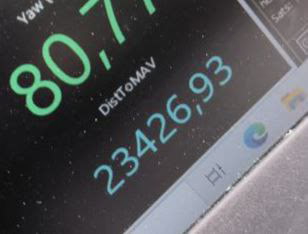
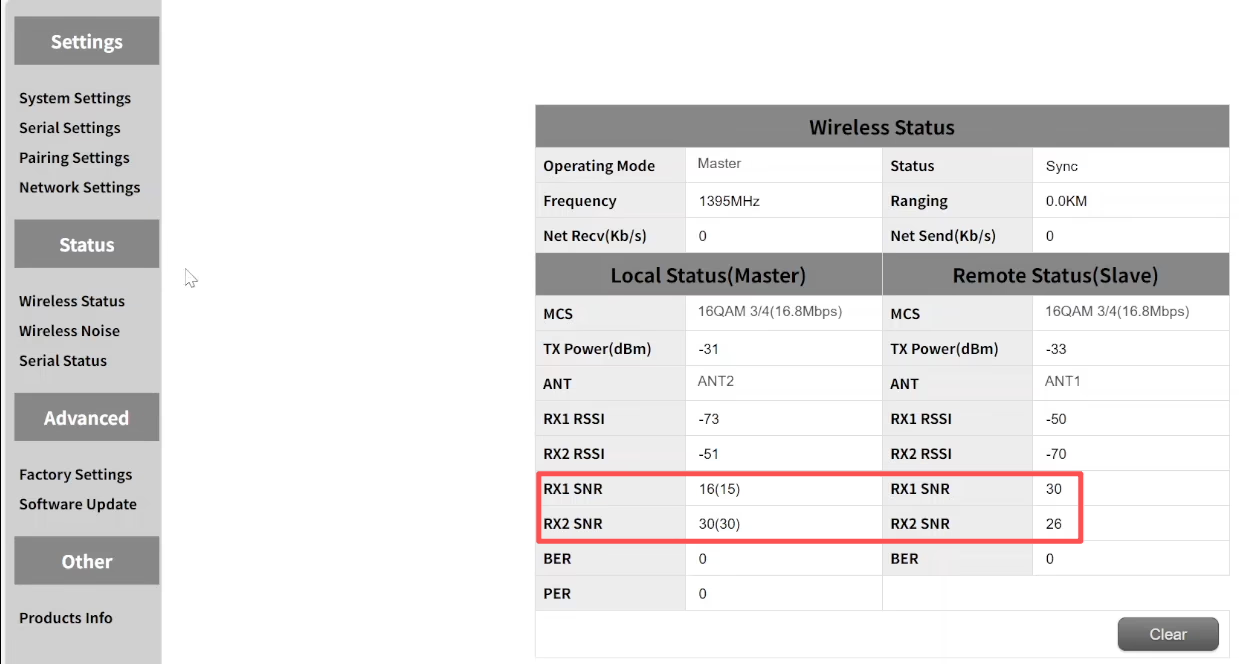
51. How far can we fly with a directional antenna before the wireless link disconnects?


iVcan.com –
I recently tested the 1.4G drone video data transmitter-relay-receiver with 2T2R and 2W PA for up to 60km, and I am very satisfied with the results. The transmission quality is excellent, providing clear and stable video feeds even at long distances. The two-way communication works flawlessly, ensuring smooth control and reliable data exchange throughout the flight. Its relay capability is especially useful for extending coverage in challenging environments. The device is easy to integrate with UAV systems and performs consistently without signal drops. Ogólnie, this product offers professional-grade performance and significantly improves long-range drone operations.